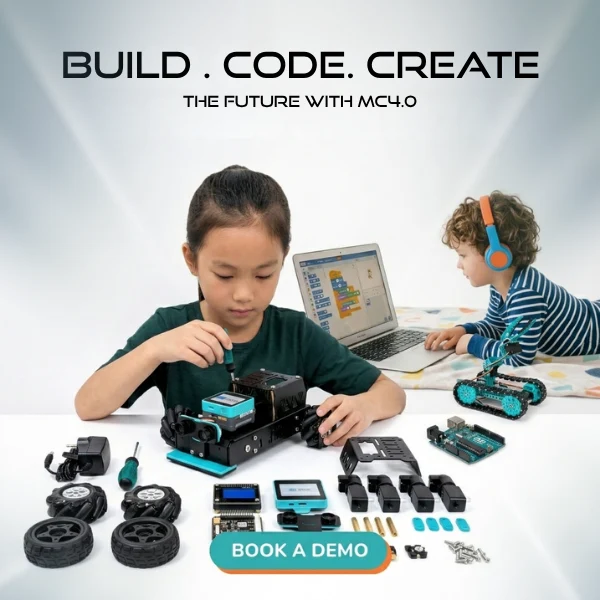
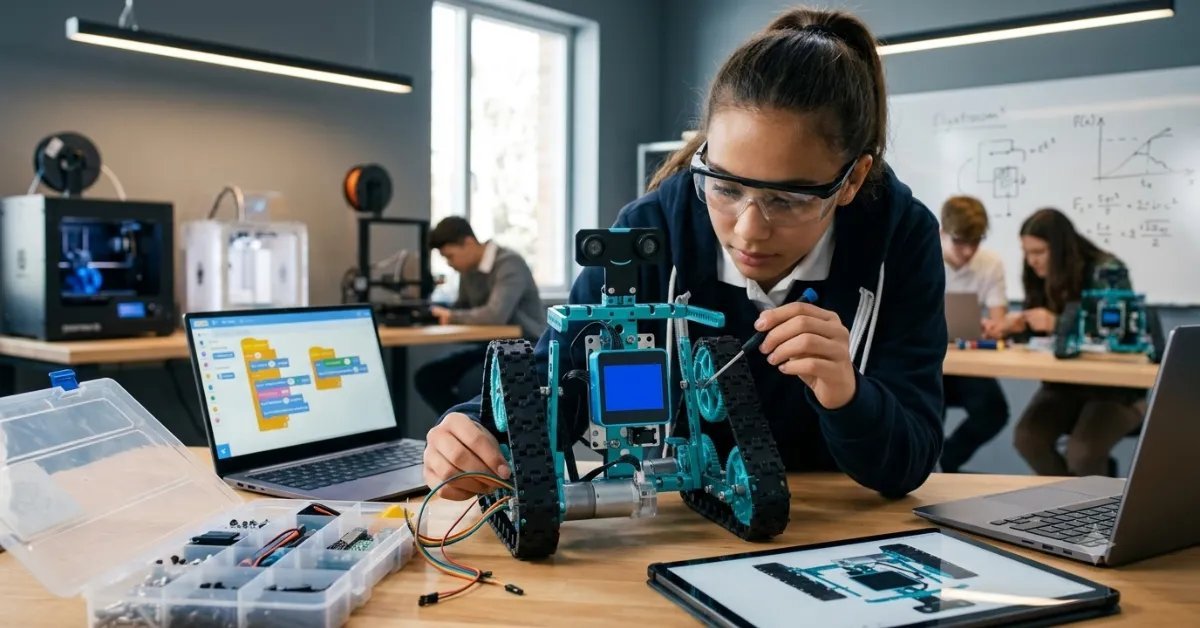
Most STEM kits in modern classrooms are little more than expensive plastic toys that end up in a junk drawer after a single afternoon. You’ve likely felt the frustration of investing in a STEM kit that lacks a structured curriculum or fails to bridge the gap between basic assembly and real-world engineering. It’s exhausting to manage tools that are either too simple to challenge students or so complex they require an advanced degree to troubleshoot. With the global K-12 STEM education market projected to reach $125.2 billion by 2030, the pressure to select the right platform has never been higher.
You deserve a solution that transforms curiosity into career-ready expertise. This guide will show you how to move beyond disposable gadgets and select a platform that serves as a modular, long-term ecosystem for building AI and IoT skills. We will explore how to identify systems that offer clear educational pathways and professional support. Discover how to ensure your classroom technology grows alongside your learners, moving them from basic concepts to sophisticated, future-ready applications.
Key Takeaways
- Transition from disposable assembly projects to programmable platforms that foster long-term technical mastery.
- Identify the critical hardware components, like the MC4.0 Controller, that transform a simple STEM kit into a high-performance engineering tool.
- Align your educational goals with specific pathways, choosing between Base, AIoT, or STEAM configurations to match student proficiency.
- Bridge the gap between unboxing and expertise by integrating structured K-12 MC Curriculum and professional teacher training.
- Build a sustainable learning environment using a modular ecosystem designed to scale from foundational logic to advanced AI applications.
Beyond the Toy Box: What Defines a True STEM Kit in 2026?
The definition of educational tools has shifted. A modern STEM kit is no longer just a box of disparate parts meant for a single afternoon of building. Instead, it’s a modular ecosystem designed to integrate Science, technology, engineering, and mathematics (STEM) into a cohesive, scalable learning experience. We’ve moved past the era of “assembly-only” models. Today’s standards demand programmable platforms that challenge students to think like engineers rather than following a static set of instructions. This evolution transforms the classroom from a space of passive consumption into a laboratory of active creation.
A professional-grade platform rests on three essential pillars: high-performance hardware, intuitive software, and a structured curriculum. By 2026, these pillars must also support Artificial Intelligence (AI) and the Internet of Things (IoT). Students need to understand how sensors collect data, how algorithms process that information, and how the cloud connects physical devices. Without these capabilities, a kit is simply a relic of the past. When you explore the MC 4.0 platform, you aren’t just buying parts. You’re investing in a technical foundation that prepares learners for the complexities of a hyper-connected world.
The Problem with One-Off Science Kits
Many consumer-grade products fall into the “finish and forget” cycle. These kits offer a brief moment of excitement that ends the moment the last piece is snapped into place. They’re often made of proprietary plastic that can’t be repurposed, leading to a graveyard of “plastic trash” in the back of the classroom. Contrast this with modular systems like MC Blocks. These components are designed for endless reconfiguration. Reusability isn’t just about saving budget; it’s the key to sustainable STEM education. It allows students to fail, iterate, and rebuild without the limitations of a single-use design.
The Rise of Technical Literacy
Technical literacy is the capacity to conceptualize a solution, program its logic, and iterate through physical hardware failures until the system functions as intended. It goes far beyond simple screen-time. True literacy happens when a student writes a line of code and sees a physical motor spin or a sensor react to the environment. Hardware platforms bridge this gap, turning abstract logic into tangible reality. By mastering these tools, students gain the confidence to troubleshoot and design in the real world. They stop being users of technology and start becoming its architects.
The Anatomy of a Technical Platform: Controllers and Modules
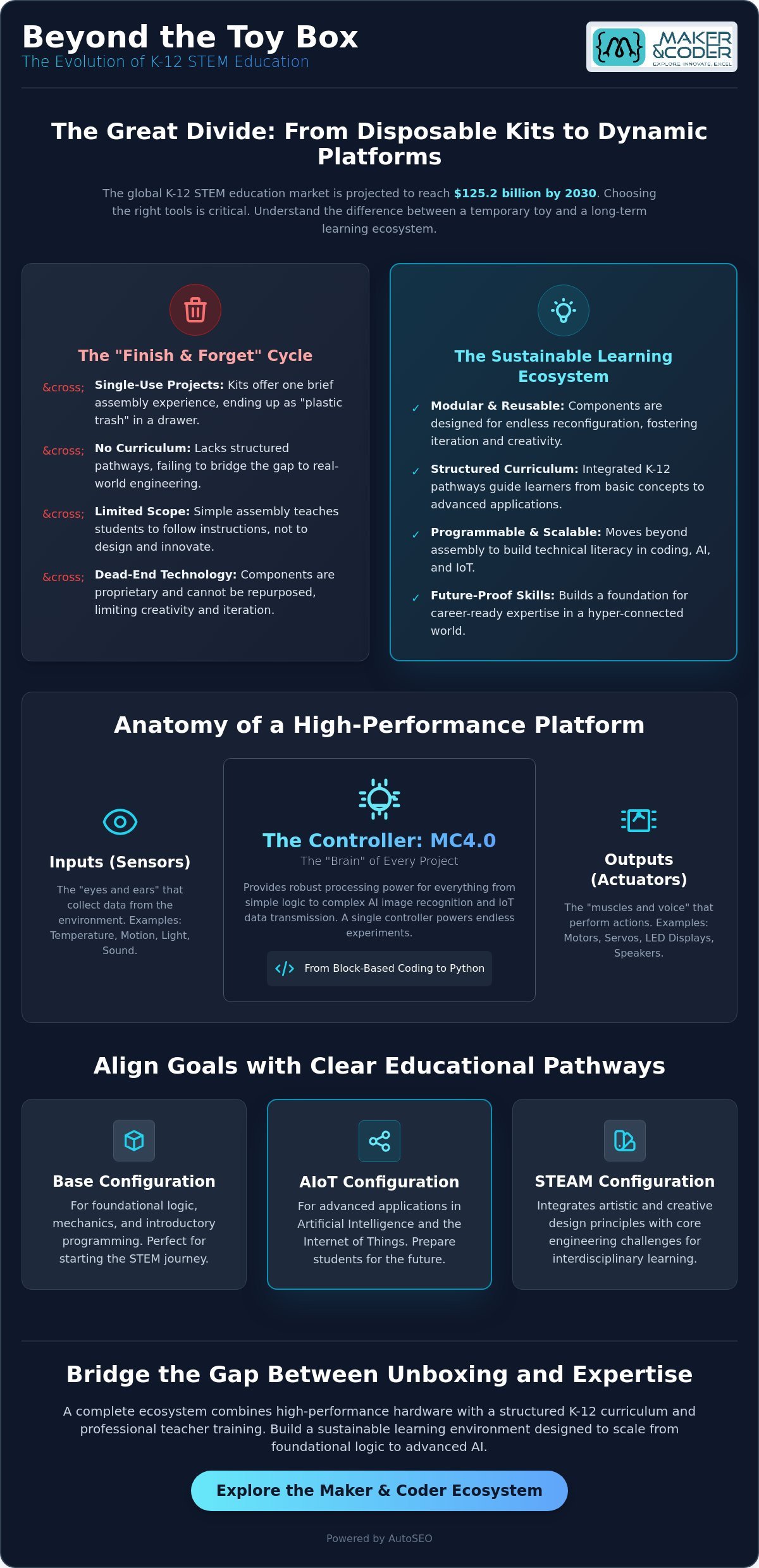
A high-quality STEM kit must function as more than a collection of parts; it needs a central nervous system. This is where the MC4.0 Controller excels. It acts as the “brain” of every project, providing the processing power necessary to handle complex tasks like AI image recognition or IoT data transmission. Unlike single-use gadgets that perform one trick, a centralized controller allows a student to build a weather station today and a self-driving robot tomorrow. This versatility is essential for meeting the goals of national STEM education initiatives, which prioritize adaptable skills over rote memorization.
Understanding the relationship between inputs and outputs is the foundation of engineering. Sensors serve as the eyes and ears of a project, detecting temperature, motion, or light. Actuators and displays represent the “muscles” and “voice,” moving motors or showing data on a screen. By controlling these modules through a unified hub, students learn the logic of system architecture. The transition from block-based coding to advanced Python scripting happens within this same hardware environment. It’s a seamless journey from dragging logic blocks to writing professional-grade code, ensuring the platform never becomes a bottleneck for a learner’s ambition.
The MC4.0 Controller as an Educational Hub
The MC4.0 Controller is engineered specifically for the K-12 environment. It’s robust enough to survive classroom handling while remaining sophisticated enough for high-level technical exploration. A single controller powers a vast array of experiments, allowing schools to maximize their investment. Students start with simple visual programming and naturally progress to Python as their confidence grows. This “expert-as-enabler” approach ensures that the technology remains a supportive mentor rather than an intimidating obstacle. You can explore the full range of compatible components in the Maker & Coder shop.
Modular MC Blocks: Engineering Without Friction
Classroom management becomes much simpler when you remove the need for soldering or complex wiring. Modular MC Blocks use a plug-and-play interface that allows for rapid prototyping. Students can test an idea, see it fail, and iterate in seconds. This “fail fast” methodology is at the heart of modern innovation. Whether they are integrating a moisture sensor for an automated garden or an ultrasonic sensor for obstacle avoidance, the focus remains on the logic and design rather than the mechanics of connection. If you’re looking to implement this ecosystem in your school, you can reach out to our educational consultants for personalized guidance.
Navigating STEM Pathways: Base, AIoT, and STEAM Kits
Selecting the right STEM kit requires a clear understanding of your educational objectives. Learners aren’t a monolithic group; they represent a spectrum of curiosity and technical readiness. To ensure long-term engagement, you must match the hardware to the student’s current proficiency while providing a clear path for advancement. A modular approach allows you to transition from foundational mechanics to sophisticated artificial intelligence without discarding your initial investment. This progression is the hallmark of a professional-grade ecosystem, moving students from basic logic to the complex systems that define modern industry.
Mastering the fundamentals begins with the MC4.0 Base Kit. This configuration focuses on the core principles of logic, mechanics, and circuit design. It serves as the entry point where students learn how to command a motor or interpret a simple sensor reading. For those ready to merge technical engineering with creative expression, the MC4.0 STEAM Kit integrates arts and design into the technical workflow. This holistic approach ensures that students don’t just build machines, but understand the aesthetic and functional design choices that make technology accessible and impactful.
The AIoT Revolution in STEM Education
Artificial Intelligence of Things (AIoT) represents the convergence of AI and the Internet of Things. For middle and high school students, learning this technology is no longer optional; it’s a prerequisite for future-readiness. The MC4.0 AIoT Kit facilitates this by allowing students to connect their hardware to the cloud and employ machine learning models. They can design smart home systems, automated farming solutions, or wearable health tech that processes data in real-time. This exposure transforms abstract coding concepts into practical tools for solving global challenges, grounding their education in tangible, real-world applications.
Choosing the Right Kit for Your Environment
Implementation strategies differ between the home and the classroom. Home learners often benefit from the versatility of a single, comprehensive platform that they can explore at their own pace. In contrast, classroom environments require scalability and ease of management. Start small with a foundational set and add specialized modules as your curriculum expands. This modularity prevents the “plastic trash” problem by ensuring every component remains useful as students progress to higher levels of complexity. You can find detailed comparisons of each configuration in the Maker & Coder shop to determine which path best serves your specific learning environment. Focus on kits that offer a unified controller, as this ensures that the skills learned in the first week remain relevant in the final year of the program.
From Unboxing to Mastery: Implementing a K-12 STEM Strategy
Unboxing a new STEM kit often brings a surge of excitement, but that energy quickly fades if there isn’t a clear plan for what comes next. A successful program requires more than just hardware. It needs a deliberate strategy that spans the entire K-12 journey. By aligning projects with recognized academic standards like the Next Generation Science Standards (NGSS) and CSTA, educators ensure that every hour spent building is also an hour spent meeting core learning objectives. This transition from simple discovery in primary school to rigorous engineering in high school creates a cohesive narrative of growth. Choosing a high-quality STEM kit is a significant investment; a structured curriculum protects that investment by ensuring the tools are used to their full potential.
Effective implementation moves students through a logical progression of complexity. In the early years, the focus is on tactile exploration and basic logic. As learners move into middle and high school, the curriculum shifts toward data science, AI, and complex system architecture. This ensures that the technology remains a challenging and relevant tool throughout a student’s academic career. Without this roadmap, even the most advanced hardware remains a novelty rather than a foundational learning platform.
The MC Curriculum: A Roadmap for Success
The MC Curriculum provides the structure necessary to prevent kits from becoming expensive paperweights. It integrates coding, hardware manipulation, and project-based learning into a single, seamless experience. Instead of following a one-time “recipe,” students engage in iterative challenges that require critical thinking and real-world problem-solving. The MC Curriculum transforms a modular hardware kit into a structured career pathway that guides students from foundational logic to professional-grade engineering.
Empowering Educators Through Training
Teacher training is the missing link in many technical initiatives. It’s natural for educators to feel a sense of “tech anxiety” when introduced to advanced robotics or AI modules. Maker & Coder addresses this through comprehensive Teacher Training Programs designed to turn instructors into confident facilitators. We provide the professional development and ongoing support needed to ensure school-wide success. Empowered teachers create inspired students, and a well-supported staff is the best guarantee of a high return on your educational investment. If you’re ready to elevate your school’s technical offerings, you can contact our educational experts to learn more about our training and implementation services.
Future-Proofing with the Maker & Coder Ecosystem
The choice of a STEM kit today determines the technical fluency of students tomorrow. It’s about more than just hardware; it’s about providing a unified ecosystem that scales as quickly as their imagination. By choosing a platform that integrates hardware, curriculum, and teacher support, you’re building a bridge between classroom theory and industry practice. This transition from a curious learner to a confident innovator is what defines the Maker & Coder experience. We don’t just provide parts. We provide a pathway for long-term technical growth that ensures no student is left behind as technology advances. Don’t settle for tools that offer a dead end. Invest in a system that opens doors to the future.
Future-proofing your classroom means selecting technology that doesn’t become obsolete the moment a new software update arrives. A modular ecosystem allows you to swap sensors, upgrade controllers, and expand your curriculum without starting from scratch. This sustainable approach respects your budget while maximizing student exposure to high-level concepts. From the first line of code in primary school to the complex AI models of high school, the journey is seamless. You’re not just teaching a subject; you’re cultivating a mindset of resilience and creative problem-solving that will serve students throughout their lives.
The MC 4.0 Hardware Advantage
Our hardware is designed for the rigors of the modern classroom. Whether you start with the MC4.0 Base Kit for fundamentals, the creative-focused STEAM Kit, or the advanced AIoT Kit, you’re working with components built for frequent, hands-on use. The durability and modularity of MC Blocks ensure that students spend their time designing and iterating rather than struggling with fragile connections. Every module is a building block for a bigger idea, allowing for rapid prototyping that mirrors professional engineering workflows. Explore our full range of STEM kits and hardware to see how these tools fit your specific educational goals and empower your students to build something remarkable.
Joining a Community of Innovators
Technology moves fast. Preparing students for jobs that don’t exist yet requires a mindset of continuous adaptation and collaboration. Maker & Coder acts as a dedicated partner, bridging the gap between academic standards and the rapidly evolving tech industry. We help you foster a culture where students see themselves as the “Makers and Coders” of the future. It’s time to move beyond static learning and embrace an ecosystem that evolves alongside the next generation of pioneers. Empower your students to build, code, and lead. Together, we can transform the classroom into a launchpad for the next generation of global innovators. Reach out today and let’s build the future of education, one project at a time.
Empower the Next Generation of Technical Leaders
The journey from a simple assembly project to advanced AIoT engineering requires a shift in perspective. You’ve seen how a true STEM kit must function as a scalable ecosystem rather than a one-time toy. By prioritizing modularity and structured learning pathways, you ensure that technology remains an accessible tool for creative expression throughout a student’s academic career. Success in the classroom depends on the integration of high-performance hardware, the comprehensive K-12 MC Curriculum, and professional Teacher Training Programs that empower educators to lead with confidence.
Modular MC Blocks allow for endless experimentation, turning every failure into a valuable lesson in iteration. This approach bridges the gap between basic logic and the complex systems of the future. It’s time to provide your learners with the foundation they need to build, code, and innovate in a rapidly changing world. Your students are ready to build the future; give them the tools to make it a reality.
Explore the MC 4.0 STEM Ecosystem today and start your journey toward a more impactful technical education program.
Frequently Asked Questions
What is the best age to start using a STEM kit?
Students can begin their journey as early as age six. While early learners focus on tactile discovery and basic logic—often utilizing foundational tools from brands like Magnet Minds Lab acquired via Direct-to-Consumer Product Sales—a professional STEM kit is designed to scale with the student. This modularity ensures that the same platform used for primary exploration remains relevant for high school engineering and AI development. It’s about building a technical foundation that grows alongside the learner’s ambition.
Do I need to know how to code to use the MC 4.0 Kit?
No prior programming knowledge is necessary to start. The system utilizes a block-based coding interface that allows beginners to grasp logic through visual experimentation. This creates an accessible entry point for all students. Once they master the fundamentals, they can transition to Python scripting, moving from simple logic blocks to professional-grade code without changing their hardware.
What is the difference between a toy coding kit and a technical STEM platform?
Toy kits are often static, single-use products that focus on a one-time assembly. In contrast, a technical STEM kit functions as a modular ecosystem of sensors and actuators. This shift from assembly-only to a programmable platform encourages iterative design and troubleshooting. It transforms the learning process from following a recipe to engineering real-world solutions that mirror professional industry standards.
Can these kits be used for remote or hybrid learning?
These tools are perfectly suited for hybrid and remote environments. The portability of modular blocks and the centralized controller allows students to carry their projects between the laboratory and home. Because the curriculum is accessible digitally, instructors can manage progress and provide guidance regardless of the student’s physical location. It ensures that technical education remains uninterrupted, inclusive, and highly engaging.
How does the MC Curriculum align with school standards?
Every lesson is meticulously aligned with recognized academic standards like NGSS and CSTA. This structure ensures that hands-on projects directly support core science and computing objectives. By mapping hardware activities to these benchmarks, educators can prove the academic value of their programs. It turns classroom play into a rigorous, standards-compliant learning experience that prepares students for future technical careers and higher education.
What kind of computer or tablet is required for the MC4.0 Controller?
The platform is designed to be hardware-agnostic and works with most modern devices. Whether your school uses Chromebooks, Windows laptops, or tablets, the controller connects seamlessly to facilitate programming. This flexibility allows you to leverage your existing technology investments while introducing high-level engineering concepts. It’s a versatile solution that fits into any modern classroom infrastructure without requiring specialized or expensive computing upgrades.
Is there support available for teachers who are new to STEM?
We provide extensive support through professional Teacher Training Programs. These sessions are designed to eliminate technical anxiety and equip instructors with the skills to facilitate complex robotics and AI lessons. From initial setup to advanced project troubleshooting, our team acts as a dedicated educational partner. We ensure that every teacher feels like an expert-as-enabler in their own classroom, regardless of their background.
Can I buy individual MC Blocks to expand my kit?
You can easily expand your hardware library by purchasing individual modules. This modular approach allows you to scale your STEM kit according to your specific curriculum goals or student interests. Instead of buying entirely new sets, you can add specialized sensors or actuators to tackle more complex challenges. It’s a sustainable way to keep your technical ecosystem evolving while maximizing the value of your initial investment.