What if your classroom’s most advanced technology didn’t end up gathering dust in a storage closet after just one semester? Many educators find themselves trapped in a cycle of high setup times and disposable tools that fail to provide lasting value. It’s a common frustration to feel under-qualified when students begin asking about complex coding or the intricacies of AIoT. You deserve a solution that empowers you as much as it inspires your students. Selecting the right hands-on STEM learning kits for classrooms shouldn’t feel like a gamble on your limited budget and time.
We’ll show you how to move beyond isolated experiments toward a structured, scalable pathway for technical literacy. This guide explores the MC 4.0 platform, a modular ecosystem designed to transition learners from basic logic to advanced AIoT using durable hardware like MC Blocks and the MC4.0 Controller. You’ll discover how to minimize prep time with a comprehensive K-12 curriculum and professional training that builds your confidence. We’re looking at a future where your classroom lab is a hub of continuous discovery, providing a seamless journey from foundational concepts to professional-grade innovation.
Key Takeaways
- Learn how the MC4.0 Controller serves as the brain of your technical lab, anchoring a modular ecosystem of MC Blocks.
- Select hands-on STEM learning kits for classrooms that don’t lose value after one project, focusing on modularity and long-term reuse.
- Implement a proven framework for kit organization to reduce setup time and ensure your technical components stay intact for multiple semesters.
- Map out a structured K-12 journey that transitions learners from foundational logic to professional-grade coding and AIoT applications.
- Empower your staff with professional teacher training that turns daunting technical challenges into accessible tools for creative expression.
Defining High-Impact Hands-on STEM Learning Kits for Modern Classrooms
High-impact hands-on STEM learning kits for classrooms represent more than a collection of plastic parts. They are sophisticated ecosystems where hardware and software converge to facilitate experiential education. By 2026, the educational standard has shifted. It’s no longer enough to follow a manual to build a static model. Students must engage with the underlying logic of the systems they create. This active participation is vital for cognitive retention. When a learner physically wires a sensor or debugs a script, they aren’t just observing a phenomenon; they’re mastering a process.
Professional platforms like the MC 4.0 platform differ significantly from consumer-grade toy kits found in retail aisles. While toys offer immediate engagement, they often lack the depth required for a multi-year curriculum. High-level educational platforms focus on computational problem solving. This means moving from “how does this look?” to “how does this function in a networked environment?” You can explore these professional-grade tools at the Maker & Coder shop to see the difference in build quality and educational intent.
The 2026 Standard for Classroom STEM
Technical literacy now demands more than basic coding. AIoT (Artificial Intelligence of Things) literacy has become a baseline requirement for the modern workforce. Schools are moving away from isolated science experiments that end with a single result. Instead, they are adopting integrated engineering pathways. These pathways allow students to see how data moves from a physical sensor to a digital interface. Modular systems are the cornerstone of this shift. They reduce waste by ensuring that every component can be repurposed across different grade levels, maximizing the value of hands-on STEM learning kits for classrooms.
Modular vs. Single-Use Kits
The hidden costs of “one-and-done” STEM projects often derail departmental budgets. Single-use kits might seem affordable initially, but they create a cycle of waste and constant re-purchasing. Modular MC Blocks offer a sustainable alternative. These components are designed for multi-grade application. This allows a fifth-grade class to explore basic sequences while an eighth-grade class uses the same hardware for advanced automation. Centralizing the experience around the MC4.0 Controller creates a consistent learning environment. This “brain” of the lab ensures that as students progress, the core interface remains familiar. They can focus on increasing complexity rather than relearning new hardware every semester. This continuity builds confidence and ensures your investment lasts for years.
The Essential Components of a Technical STEM Learning Ecosystem
A high-functioning technical lab isn’t a collection of random gadgets. It is a synchronized ecosystem. To build this, you need a central intelligence that coordinates every motor, light, and sensor. Choosing hands-on STEM learning kits for classrooms that prioritize this unified architecture prevents the fragmentation often seen in science departments. When every component speaks the same language, students focus on innovation rather than troubleshooting incompatible hardware.
The Controller: The Heart of the Classroom Lab
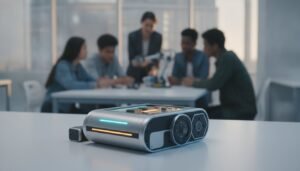
The MC4.0 Controller acts as the foundational “brain” for every project. Built specifically for the rigors of student handling, it withstands the daily wear of a busy classroom while providing the high-level performance needed for complex tasks. It supports essential connectivity standards like Bluetooth, Wi-Fi, and IoT protocols. These features allow students to build systems that communicate across networks, mimicking the industrial automation found in modern smart cities. The MC4.0 Controller serves as a bridge between abstract code and physical action. By aligning with U.S. Department of Education STEM initiatives, this technology ensures your school meets the highest standards for technical literacy and future-readiness.
Modular Sensors and Actuators
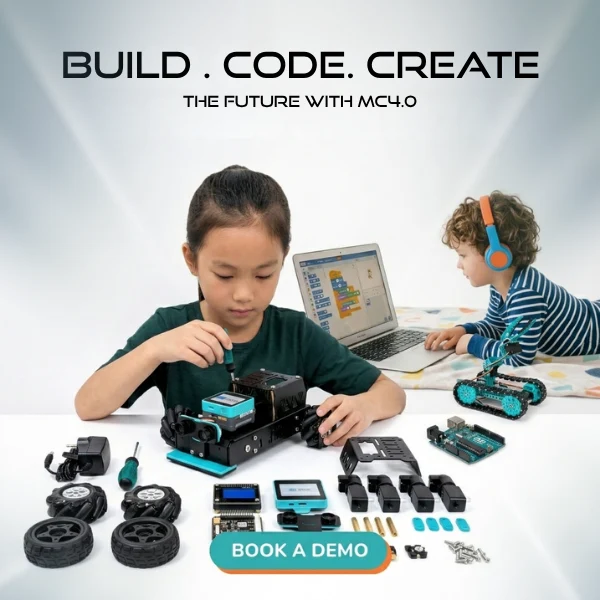
Real-world automation relies on sensors that perceive the environment and actuators that change it. Our MC Blocks use “snap-and-play” logic to make these high-level concepts immediately accessible. Younger learners begin with simple logic gates and tactile responses. As they progress, they transition to advanced technical kits like the MC4.0 AIoT Kit for sophisticated data analysis and remote monitoring. This modularity encourages creative exploration. Students don’t just follow a script; they iterate. They move from basic light-sensing circuits to complex, internet-connected environmental monitors that solve local community problems.
Software must grow alongside the student. A professional technical ecosystem supports both intuitive block-based coding for beginners and Python for advanced learners. This prevents the “ceiling effect” where students outgrow their tools before the end of the year. Durability and storage are equally critical for teacher peace of mind. Classroom kits need storage-ready designs that keep small components organized and visible. Missing parts shouldn’t stop a lesson. If you’re ready to build a lab that scales with your students’ ambitions, connect with our educational consultants to discuss a tailored hardware plan.
Classroom Management for Hands-on Learning
The primary barrier to adopting hands-on STEM learning kits for classrooms isn’t usually the cost. It’s the chaos. Many educators worry that a high-tech lab will quickly devolve into a graveyard of missing sensors and tangled wires. This fear is understandable. However, effective classroom management transforms a potentially messy environment into a streamlined center of innovation. It’s about moving from reactive cleanup to proactive systems. By establishing a clear framework for hardware handling, you ensure that your technical assets remain ready for the next period, the next semester, and the next year.
Inventory and Storage Logistics
Organization starts with visibility. Modular MC Blocks are most effective when students can find exactly what they need without digging through bins. Use color-coded labeling and transparent storage cases to make inventory checks instantaneous. Implementing a “kit captain” system empowers students to take ownership of their tools. These student leaders handle the final check of each kit at the end of a session, ensuring that all sensors are returned to their designated slots. For the MC4.0 Controllers, establish a centralized charging station. A simple visual cue, such as a green LED status, confirms the hardware is ready for the next class. You can find organized, classroom-ready hardware sets at the Maker & Coder shop.
The Role of Professional Teacher Training
Hardware is only as powerful as the person guiding the lesson. Even the most advanced hands-on STEM learning kits for classrooms fail if the teacher feels overwhelmed by technical friction. Confidence doesn’t come from knowing every answer. It comes from having a reliable troubleshooting framework. Maker & Coder prioritizes professional teacher training programs that move educators from hesitant observers to confident facilitators. This training aligns with broader U.S. Department of Education STEM initiatives, which emphasize the need for robust educator support to improve student outcomes. When teachers feel supported, they can focus on the joy of discovery rather than the fear of a system crash.
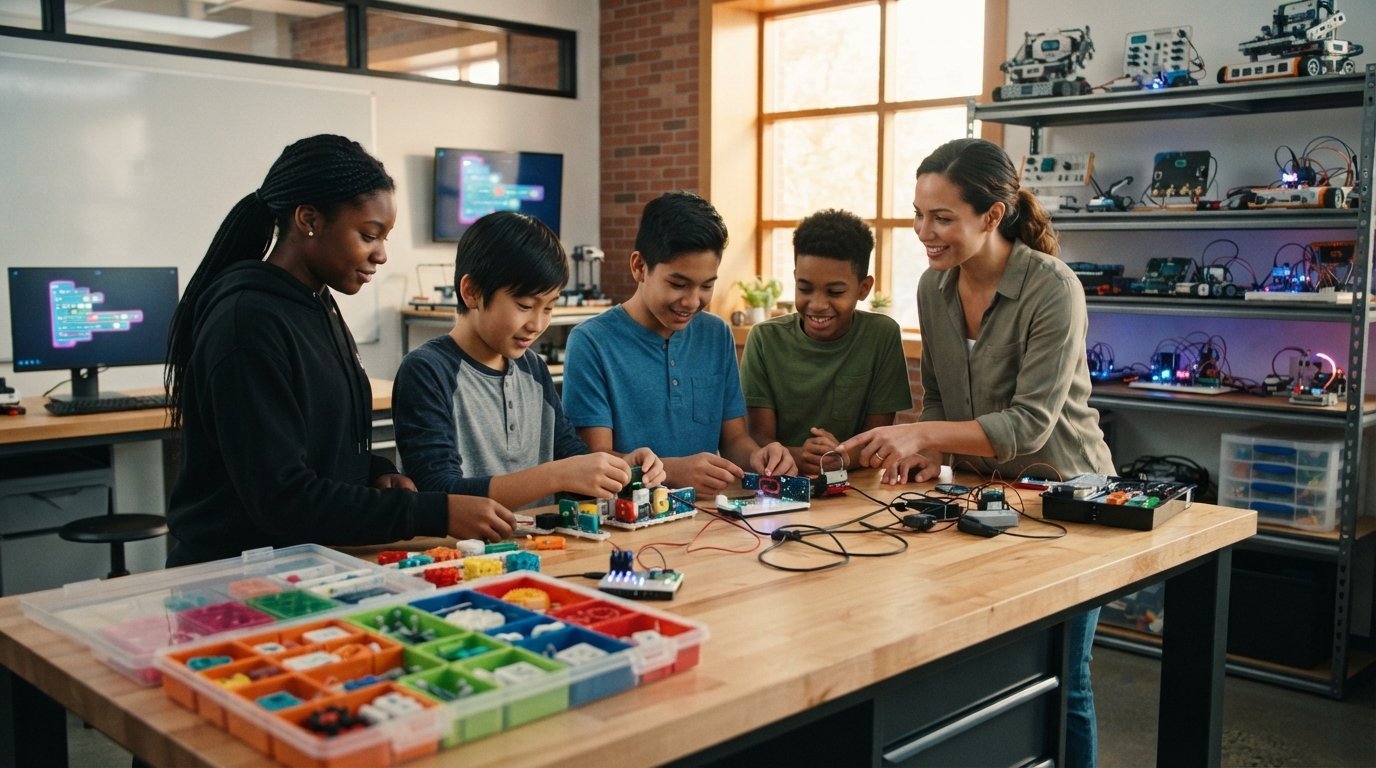
Engagement levels often correlate with the student-to-kit ratio. While one-to-one access is ideal for solo coding, a two-to-one ratio often sparks better collaborative problem-solving. It encourages “driver and navigator” roles, where one student focuses on physical assembly while the other manages the code logic. This structure mirrors professional engineering environments and reduces the management load on the instructor. By balancing modular hardware with structured group roles, you create a lab that is both high-energy and highly disciplined. This transition from basic logic to advanced coordination is where true technical literacy begins to take root.
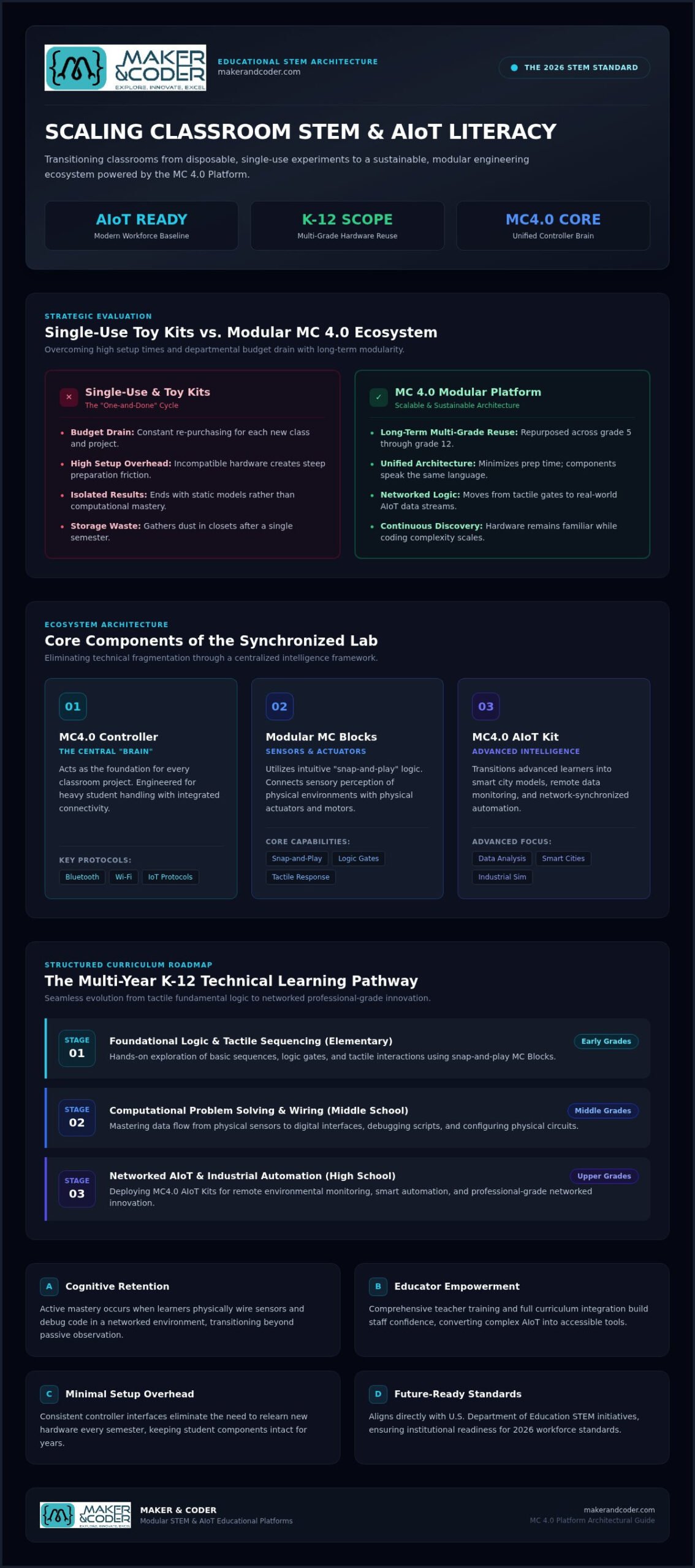
Step-by-Step: How to Integrate STEM Kits into Your K-12 Curriculum
Integrating technology requires more than just unboxing hardware. It demands a roadmap that respects the developmental stages of a learner. Effective hands-on STEM learning kits for classrooms shouldn’t be isolated to a single grade level. Instead, they should function as a cohesive thread that runs through the entire K-12 experience. This progressive approach ensures that students build upon prior knowledge, moving from simple physical interactions to complex, data-driven systems. By mapping out a multi-year strategy, you transform a series of one-off lessons into a comprehensive journey toward technical mastery.
Phase 1: Foundation (Grades K-5)
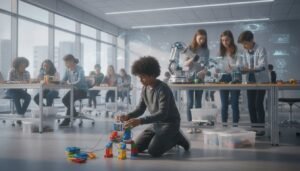
Primary education is the time for tactile discovery. In these early years, the focus remains on cause-and-effect relationships and foundational logic. Using the MC4.0 Base Kit, students explore how a single input leads to a visible output. They don’t just learn about circuits; they build them. This stage integrates seamlessly into core subjects. For example, a math lesson on measurements becomes an engineering challenge when students calculate the distance a programmed car travels. Tactile engagement at this level builds the spatial reasoning necessary for future success. Explore our K-12 MC Curriculum to see how foundational concepts are mapped across these early levels.
Phase 2: Technical Proficiency (Grades 6-8)
Middle school serves as the bridge to technical proficiency. As students mature, their tools must evolve to meet their growing curiosity. Here, learners move beyond simple sequences to variable-based logic and environmental sensing. The MC4.0 STEAM Kit allows classes to tackle community-based engineering problems, such as designing smart irrigation systems for a school garden. This phase is critical for preparing students for the transition from visual block-based coding to text-based languages. They begin to see the MC 4.0 platform not as a set of toys, but as professional instruments for solving real-world challenges. This shift from “building models” to “coding solutions” is where true computational thinking takes root.
Phase 3: Advanced Innovation (Grades 9-12)
High school years represent the peak of classroom innovation. Students at this level are ready for full Python integration and complex robotics. By leveraging the MC4.0 AIoT Kit, learners can build AI models that predict patterns or automate sophisticated systems. They move from basic logic to professional-grade data collection. This capstone experience prepares them for university-level engineering and the demands of a high-tech workforce. You’re creating more than just students; you’re developing future-ready innovators. If you’re ready to design a long-term strategy for your district, schedule a consultation for your school’s STEM pathway to ensure your lab stays at the cutting edge of educational technology.
Scaling Technical Literacy with the Maker & Coder MC 4.0 Platform
The MC 4.0 platform isn’t just a hardware purchase. It is a commitment to a unified educational vision. By choosing the MC 4.0 platform, schools move beyond fragmented lessons and embrace a scalable ecosystem that evolves with their students. The synergy between the MC4.0 Controller and our specialized kits, including the Base, AIoT, and STEAM collections, ensures that technical literacy is a continuous journey rather than a series of isolated experiments. You’ve seen how these tools manage the transition from block-based coding to Python. Now, it’s time to consider the long-term sustainability of your STEM program.
Teacher Training Programs are the secret to this longevity. Without confident educators, even the most advanced hands-on STEM learning kits for classrooms remain underutilized. Our training ensures that every instructor feels like an expert-as-enabler, capable of guiding students through complex logic and troubleshooting with ease. This professional support turns a technical lab into a thriving community of practice. It provides the peace of mind that your investment will yield results for years to come.
A Future-Proof Investment
Modularity is the key to staying relevant in an ever-changing technical environment. As technology shifts, MC Blocks can be repurposed for new challenges, preventing your hardware from becoming obsolete after a single semester. This scalability works for single classrooms or entire districts, providing a consistent experience across all grade levels. The MC4.0 platform is the definitive bridge to 21st-century technical mastery. It offers a clear, structured pathway from the tactile beginnings of the Base Kit to the sophisticated data modeling and automation of the AIoT Kit.
Ready to Transform Your Classroom?
Envision a classroom where every student is a confident creator, building systems that solve real problems. For the 2026 school year, the first step is auditing your current hardware and identifying the gaps in your K-12 technical pathway. From there, implementing a modular system like MC 4.0 ensures you are prepared for the next generation of technical standards. We’re here to act as your dedicated educational partner, providing the tools, the curriculum, and the training necessary for success. Connect with a Maker & Coder STEM Expert today to begin your transformation.
Ignite Innovation in Your Classroom Lab
Building a future-ready STEM program requires more than just hardware; it demands a vision for long-term growth. You’ve explored how a modular ecosystem moves learners from basic logic to advanced automation. By prioritizing modular and reusable MC Blocks, you eliminate the waste of disposable projects and build a sustainable foundation. Success hinges on the synergy between a comprehensive K-12 MC Curriculum and the professional teacher training programs that empower your staff to lead with confidence. This approach ensures your technology remains a tool for expression rather than a source of frustration.
Investing in hands-on STEM learning kits for classrooms isn’t just about the tools. It’s about the transformation of your students from passive consumers into active creators. You can bridge the gap between abstract code and real-world impact using the MC 4.0 platform as your guide. It’s time to transition from isolated experiments to a scalable pathway of discovery. Your students are ready to build the future, and we’re here to provide the bridge.
Take the first step toward a technical legacy. Request a STEM Classroom Consultation to begin designing your custom laboratory environment. We’re ready to partner with you in shaping the innovators of 2026 and beyond.
Frequently Asked Questions
What age groups are Maker & Coder STEM kits designed for?
Maker & Coder provides a complete K-12 educational pathway. Our hands-on STEM learning kits for classrooms are tailored to specific developmental stages. The MC4.0 Base Kit introduces foundational logic to primary students in grades K-5. Middle schoolers in grades 6-8 utilize the MC4.0 STEAM Kit for community-based engineering. High school students in grades 9-12 engage with the MC4.0 AIoT Kit for advanced data modeling and AI applications. This ensures technical literacy grows alongside the student’s cognitive development.
Do teachers need prior coding experience to use the MC 4.0 platform?
No prior coding experience is required to successfully implement the MC 4.0 platform. We’ve designed our ecosystem to act as an “expert-as-enabler” for educators of all backgrounds. Our professional Teacher Training Programs provide the necessary troubleshooting frameworks and lesson plans to build your confidence. You’ll learn to guide students from basic block-based sequences to text-based Python. This support system ensures that technical hurdles don’t distract from the joy of discovery in your classroom.
How do modular MC Blocks differ from traditional building kits?
Unlike traditional building kits that often focus on single-use projects, MC Blocks are modular and fully reusable across multiple semesters. These components are standardized to snap together, allowing students to focus on logic rather than tedious assembly. Each block represents a specific sensor or actuator, mimicking real-world industrial components. This modularity reduces classroom waste and increases your ROI. It allows the same hardware to serve a fifth-grade science lesson and a tenth-grade robotics project.
Can the MC4.0 Controller be used with Python and block-based coding?
Yes, the MC4.0 Controller is specifically engineered to support both block-based coding and Python. This versatility makes it the definitive bridge between abstract concepts and physical action. Beginners start with intuitive visual blocks to grasp basic logic and sequences. As they gain proficiency, they transition to text-based Python for more complex automation and data analysis. This prevents the “ceiling effect” where students outgrow their tools, ensuring the hardware remains relevant throughout their entire K-12 journey.
What kind of support is provided in the Teacher Training Programs?
Our Teacher Training Programs offer comprehensive support to ensure long-term program sustainability. We focus on effective classroom management, inventory logistics, and technical troubleshooting. Educators receive hands-on instruction on integrating the K-12 MC Curriculum into their existing lesson plans. Beyond initial training, we help build a community of practice among STEM educators. This professional development turns a daunting technical challenge into an accessible tool for creative expression, giving you peace of mind during every lesson.
Are the kits aligned with NGSS and other educational standards?
Yes, our hands-on STEM learning kits for classrooms are meticulously aligned with current NGSS and international educational standards. We’ve verified these kits against 2026 technical literacy requirements to ensure your students meet high-level academic benchmarks. The curriculum focuses on integrated engineering pathways and computational thinking rather than isolated experiments. This alignment provides administrators with the data and confidence needed to justify STEM investments. It ensures every project contributes directly to student readiness for a high-tech workforce.
How many students can share a single MC 4.0 Kit in a classroom setting?
We recommend a two-to-one student-to-kit ratio for maximum engagement and collaborative learning. This structure allows for a “driver and navigator” dynamic where one student manages the physical MC Blocks while the other oversees the code logic. This mirrors professional engineering environments and encourages peer-to-peer problem solving. While the MC4.0 Controller is durable enough for larger groups, keeping the ratio small ensures every learner gets significant hands-on time. It balances classroom management with individual technical discovery.
What is included in the MC4.0 AIoT Kit specifically?
The MC4.0 AIoT Kit includes the MC4.0 Controller along with a specialized selection of modular MC Blocks designed for high-level technical literacy. It features sensors for environmental data collection and actuators for remote automation. This kit is specifically built to teach Artificial Intelligence of Things concepts, allowing students to build AI models and connected systems. It integrates seamlessly with our advanced curriculum, providing high schoolers with the professional-grade tools needed for capstone engineering projects and real-world data analysis.