
What if your summer break didn’t just recharge your batteries, but completely redesigned your classroom’s DNA for the 2026 school year? You’ve likely experienced the frustration of theoretical workshops that look impressive on a slide deck but feel impossible to implement when twenty students are staring at a box of wires. You want to move beyond the mentoring phase and into a state of total enablement, where you act as a confident pioneer of technology rather than a cautious observer.
Finding high-quality summer professional development for educators STEM shouldn’t feel like a gamble between abstract concepts and practical reality. You deserve a path that transforms your teaching practice through high-impact learning that bridges the gap between theory and hands-on robotics. By the end of this guide, you’ll gain the confidence to master the MC 4.0 Controller, troubleshoot complex hardware with ease, and align your summer learning with strict K-12 curriculum standards.
We’re diving into actionable lesson plans designed for 2026, modular prototyping with MC Blocks; and the specific certifications you need to fuel your professional growth. It’s time to turn your curiosity into a concrete plan for a future-ready classroom.
Key Takeaways
- Identify the critical transition from basic programming to integrated AIoT and robotics to meet 2026 educational standards.
- Evaluate the most effective summer professional development for STEM educators to ensure your training doesn’t just stay in the workshop but translates into classroom success.
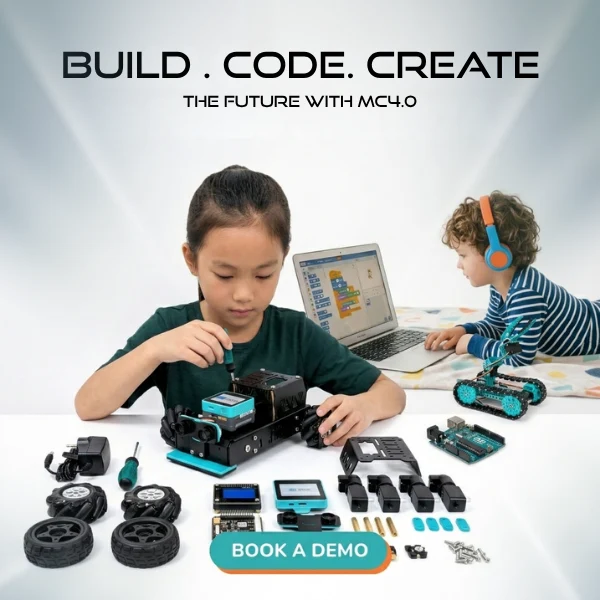
- Learn how to marry sophisticated hardware like the MC 4.0 Kit with a structured K-12 MC Curriculum for a seamless student experience.
- Develop a concrete roadmap for 2026 by auditing your school’s hardware inventory and identifying key funding sources for new technology.
- Build lasting confidence in troubleshooting robotics using the MC4.0 Controller through immersive, builder-focused training modules.
Navigating the 2026 Landscape of Summer STEM Professional Development
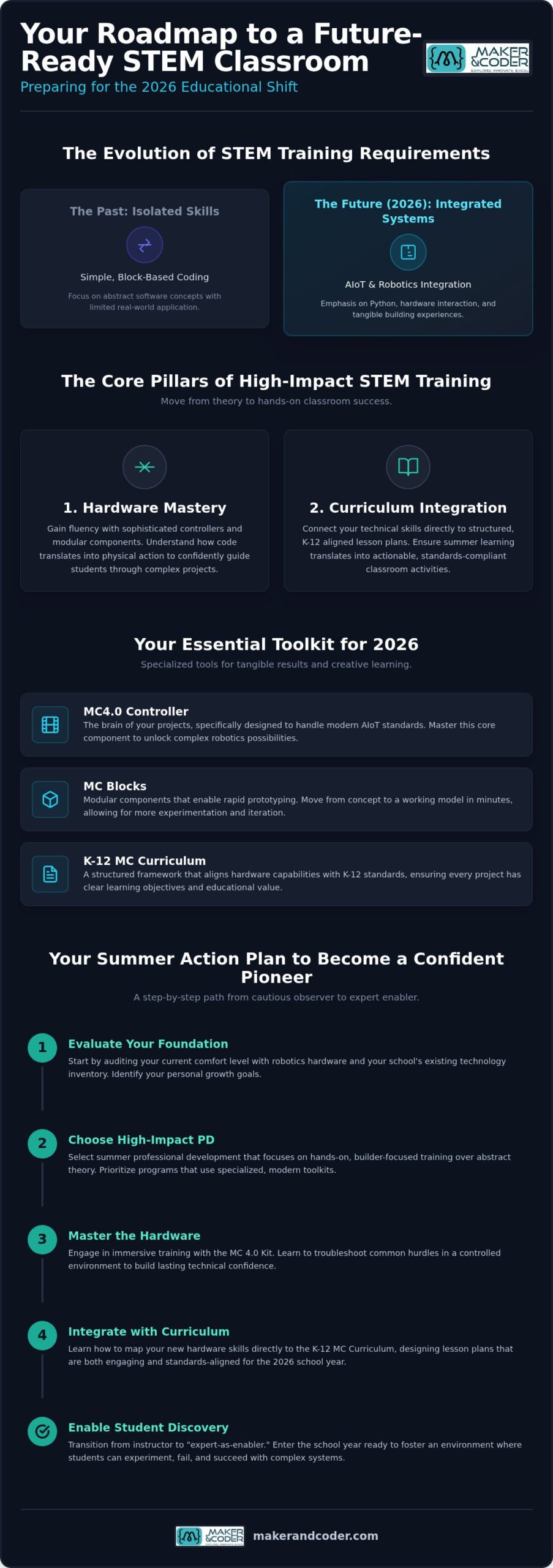
The year 2026 marks a pivotal shift in how we approach technical literacy. We’ve moved past the era where simple block-based coding was enough to prepare students for the future. Today, the focus is on integrated systems. The classroom is no longer a place for isolated digital skills; it’s a laboratory for AI and robotics. Engaging in summer professional development for educators STEM provides the necessary space to master these complexities without the daily pressure of lesson delivery or administrative tasks. It’s about building a foundation of confidence that lasts the entire school year.
Summer offers the quiet focus required for deep-dive technical mastery. It’s the optimal window to move from being a facilitator to becoming a true expert. Districts are increasingly seeking educators who can bridge the gap between abstract software concepts and physical hardware. When you understand how a line of code translates into the physical movement of an MC4.0 Controller, you change the trajectory of your students’ K-12 experience. This technical fluency doesn’t just improve your resume; it directly impacts student outcomes by fostering a classroom environment where students feel safe to experiment, fail, and eventually succeed with complex systems.
The Evolution of STEM Training Requirements
Standardized requirements for 2026 now emphasize Python and AIoT integration. It’s not just about what happens on the screen. It’s about the “tangible building” experience. Students need to see how sensors interact with the real world in real-time. Meeting these standards requires moving beyond generic workshops toward technical PD that focuses on sophisticated ecosystems. The K-12 MC Curriculum is built for this transition, ensuring that every lesson plan aligns with modern expectations for cognitive development, innovation, and future-readiness.
Identifying Your Personal Growth Path
Start by evaluating your current comfort level with robotics hardware. Are you ready to move into advanced prototyping with MC Blocks? Set measurable goals for your summer. You might aim to master specific troubleshooting techniques or earn a certification in AIoT systems. Choosing specialized tools like the MC 4.0 Kit over general STEM overviews ensures you walk away with actionable skills. You can explore these specialized tools at the Maker & Coder shop to see which ecosystem fits your classroom’s 2026 vision. Focused training leads to tangible results. It turns a daunting challenge into a creative outlet for both you and your learners.
The Core Pillars of Effective STEM Teacher Training
Effective training rests on more than just “knowing how to code.” It requires a deep understanding of how hardware and software communicate. High-impact summer professional development for educators STEM must prioritize this synergy. Using tools like the MC 4.0 Kit, teachers learn to see technology as a medium for creative expression. This shift in perspective is vital. You move from being the “sage on the stage” to an “expert-as-enabler.” This means you don’t just provide answers; you provide the environment where discovery happens. It’s about empowering students to solve problems you haven’t even defined yet.
Hardware Mastery: Beyond the Basics
Success in the 2026 classroom starts with hardware fluency. You need to understand the refined capabilities of the MC4.0 Controller before the first bell rings. This controller acts as the brain of your projects, specifically designed to handle the AIoT (Artificial Intelligence of Things) standards that define modern STEM education. Quality summer professional development for educators STEM should involve hands-on sessions with modular MC Blocks. These blocks allow for rapid prototyping, letting you move from a concept to a working model in minutes. By troubleshooting common technical hurdles in a controlled summer environment, you ensure that technical hiccups don’t derail your future lesson plans. You become the reliable guide your students need when things get complex.
Curriculum Integration Strategies
Hardware is only as effective as the lesson plan supporting it. Effective training maps summer workshops directly to the K-12 MC Curriculum. This alignment ensures your summer hours translate into actionable classroom minutes. Consider how these kits facilitate cross-disciplinary approaches. A robotics project isn’t just about engineering; it’s a vehicle for mathematical modeling, scientific inquiry, and even artistic design. This STEAM integration makes technical subjects accessible to a broader range of learners. You aren’t just teaching code; you’re teaching critical thinking through tangible construction. This approach scales beautifully, whether you are managing a single classroom or overseeing a district-wide rollout. If you’re ready to design a custom training path for your team, you can reach out to our educational consultants to explore tailored options. The goal is a classroom where technology feels intuitive, not intimidating, and where every student has the tools to build their own future.
Comparing Workshop Formats: From Webinars to Hands-On Bootcamps
Format matters. Your choice determines whether you walk away with a simple certificate or a completely transformed teaching practice. Selecting the right summer professional development for educators STEM depends on your specific goals for the upcoming semester. Some teachers prioritize the convenience of their home office; others thrive in the high-energy environment of a physical laboratory. Understanding these differences ensures you don’t waste your most valuable resource: your time.
Pros and Cons of Virtual STEM PD
Virtual PD offers unmatched flexibility. You can balance family commitments with career growth on your own timeline. It’s often the most cost-effective route, eliminating travel expenses and housing fees. However, remote learning demands high engagement. You cannot master robotics by simply watching a screen. Successful virtual training requires you to have the MC 4.0 Kit on your desk. You must build, code, and troubleshoot in real-time alongside the digital instructor. This format works best for self-starters who are comfortable with digital collaboration tools and have a dedicated space for experimentation.
The Impact of Hands-On Intensive Workshops
Nothing replaces the “prestige-tech” feel of a live bootcamp. Physical interaction with the MC4.0 AIoT Kit changes the learning curve entirely. In these settings, you aren’t just an observer. You’re a pioneer working in a lab-like environment. You gain immediate, tactile feedback from instructors when working with the MC4.0 Controller. Using modular MC Blocks in person allows for rapid prototyping that’s difficult to replicate in a purely digital space. This setting also fosters deep peer collaboration. You’ll network with other forward-thinking educators, sharing strategies for implementing the K-12 MC Curriculum across diverse school settings. It’s an immersive experience that builds technical confidence through shared discovery.
Hybrid models and self-paced paths offer a middle ground. You might cover the theory of AIoT online before attending a short, intensive building session. This “flipped classroom” approach for teachers allows for deep technical mastery without the burnout of a week-long commute. Whichever path you choose, ensure the program focuses on tangible outcomes. The goal is to return to your classroom as a confident enabler of innovation, ready to lead your students into the 2026 school year with high-impact skills.
Planning Your Summer: A Checklist for STEM Career Growth
Success in 2026 requires more than just attending a session; it demands a strategic approach to your professional evolution. High-impact summer professional development for educators STEM begins long before you open your first kit. By treating your summer learning as a high-level project, you ensure the skills you gain translate into immediate classroom momentum come autumn. Preparation turns a simple workshop into a career-defining milestone.
Start with a thorough audit of your school’s current hardware inventory. It’s impossible to plan effectively if you don’t know what tools are available for your students. Once you have a clear picture, secure your funding. Look beyond standard district budgets. Investigate 2026 STEM subsidies and specialized grants designed to modernize technical education. Hardware-focused programs often have limited capacity due to the physical nature of the equipment, so register early to claim your spot. Finally, set up a “Summer STEM Lab” at home. Having a dedicated space to experiment with the MC 4.0 Kit allows you to practice at your own pace, building the muscle memory needed for effortless classroom demonstrations.
Finding the Right Program for Your Grade Level
Aligning your training with your students’ cognitive development is essential for a successful rollout. If you teach primary school, focus on the MC4.0 Base Kit to master fundamental logic and early engineering concepts. Middle and High School educators should pivot toward the MC4.0 STEAM Kit or the MC4.0 AIoT Kit. These advanced platforms allow you to explore complex applications like environmental sensing and automated systems. Choosing the right entry point ensures that the K-12 MC Curriculum feels challenging yet achievable for your specific age group.
Maximizing Your Training ROI
Your summer efforts should yield long-term professional dividends. Document your learning journey. Take photos of your prototypes and save your code iterations to build a robust professional portfolio. This evidence of growth is invaluable for career advancement and certification credits. Create a concrete “PD-to-Classroom” implementation timeline that outlines how you’ll introduce new hardware like MC Blocks to your students. Plan to share your insights with colleagues in the fall; becoming a mentor within your district solidifies your status as a leader in the field. If you need help identifying which funding paths or kits are right for your specific goals, contact our educational specialists for a personalized consultation.
Transforming Classrooms with Maker & Coder Teacher Training
The journey from a summer workshop to a thriving winter classroom requires a partner who understands the intricacies of technical implementation. Maker & Coder provides a specialized ecosystem designed to bridge this gap. While others offer abstract inspiration, we focus on the practical application of the MC 4.0 Kit. This ensures your summer professional development for educators STEM isn’t a fleeting experience but a permanent upgrade to your teaching toolkit. We move you from technical uncertainty to a state of absolute confidence.
The Maker & Coder Professional Development Advantage
Our training modules center on the MC4.0 Controller, the sophisticated brain behind every project. You’ll engage in direct, hands-on sessions that teach you how to integrate MC Blocks for rapid prototyping. This isn’t generic instruction. It’s a deep dive into the MC4.0 AIoT Kit and MC4.0 STEAM Kit, focusing on the high-level technology that students will encounter in 2026. We empower you to lead by providing the visionary instruction needed to master complex engineering and AI concepts. You become the enabler of innovation, equipped with the “prestige-tech” skills that set your classroom apart. Our goal is to transfer our expertise to you, ensuring you feel as comfortable in a high-tech laboratory as you do in your primary school setting.
Beyond the hardware, you gain access to the comprehensive K-12 MC Curriculum. This structured roadmap provides the peace of mind that your summer learning aligns perfectly with classroom standards. It’s a complete system that supports your growth throughout the entire school year. We don’t just provide a kit; we provide a sustainable educational framework. From troubleshooting hardware issues to designing actionable lesson plans, our ongoing support ensures your 2026 transformation is both successful and enduring.
Get Started with Your 2026 STEM Transformation
The first step toward a future-ready classroom is selecting the right tools. You can browse the Maker & Coder shop to discover training-compatible kits that match your specific grade level and technical goals. Whether you’re looking for the MC4.0 Base Kit for fundamental logic or advanced AIoT systems, our shop provides the hardware you need to start your journey. For administrators and department heads, we also offer custom training programs tailored for your entire school district. This ensures a unified approach to STEM excellence across every grade level. Don’t wait until the summer rush to plan your evolution. Contact Maker & Coder today to secure your summer PD spot and begin your journey toward technical mastery.
Empower Your Students for the 2026 Technical Frontier
Transforming your classroom from a space of digital consumption to a hub of tangible creation starts with a single, strategic decision. We’ve explored the necessity of marrying modular hardware with a structured curriculum to meet the rigorous AIoT standards of 2026. You now have the checklist to audit your inventory and the insight to select the training format that best fits your goals. High-impact summer professional development for educators STEM acts as the definitive bridge between theoretical knowledge and the classroom confidence needed to lead.
By mastering the advanced MC4.0 Controller and utilizing modular MC Blocks, you’ll create custom learning pathways that spark genuine curiosity in every student. Every lesson you deliver aligns with the K-12 MC Curriculum, ensuring your professional growth is both measurable and sustainable. You’re no longer just a teacher; you’re an enabler of future pioneers.
Join the 2026 STEM Vanguard-Contact Us for Summer PD Details. The future of education is tangible, and it begins with your commitment to technical mastery this summer. We’re ready to support your evolution.
Frequently Asked Questions
What is the best type of summer PD for a teacher new to robotics?
Start with the MC4.0 Base Kit. It’s the ideal entry point for those new to the field. Look for summer professional development for educators STEM that prioritizes the “expert-as-enabler” model. You’ll move from basic logic to advanced applications using the MC4.0 Controller. This hands-on approach builds the confidence needed to lead a classroom. It turns daunting technology into an accessible tool for creative expression and student discovery.
How do I get my school to fund my summer STEM professional development?
Present a clear implementation plan to your administration. Highlight how the K-12 MC Curriculum aligns with 2026 educational standards. Focus on the long-term ROI of having a certified expert in AIoT and robotics on staff. Mention specific funding sources like 2026 STEM subsidies or local grants. Schools are more likely to invest when they see a direct path from summer learning to measurable student success in the fall.
Are Maker & Coder training programs aligned with CSTA or ISTE standards?
Our Teacher Training Programs and K-12 MC Curriculum are built to meet rigorous academic standards. They provide a structured educational pathway that ensures students develop critical technical competencies. While we focus on the practical utility of the MC4.0 Controller, the underlying pedagogy aligns with modern technical literacy goals. This alignment gives you peace of mind that your training translates directly into accredited classroom instruction that prepares students for the future.
Can I use the MC 4.0 Kit for both virtual and in-person training?
You absolutely can. The MC 4.0 Kit is designed for versatility across all learning environments. Its modular MC Blocks allow for rapid prototyping whether you’re in a high-tech laboratory or a home office. This flexibility is a core pillar of our summer professional development for educators STEM. It ensures you can master the hardware on your own timeline before introducing it to your students in a physical classroom setting.
What technical skills do I need before starting a Maker & Coder workshop?
No prior expertise in robotics or engineering is required. Our workshops are designed to meet you at your current comfort level. You’ll move through a journey of growth, starting with fundamental concepts and advancing to complex AIoT systems. We provide the tools, like the MC4.0 Controller, and the support needed to transfer knowledge effectively. Your primary requirement is a curiosity for discovery and a commitment to the success of the next generation.
How long do summer STEM PD programs typically last?
Program duration depends on the specific depth of technical mastery you seek. Intensive hands-on bootcamps typically run for three to five days, providing a deep dive into the MC 4.0 Kit. Alternatively, self-paced virtual modules offer the flexibility to build skills over several weeks. This variety allows you to choose a schedule that fits your summer window while ensuring you gain the technical fluency required for modern 2026 standards.
Will I receive a certification after completing Maker & Coder teacher training?
Yes, completion of our Teacher Training Programs results in professional recognition of your technical skills. This certification serves as a proof point of your ability to implement the K-12 MC Curriculum effectively. It demonstrates your mastery of the MC4.0 Controller and your status as a leader in STEM education. This credential is a valuable addition to your professional portfolio, signaling your readiness to act as a bridge between complex systems and the classroom.
Can I purchase kits like the MC4.0 STEAM Kit individually for summer practice?
Individual kits are available for educators who want to practice before the school year begins. You can purchase the MC4.0 STEAM Kit, the AIoT Kit, or the Base Kit directly from our shop. Having your own hardware allows for deep-dive experimentation with modular MC Blocks at home. This personal practice is the best way to ensure you can troubleshoot technical hurdles effortlessly when your students face them in the upcoming semester.