Traditional science labs give students valuable opportunities to observe experiments and connect theory with practice, but they cannot meet every learning need on their own. That’s why traditional science labs are not enough when students also need to apply ideas, combine disciplines, and investigate questions independently. Modern STEM learning builds on laboratory work rather than replacing it.
A familiar experiment can make a concept visible. But when the outcome is predetermined and lab sessions are occasional, learners may have fewer chances to test their own ideas, connect science with mathematics, or use knowledge to address practical problems. The answer is not to discard traditional labs, but to extend what students can do with them.
In this article, you’ll see where conventional labs can fall short, how inquiry-based and hands-on STEM approaches support real-world problem-solving and student confidence, and what distinguishes an evolution of lab learning from a replacement. From guided observation to designing, building, and refining solutions, the goal is a clearer path from understanding concepts to applying them.
Key Takeaways
- Look beyond whether a lab demonstrates a concept: consider how often students get to collaborate, communicate, and make decisions of their own.
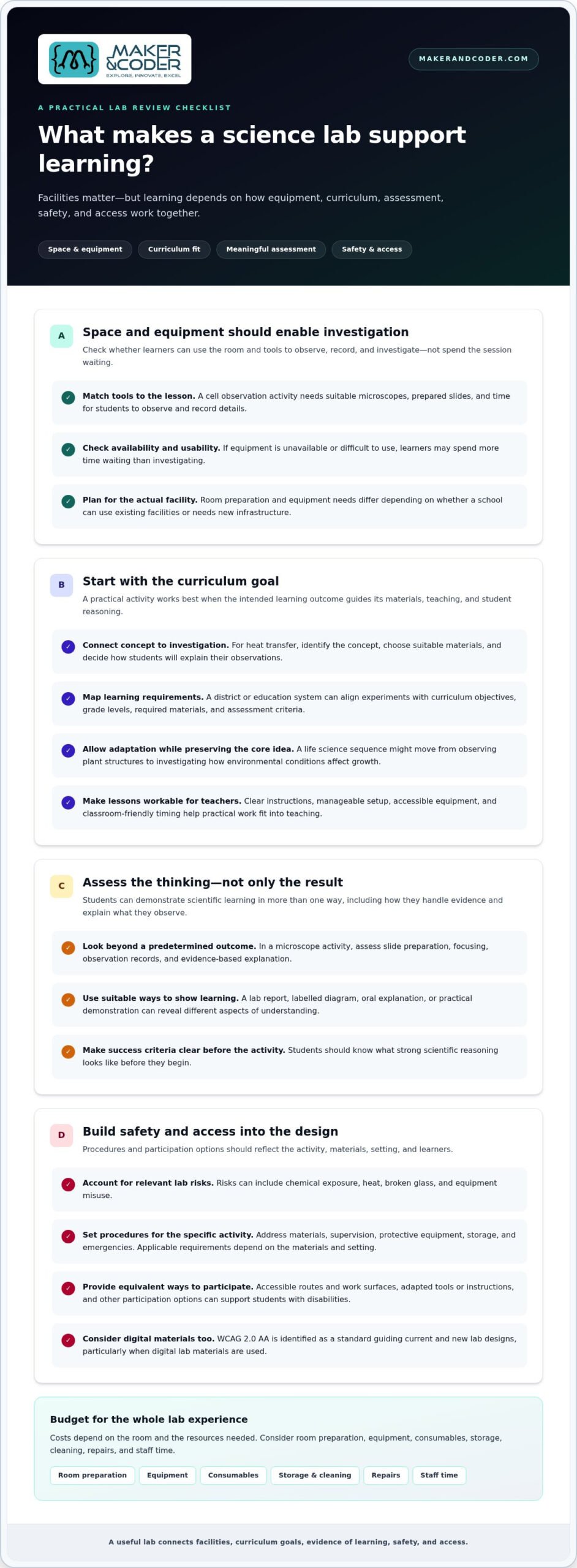
- Assess facilities and equipment by how well they align with curriculum goals, classroom teaching, and meaningful assessment.
- Use open-ended investigations to help students connect scientific ideas with practical challenges and learn through testing and refining solutions.
- Build student confidence by giving learners room to make choices, learn from setbacks, and see their ideas take shape.
- Explore how the MC 4.0 Kit, MC Blocks, and K-12 curriculum can support a more connected, hands-on STEM learning experience.
Are Traditional Science Labs Enough for Today’s Learning Needs?
Traditional science labs remain useful for observing experiments and seeing scientific principles in action. They may fall short when students mainly follow preset steps toward known outcomes. A lab can demonstrate a reaction, for example, but leave little room for learners to decide what to test, compare evidence, or explain an unexpected result. Why traditional science labs are not enough often comes down to whether students practise the broader skills that strong learning requires.
Collaboration and communication need deliberate practice, not just shared bench space. In a lab group, one student might measure, another record observations, and a third explain how the data supports or challenges the class prediction. These roles give students reasons to listen, describe evidence clearly, and agree on next steps. If each learner completes an individual worksheet, the activity may offer fewer opportunities to develop those skills or strengthen engagement.
Creative and critical thinking grow when an investigation involves choices. Instead of simply confirming that light affects plant growth, students could propose how to compare plants in different light conditions, identify what should stay constant, and interpret results that do not match their predictions. The teacher still provides structure, but students help shape the investigation. This connects observation with reasoning, rather than treating a correct result as the only measure of success.
Faculty collaboration also matters. A survey of 10 faculty members in a postsecondary virtual-lab study found that 60% had no teaching-colleague network for sharing and reflecting on virtual-lab practices; 40% reported an informal community that met from time to time. In the same survey, 70% were unfamiliar with virtual labs. These findings concern faculty and virtual labs, not every school science department, but they illustrate why shared planning and professional learning can matter when teaching methods change.
A practical response is to build collaboration into student tasks and teacher planning. Assign students roles such as experiment designer, data recorder, and evidence presenter, then rotate those roles across investigations. Teachers can use shared planning time to compare an activity’s learning goal, student questions, and assessment criteria. This makes communication visible and gives creative thinking a purpose. It also helps educators assess whether a lab develops transferable skills or mainly rehearses a procedure.
Safety and access should shape that design. U.S. school laboratory risks can include chemical exposure, heat, broken glass, and equipment misuse; procedures should address the activity, materials, supervision, protective equipment, storage, and emergencies. Applicable requirements depend on the materials and setting. Schools can accommodate students with disabilities through accessible routes and work surfaces, adapted tools or instructions, and equivalent ways to participate in the investigation. WCAG 2.0 AA is identified as a standard guiding current and new lab designs, particularly relevant when digital lab materials are used.
Facilities, equipment, curriculum alignment, and assessment
A science lab supports learning when its space, equipment, and teaching goals work together. A biology lesson on cells, for example, needs suitable microscopes, prepared slides, and time for students to observe and record details. If equipment is unavailable or difficult to use, learners may spend more time waiting than investigating. Facilities matter, but their educational value depends on how well teachers connect them to the curriculum.
Curriculum alignment starts with the intended learning outcome. When planning an investigation of heat transfer, a teacher can identify the concept, choose suitable materials, and decide how students will explain their observations. A useful lab activity develops science knowledge alongside problem-solving skills. Teacher usability matters too: clear instructions, manageable setup, accessible equipment, and lessons that fit classroom schedules help make practical work part of teaching rather than a separate event.
At national scale, schools need a framework that can support shared learning goals while allowing teachers to adapt activities to local facilities. A district or education system can map each experiment to curriculum objectives, grade levels, required materials, and assessment criteria. For example, a common life science sequence might move from observing plant structures to investigating how environmental conditions affect growth. Teachers can adjust the investigation while keeping the central concept and evidence-based reasoning in view.
Assessment should capture more than whether students reached a predetermined result. In a microscope activity, teachers can assess whether learners prepared a slide, focused the image, recorded observations, and used evidence to explain what they saw. A lab report, labelled diagram, oral explanation, or practical demonstration can reveal different aspects of learning. Clear criteria also help students understand what strong scientific reasoning looks like before they begin.
How much does it cost to build and maintain a traditional school science lab? The budget depends on room preparation, equipment, consumables, storage, cleaning, repairs, and staff time. A room that needs new infrastructure has different requirements from one that can use existing facilities and equipment.
Barriers to hands-on work include limited space, equipment shortages, setup and cleanup demands, staff capacity, and scheduling. A class with many learners sharing a small number of microscopes, for instance, may leave some students watching rather than operating the equipment. Large classes and restricted lab time can reduce each learner’s opportunities to practise, repeat observations, and discuss results. Rotating stations or small-group tasks can distribute active roles more deliberately.
Life science curricula benefit from practical experiences that connect concepts with observable evidence. Students studying ecosystems, for example, can collect observations, organize them in a table, and explain relationships in their findings. A curriculum that links each activity to prior learning and clear assessment criteria helps teachers build continuity. This creates a more coherent path from classroom concepts to hands-on investigation.
Inquiry-based experiments and real-world problem-solving
Experiments become more meaningful when students use evidence to make decisions instead of simply following a fixed procedure. Inquiry-based and digital approaches can connect classroom learning to practical challenges.
Inquiry-Based Experiments
An inquiry-based experiment lets students ask a question, plan a test, examine evidence, and revise their explanation. For example, a class investigating road runoff could compare how water moves across sand, soil, and paved surfaces. Students decide what to observe, record results, and explain which conditions affect the flow. This makes problem-solving part of learning, rather than providing the answer in advance.
Teachers can guide an investigation with a focused question and clear boundaries. Students might predict which surface absorbs the most water, then test samples using the same volume. They can compare observations, identify variables, and discuss unexpected results. The process develops scientific reasoning because learners must connect claims to evidence. It also gives experiments a purpose beyond reproducing a familiar outcome.
Technology can extend an investigation when direct observation is difficult or classroom materials are limited. Cloud-based tools can help students organize shared measurements, such as recording temperature changes during an insulation test. A virtual reality environment can provide an immersive way to explore a setting that cannot be recreated in the classroom. A 3D model can let learners examine structures, rotate them, and connect visible features with scientific concepts. These approaches support learning when they serve a specific question, not simply add screen time.
Application-Based Hands-On Learning
Application-based, hands-on learning asks students to use concepts to design, build, test, or improve something. Teams could create a small barrier that slows water flow, then test how different materials affect the result. Students apply ideas about force and material properties while learning from each trial. The task connects scientific understanding with decisions similar to those involved in real-world problem-solving.
Make each activity produce evidence students can interpret. After testing a barrier, learners can sketch its design, record what happened, and explain one change they would make. They might compare designs across groups and identify which features influenced the outcome. This cycle of making and refining strengthens the link between an idea and its application. It also lets students track how their thinking develops.
Use digital models alongside physical experiments when each adds a distinct perspective. A 3D model of a structure can help students inspect its parts before building a physical version. Cloud-based records can then capture design changes and test observations. Combining these tools with hands-on work creates connected approaches to inquiry, from visualizing a system to testing a solution with real materials.
Student motivation and self-efficacy
Traditional labs can engage students through direct observation, but motivation may fade when every learner follows identical steps toward a known answer. Across traditional learning settings, the average failure rate is 33.8%, compared with 21.8% in active learning environments. These figures compare learning settings, not laboratory formats alone. They show why hands-on work needs meaningful participation, guidance, and opportunities for students to think independently.
Autonomy can turn a prescribed activity into an opportunity for purposeful choices. In a plant-growth investigation, learners might choose which environmental condition to observe, record changes, and explain their reasoning. The teacher can set boundaries while leaving room for decisions. This balance helps students see their own contribution to the work, rather than viewing science as a sequence of instructions to copy.
Small choices matter. Ask students to predict an outcome before an experiment, choose how to organize observations, or suggest a variable to compare. During a shadow investigation, for example, learners can choose where to mark a shadow and explain how that choice supports consistent observations. These actions make engagement visible and create specific opportunities to practise reasoning, not just complete a worksheet.
Feedback also shapes confidence. After a student records an unexpected result, a teacher can ask which observation supports the explanation and what the student might test next. This treats a mismatch as evidence to examine, rather than proof of failure. When students can revise their explanations, they can practise using feedback effectively and approach another investigation with greater purpose.
Active learning comparisons offer context for this shift. Students in traditional lecture courses are 1.5 times more likely to fail than students in active learning STEM courses. Performance with active learning also increases by nearly half a standard deviation compared with traditional lecturing. These findings concern active learning and lectures, not a guaranteed result from any single lab. They support designing practical lessons where students explain, test, and apply ideas.
Teachers can strengthen motivation through a clear sequence: state the learning goal, invite a student decision, provide feedback during the task, and ask for reflection afterward. For example, students testing paper bridge designs can identify a change, observe its effect, and describe what they learned. This makes progress tangible. A student who can explain how a revision improved a design has evidence of learning, not merely a completed activity.
Self-efficacy grows through repeated experiences of manageable challenges and visible progress. A learner who struggles to interpret a result can use a labelled diagram, partner discussion, or teacher prompt before trying again independently. These supports do not remove the scientific thinking; they help students take part in it. Traditional labs can support motivation, but engagement depends on whether learners have meaningful roles, useful feedback, and room to build confidence through action.
Traditional labs compared with modern STEM labs
Traditional science labs provide structured settings for observing experiments, practising techniques, and seeing concepts in action. A class can examine a prepared slide with a microscope, then connect visible structures with a biology lesson. These experiences remain valuable. The limitation arises when students mainly verify an expected result, with little chance to choose a question, apply mathematics, or connect findings to a practical challenge.
In a conventional teacher-centred activity, the educator may demonstrate each step while students follow instructions and record results. This structure can introduce unfamiliar equipment or support careful observation. Yet a predetermined procedure may leave less room for students to compare methods or explain unexpected evidence. For example, learners measuring plant growth could record the same observations without deciding which conditions to compare or how to interpret differences.
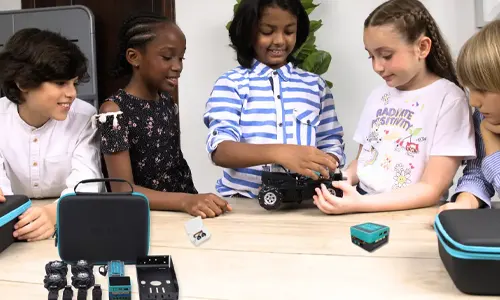
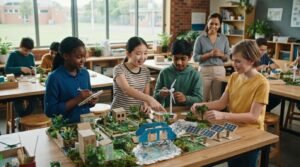
Modern STEM labs build on this foundation by integrating science, technology, engineering, and mathematics. A school project on water filtration might ask learners to examine materials, measure water flow, design a filter, and improve it after testing. Each subject contributes to the solution. Students move from understanding separate concepts to applying them together, while teachers can still provide clear learning goals and boundaries.
The distinction is not simply old equipment versus new technology. It is how the learning task is designed. A traditional setup can support active investigation if students make meaningful decisions. A technology-rich room can still feel passive if learners only watch a demonstration. Compare a fixed experiment with a design task: in the first, students follow a procedure; in the second, they explain a need, test an approach, and use evidence to refine it.
Modern approaches can also offer varied ways to engage with a concept. One student might build a model, another interpret a data display, and another explain design choices. In a lesson on energy transfer, learners could compare insulation materials, record temperature changes, and justify which design best meets the task. Different roles can make participation more accessible, while shared evidence keeps the group focused on the same scientific question.
For school leaders, the useful comparison is whether a lab supports both foundational practice and applied problem-solving. Consider whether learners can observe, measure, explain, and create, rather than only complete a worksheet. A strong STEM environment does not discard the microscope, beaker, or controlled experiment. It connects these tools to design, reasoning, and real-world contexts, helping students transfer concepts to new situations.
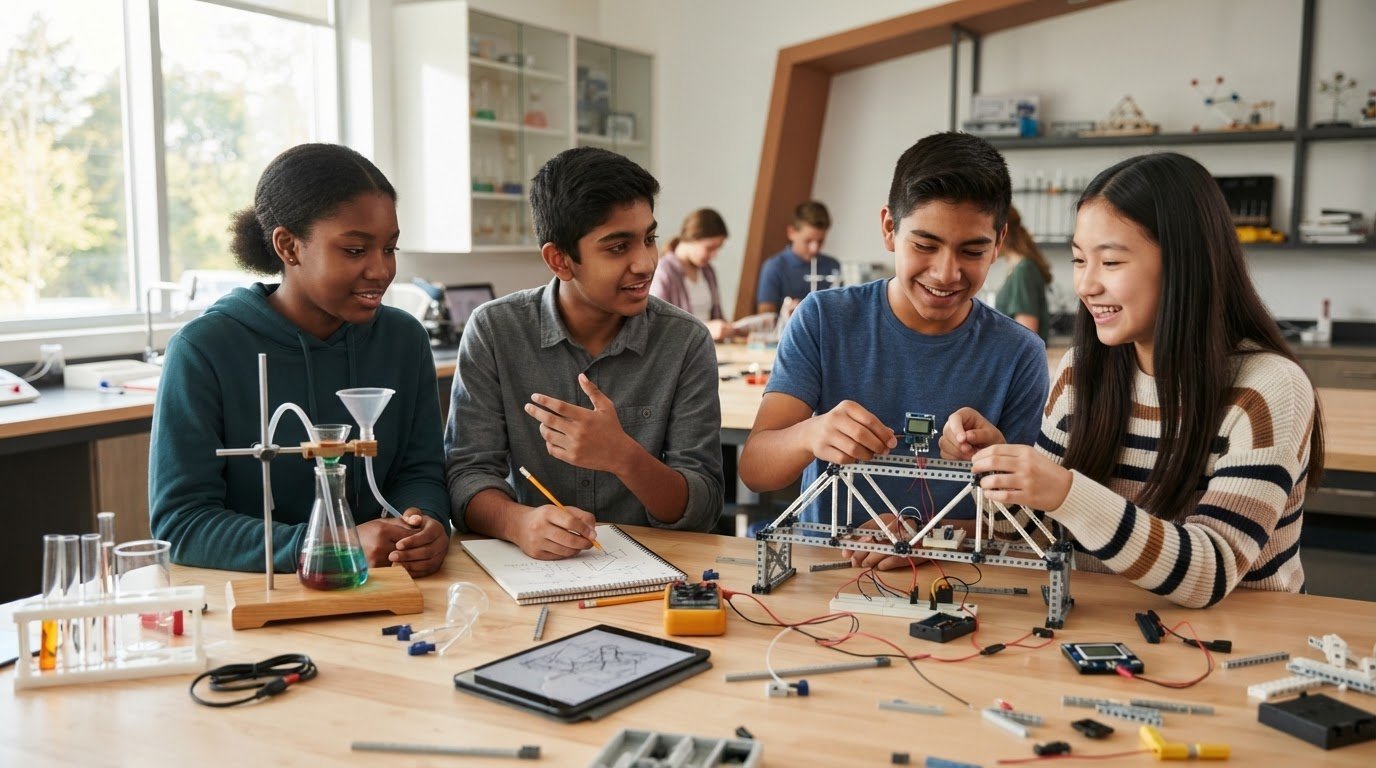
The takeaway is practical: preserve structured experiments, then extend them with opportunities to investigate and improve solutions. A lab becomes more relevant when students move from verifying a concept to applying it, such as using measurement and knowledge of materials to design a stronger bridge.
Maker & Coder: MC 4.0 Kit
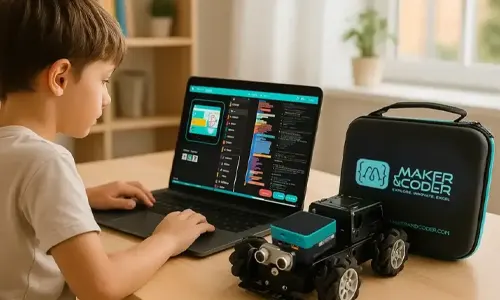
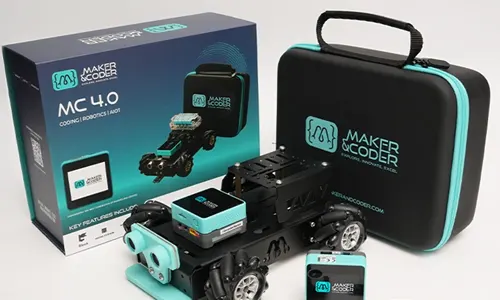
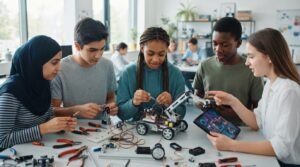
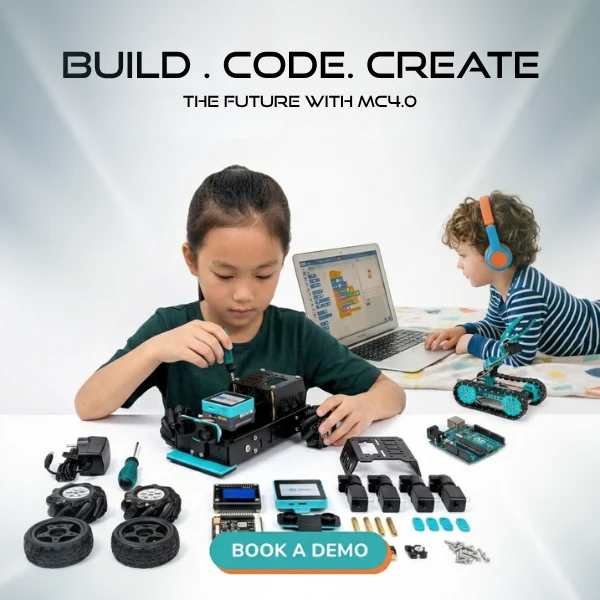
Maker & Coder’s MC 4.0 Kit offers a practical next step for educators seeking hands-on STEM learning beyond traditional lab activities. Centered on the MC 4.0 hardware platform and modular MC Blocks, it can support learning that moves from exploring concepts to building and testing ideas.
The MC Curriculum (K-12) integrates with the hardware to provide a structured learning pathway, while Teacher Training Programs support educators developing their approach. Consider this option when you want to connect curriculum goals with practical STEM activities and give students opportunities to work with tangible materials.
Contact Maker & Coder to explore how the MC 4.0 Kit may fit your learning goals.
Turn Curiosity Into the Next Learning Opportunity
Understanding why traditional science labs are not enough can help educators shape the next stage of learning around what students should be able to do. The opportunity is to make practical exploration an ongoing part of education, not an occasional activity. Begin with a curriculum goal, then consider how students could investigate it, develop an idea, and reflect on what their results reveal.
For educators ready to extend classroom STEM experiences, Maker & Coder offers the MC 4.0 Kit, MC Curriculum (K-12), and MC Blocks. These offerings can support a structured path from curriculum concepts toward hands-on exploration. Choose an approach that fits your learning goals and gives students meaningful opportunities to take part.
Contact Maker & Coder to discuss bringing more hands-on STEM learning into your educational setting. A thoughtful next step can help turn student curiosity into the confidence to explore, create, and keep learning.
Frequently Asked Questions
What are the limitations of traditional science labs in schools?
Traditional labs can limit how often students repeat an investigation, especially when equipment, consumables, or scheduled room access are limited. A class studying reaction rates, for example, may have time for one trial rather than comparing several conditions. That can narrow the evidence learners examine. Teachers can extend the activity by analysing additional datasets, helping students compare results without relying solely on another full laboratory session.
How do traditional labs compare with virtual and remote science labs?
Traditional labs put learners in direct contact with physical materials and instruments. Virtual labs represent experiments in a digital environment, while remote labs let learners interact online with equipment located elsewhere. For example, a virtual model can illustrate how changing a variable affects a system, while a remote setup can provide data from a physical instrument. The key distinction is whether students manipulate real apparatus, a simulation, or both.
Can virtual labs improve science learning compared with hands-on experiments?
Virtual labs can support learning goals that benefit from repeatable trials or visualizing processes that are difficult to observe directly. Hands-on experiments build familiarity with physical materials, instruments, and measurement. Neither format automatically produces stronger learning; the right choice depends on the skill being taught. A lesson on interpreting changing variables might use a simulation first, then ask students to explain how its simplified model differs from physical observations.
What alternatives or hybrid models can supplement traditional science labs?
A hybrid lesson can combine field observation, digital analysis, and a focused classroom experiment. For example, students could observe shade patterns around school grounds, organize their findings in a shared table, then test how different materials affect light transmission. They can compare classroom results with outdoor observations and identify the limits of each method. This approach adds context and data interpretation without treating digital activities as a substitute for every practical task.