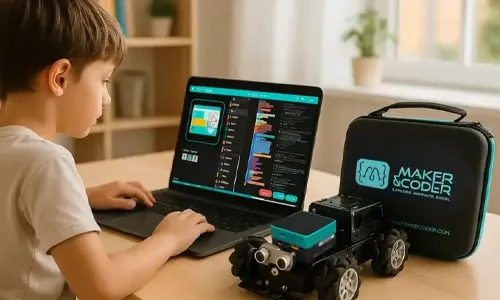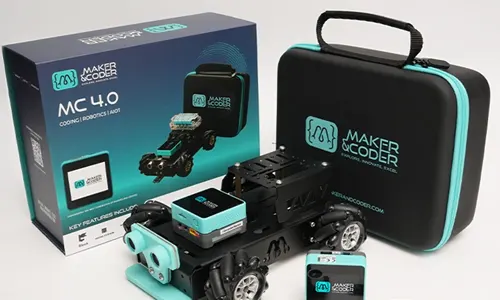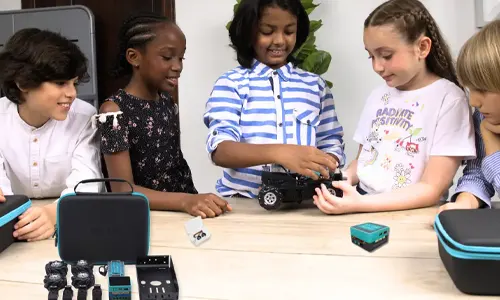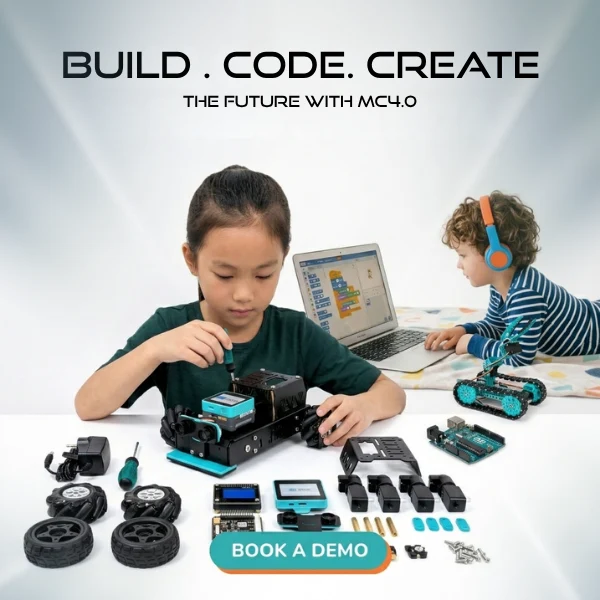

A student team hunches over an MC 4.0 Kit, locked in a debate about why their automated irrigation system isn’t responding to the moisture sensor. One student iterates on the code, another reconfigures the modular MC Blocks, and a third meticulously logs each failed attempt. As an educator, you see the brilliance in their struggle, but you face the daunting task of turning that messy, non-linear process into a quantifiable grade. You know that a final, working prototype only tells half the story of their cognitive development.
Most teachers feel the tension between fostering creative energy and meeting rigid academic requirements. It’s difficult to quantify collaboration or find the time to monitor every individual in a busy lab. This guide provides a definitive roadmap for how to assess project-based learning in STEM with precision and professional authority. You’ll learn to evaluate student growth and technical mastery without stifling the innovative spirit of your classroom. We’ll explore a comprehensive framework for 2026 that includes modular rubrics, real-time formative assessment tactics, and strategies to defend your PBL outcomes to any administrator.
Key Takeaways
- Shift from traditional snapshot testing to a cinematic view of student growth that values the iterative journey as much as the final result.
- Integrate agile methodologies like Scrum-style stand-up meetings to monitor daily progress and capture logic shifts through digital engineering journals.
- Master how to assess project-based learning in STEM by implementing a robust rubric that balances technical mastery, collaboration, and the engineering design process.
- Leverage the structured milestones of the MC Curriculum and modular MC Blocks to create objective, data-driven performance tasks for every unit.
- Access targeted Teacher Training Programs to gain the confidence and tools needed to defend PBL outcomes to parents and administrators.
The Evolution of STEM Assessment: From Rote Learning to PBL
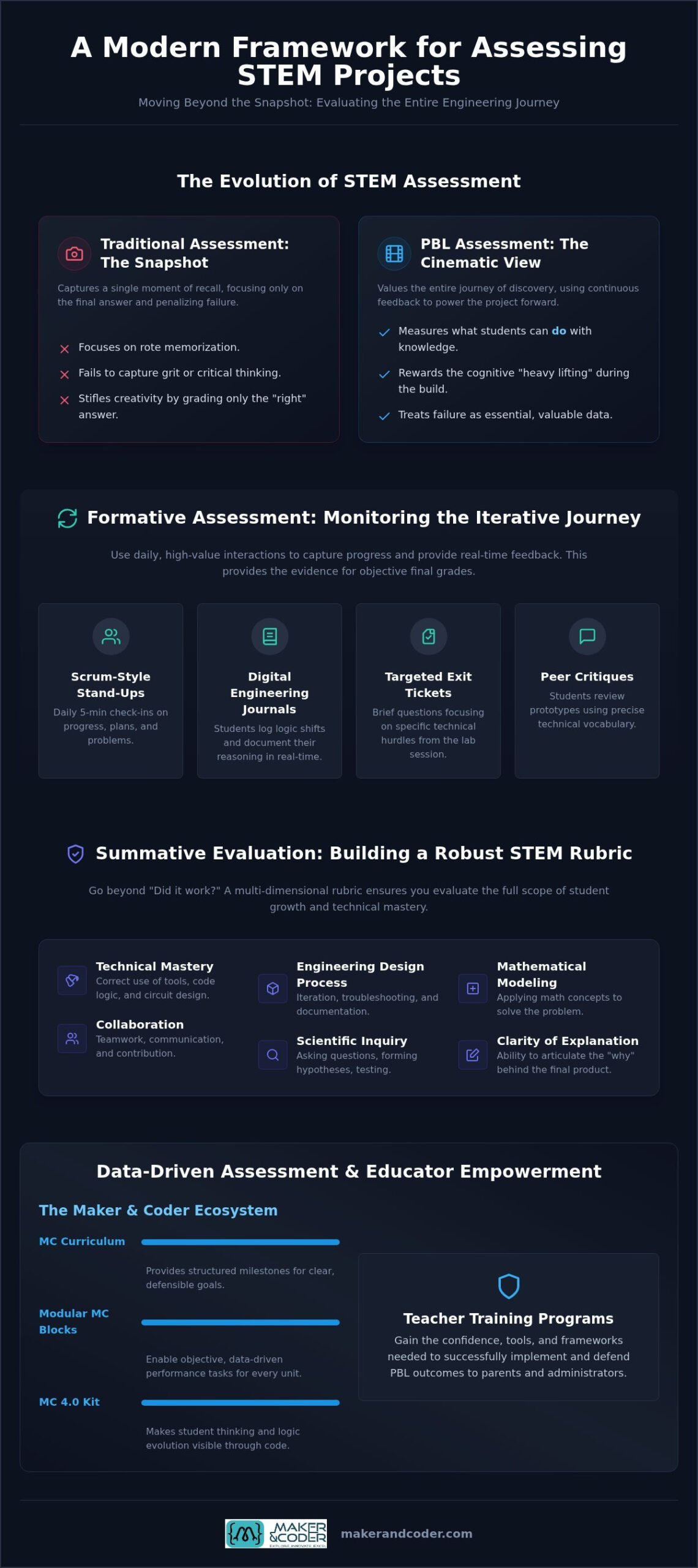
Traditional assessment is a snapshot. It captures a single moment of recall, often frozen in a multiple-choice bubble. In contrast, understanding how to assess project-based learning in STEM requires a cinematic approach. We’re looking at the entire journey of discovery, not just the final frame. Assessment becomes a continuous feedback loop that powers the project forward rather than a terminal event that shuts it down. This shift moves the focus from what a student remembers to what they can actually do with their knowledge.
Evaluation in this space must be multi-dimensional. You aren’t just checking if a circuit works; you’re measuring scientific inquiry, technical execution, mathematical modeling, and engineering logic simultaneously. One of the biggest hurdles is the “Product vs. Process” trap. It’s tempting to assign a high grade because a student built a sleek, spinning windmill. However, if they can’t explain the torque or the code behind it, the learning hasn’t truly occurred. Authentic Project-based learning rewards the cognitive heavy lifting that happens during the build, not just the aesthetic of the final object.
Why Traditional Testing Fails the STEM Classroom
Rote memorization is a relic of a different era. A student might pass a written test on electronics but feel completely lost when handed an MC 4.0 Kit for a real-world challenge. Standardized tests fail to capture the grit required for troubleshooting or the nuance of critical thinking. In a traditional grading system, failure is a penalty to be avoided. In the engineering design process, failure is essential data. When we grade only the “right” answer, we stifle the very creativity STEM projects are meant to ignite. This disconnect often leaves students unprepared for the unpredictable nature of modern technology.
Defining Success in a Project-Based Environment
Clarity starts long before the first MC Block is connected. Effective assessment begins by establishing clear learning targets and a compelling “Driving Question.” This question acts as the North Star for the entire project, ensuring every experiment has a purpose. By aligning these goals with K-12 academic standards, you ensure the work remains rigorous and defensible. Many educators find that professional Teacher Training Programs are vital for this transition. These programs provide the frameworks needed to build rubrics that capture future-readiness skills alongside core technical competencies, giving teachers peace of mind and students a clear path to mastery.
Formative Assessment: Monitoring the Iterative Journey
Daily progress monitoring is the heart of a successful STEM lab. To keep the momentum high without drowning in paperwork, implement “Scrum” style stand-up meetings. Spend the first five minutes of class having student teams report three things: what they finished, what they’re doing today, and where they’re stuck. This agile approach gives you an immediate pulse on the room. It transforms the teacher into a high-level project manager, allowing you to spot blockers before they derail a week of work.
Capturing the “why” behind a student’s decision is often more valuable than the “what.” Digital engineering journals allow students to log logic shifts in real-time. When a team changes a sensor’s threshold or reconfigures a circuit, they should document the reasoning. This practice is the core of Formative & Summative Assessments; the former provides the evidence trail that makes the latter objective. Use Exit Tickets at the end of lab sessions to focus on specific technical hurdles. Ask questions like, “How did you solve the signal interference in your MC4.0 STEAM Kit?”
Peer critiques build professional vocabulary and community. Encourage students to review each other’s prototypes using precise terms like “variable,” “actuator,” or “latency.” This shifts the classroom dynamic, making students responsible for the collective growth of the group. Mastering how to assess project-based learning in STEM requires moving beyond the final grade and focusing on these daily, high-value interactions.
Real-Time Feedback Loops with STEM Hardware
Hardware makes thinking visible. When students iterate code on the MC4.0 Controller, you can literally watch their logic evolve through every upload. If a project isn’t performing as expected, look at the modular MC Blocks. These physical components make it incredibly easy to identify exactly where a student’s technical understanding breaks down. You can then provide “just-in-time” instruction to bridge the gap, ensuring students stay engaged and productive.
The Power of Self-Reflection in STEM
Celebrate the “Beautiful Failure.” Encourage students to document every time a circuit failed or a code loop crashed. These aren’t setbacks; they’re learning milestones. Shift your prompts from “What did you build?” to “Why did you choose this specific logic?” This builds the metacognitive skills essential for mastering advanced AIoT kits later in their journey. If you’re looking for ways to implement these tracking strategies in your district, feel free to reach out to our team for a consultation.
Summative Evaluation: Building a Robust STEM Rubric
A rubric is more than a grading tool; it’s a contract of excellence between you and your students. When determining how to assess project-based learning in STEM, transparency is your greatest asset. Sharing the rubric during the project launch provides a clear roadmap, transforming a daunting challenge into a series of achievable milestones. This approach ensures that students focus their energy on the high-value cognitive tasks that drive true innovation.
To build a robust framework, break your rubric into four core quadrants. This balanced structure prevents the “Product Trap” where a flashy final build masks a lack of underlying knowledge. Consider these weighted categories:
- Process and Iteration (35%): The most critical quadrant. It rewards the “Beautiful Failures” and logic shifts documented in engineering journals.
- Technical Mastery (25%): Evaluates the stability of the build and the efficiency of the code.
- Collaboration (20%): Measures how well students leveraged group strengths and resolved technical conflicts.
- Communication (20%): Assesses the final pitch and the ability to explain complex systems to a non-technical audience.
Require concrete “Evidence of Learning” to support these grades. Wiring diagrams, logic flowcharts, and annotated code snippets provide the objective data needed to justify a summative score. These artifacts prove that the student didn’t just stumble upon a working solution but engineered it with intent.
Quantifying Technical Mastery and Engineering Design
Technical evaluation must go deeper than “does it turn on?” Assess the efficiency of the code on the MC4.0 Controller and the structural integrity of the physical build. Does the student understand how their modular MC Blocks interact? Measure their ability to integrate advanced AIoT or STEAM concepts into the final solution. The highest marks should be reserved for the “Optimization” phase, where students move beyond a basic prototype to create a refined, high-performance system.
Evaluating Collaboration and Soft Skills
Soft skills are often the hardest to quantify, yet they’re vital for future-readiness. Use 360-degree peer evaluations to gain a transparent view of group dynamics. These insights help you differentiate individual grades within a team project, ensuring that every student is held accountable for their contribution. Assess communication through a final project “Pitch.” This demonstration requires students to synthesize their journey, defending their technical choices with professional authority. If you need pre-built templates to start this process, the MC Curriculum offers structured assessment blueprints designed for immediate classroom use.
Data-Driven Assessment via the Maker & Coder Ecosystem
Modern STEM education demands more than just a passing grade; it requires evidence. When you look at how to assess project-based learning in STEM, the hardware itself becomes the primary source of truth. The Maker & Coder ecosystem transforms every experiment into a data point. By leveraging the MC Curriculum, you gain access to structured milestones that act as built-in assessment checkpoints. These aren’t just hurdles; they’re opportunities for students to demonstrate technical maturity in a controlled, measurable environment.
Modular MC Blocks offer a unique advantage for targeted grading. Instead of evaluating a massive, complex project all at once, you can create specific “performance tasks” based on individual components. Can the student successfully integrate a sensor block into an existing loop? Do they understand the logic required to trigger an actuator? This granularity allows you to translate raw hardware experimentation into quantifiable academic progress reports that parents and administrators can easily understand. It moves the conversation from vague effort to the mastery of specific engineering competencies.
High-level systems thinking is best captured through the analysis of student-developed AIoT data streams. When students use the MC4.0 AIoT Kit, they aren’t just building gadgets; they’re managing information. Assessing how they interpret and act on this data provides a window into their cognitive development that no paper test could ever match. It proves they can handle the complexity of modern, interconnected systems.
Standardizing Assessment across the K-12 Pathway
Consistency is the backbone of a successful district-wide STEM program. The MC Curriculum provides a unified grading language that bridges the gap between primary and secondary education. By aligning hardware milestones with grade-level objectives, you create a seamless journey of growth. Students build a cumulative portfolio of work, moving from basic MC Blocks to advanced systems. This long-term record ensures that every achievement is documented, providing a clear map of their evolving technical prowess through their entire STEM journey.
Bridging the Gap between Classroom and Industry Standards
Authentic assessment must mirror the professional world. The MC4.0 platform is designed to reflect the architecture of real-world industrial controllers, allowing students to train on equipment that meets industry standards. Incorporating “External Reviewers,” such as local engineers or tech professionals, into the final evaluation adds a layer of professional authority. This prepares students for technical careers by requiring them to use professional registers and defend their work under scrutiny. If you’re ready to modernize your school’s evaluation framework, contact our educational consultants to discuss a custom implementation plan.
Empowering Educators: Professional Training for PBL Success
Transitioning to a project-based model often triggers a specific type of “Assessment Anxiety” in even the most seasoned educators. The shift from grading binary right-or-wrong answers to evaluating a fluid, iterative process can feel subjective and overwhelming. However, mastering how to assess project-based learning in STEM is a skill that can be developed through structured professional development. When teachers feel empowered with the right evaluative tools, they move from being overwhelmed observers to confident mentors who can pinpoint exactly where a student is excelling or struggling.
Professional Teacher Training Programs act as a vital bridge between theory and classroom reality. These programs provide the specialized training needed to design rubrics that are both rigorous and flexible. By participating in targeted training, educators ensure that grading remains consistent and fair across entire departments. This standardization is crucial for maintaining academic integrity and provides a unified front when discussing student progress with parents or school boards. It fosters a culture of continuous improvement, where teachers regularly refine their methods alongside the evolving MC 4.0 platform.
Overcoming Common Assessment Roadblocks
The most effective STEM departments don’t work in silos. Start by developing a shared rubric library that all teachers can access and adapt. This ensures that a student’s experience with assessment remains consistent as they move through different grade levels. Leverage the MC 4.0 Kit to create standardized performance tasks that serve as benchmarks for specific units. Finally, invite feedback from the students themselves. Ask them which parts of the assessment process helped them learn and which felt like “busy work.” This collaborative approach refines the process for future cohorts and gives students a sense of ownership over their own educational journey.
Architecting the Future of STEM Evaluation
Evaluation in the modern STEM classroom is no longer about checking off a finished prototype. It’s about capturing the cognitive evolution that happens between the first idea and the final iteration. By shifting your focus toward formative feedback loops and robust, quadrant-based rubrics, you ensure that every student’s growth is visible and valued. Mastering how to assess project-based learning in STEM allows you to provide a rigorous, defensible grading framework that parents and administrators can trust.
The Maker & Coder ecosystem is designed to simplify this transition. With our structured K-12 MC Curriculum and modular MC Blocks, you can track technical competencies with surgical precision. Our hardware is purpose-built for experimentation, ensuring that the evidence of learning is always tangible and data-driven. It’s time to move beyond the limitations of traditional testing and embrace a framework that mirrors the professional world.
Ready to modernize your evaluation strategy? Explore the MC 4.0 Ecosystem and Professional Training Programs to start your journey. Together, we can empower the next generation of innovators through assessment that truly reflects their potential.
Frequently Asked Questions
How do I give an individual grade for a group STEM project?
You assign individual grades by combining collective project outcomes with personal contributions captured in digital engineering journals. Peer evaluations provide transparency into group dynamics, while specific roles like Lead Coder or Hardware Architect allow you to grade unique responsibilities. This ensures every student is held accountable for their specific input. It prevents passenger behavior in a high-tech lab setting and rewards those who drive the technical logic forward.
Can PBL assessment align with standardized testing requirements?
PBL assessment aligns with standardized testing by mapping project milestones directly to state and national academic standards. When you understand how to assess project-based learning in STEM, you see that the deep troubleshooting required in a project mirrors the critical thinking tested in high-stakes exams. Projects provide the conceptual hooks that help students retain complex information, making them better prepared for traditional testing environments.
What is the most effective way to grade the ‘Engineering Design Process’?
The most effective way to grade the Engineering Design Process is to weight the iteration phase more heavily than the final build. Use a rubric that rewards students for identifying failures, documenting logic shifts, and refining their prototypes. This approach values the cognitive journey over the aesthetic of the final object. It encourages students to treat every technical setback as a vital data point rather than a penalty.
How do I assess students who have great ideas but struggle with the technical build?
You assess these students by decoupling conceptual logic from physical execution in your rubric. Use modular MC Blocks to help them visualize systems even if they struggle with fine motor assembly. Grade their systems thinking quadrant based on logic flowcharts and wiring diagrams. This allows students to demonstrate high-level engineering mastery while they continue to develop the hands-on technical skills required for advanced builds.
Should I grade the final project based on whether it ‘works’?
You should include functionality as one quadrant of the grade, but it shouldn’t be the sole metric for success. A project that works might have inefficient code, while a non-functional one might show brilliant troubleshooting. Use the MC 4.0 Kit to set clear technical benchmarks. Ensure the majority of the grade reflects the student’s ability to explain their logic and defend their specific design choices.
How often should I provide feedback during a 4-week STEM project?
Provide feedback through daily stand-up meetings and weekly milestone reviews. These frequent touchpoints prevent students from heading too far down a dead-end path without guidance. Just-in-time instruction based on real-time observations ensures that students stay engaged and productive throughout the entire cycle. This cadence builds momentum and allows for course correction before the final summative evaluation, giving students more confidence in their technical direction.
How do rubrics for primary school STEM differ from high school rubrics?
Primary school rubrics focus on exploration and basic systems thinking, using simplified vocabulary and visual checkpoints to track progress. High school rubrics demand greater technical precision, professional registers, and the integration of advanced concepts like AIoT or complex mathematical modeling. While both levels use the MC Curriculum as a blueprint, the secondary level requires students to defend their technical choices with the authority of an industry professional.