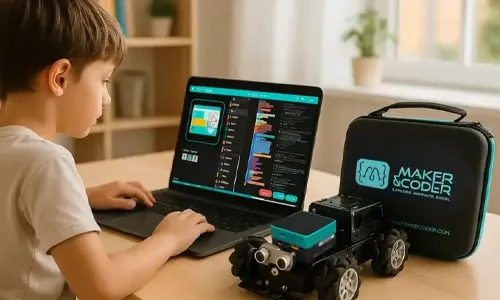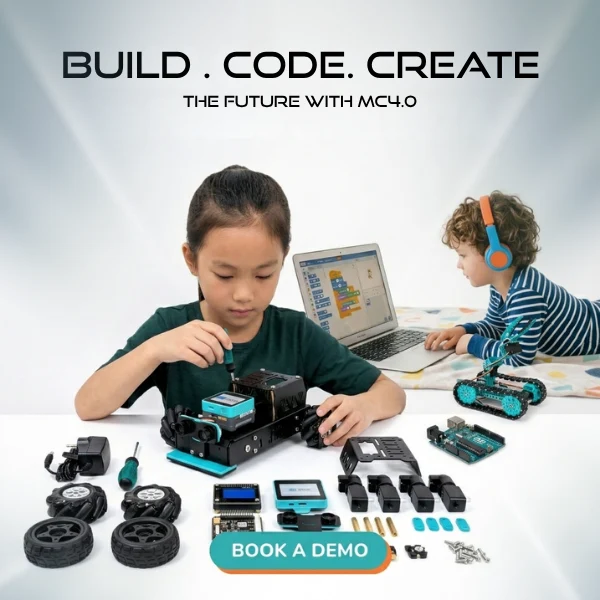

What if the key to mastering artificial intelligence isn’t found on a glowing screen, but in a student’s own hands? With the global AI in education market projected to reach 11.4 billion dollars in 2026, the shift toward physical learning is no longer optional. Developing high impact AI projects for students using kits bridges the gap between abstract algorithms and real world applications. It transforms a daunting subject into a playground for creative expression and future ready skill building.
You likely recognize that teaching AI often feels like chasing a phantom. It’s frequently too abstract for a standard classroom or too repetitive when confined to a laptop. We promise to help you transform that frustration into a sense of genuine wonder. You’ll discover how modular hardware, such as the MC 4.0 ecosystem, allows learners to build tangible, student led innovations that solve physical problems. We will explore the best modular kits for 2026, the curriculum that supports them, and the steps to build a portfolio of impressive projects that stand out at any science fair.
Key Takeaways
- Transition from abstract, screen-based coding to tangible hardware that makes complex AI concepts visible and interactive for every learner.
- Evaluate the processing requirements for edge AI and see how the MC4.0 Controller supports advanced vision processing and rapid prototyping.
- Launch five sophisticated AI projects for students using kits, ranging from smart recycling systems to autonomous delivery robots.
- Overcome common classroom barriers by integrating professional teacher training with a modular, tool-less ecosystem like MC Blocks.
- Align every hands-on innovation with recognized STEAM standards to build a student portfolio that demonstrates true future-readiness.
The Shift to Physical AI: Why Student Kits are the Key to AI Literacy
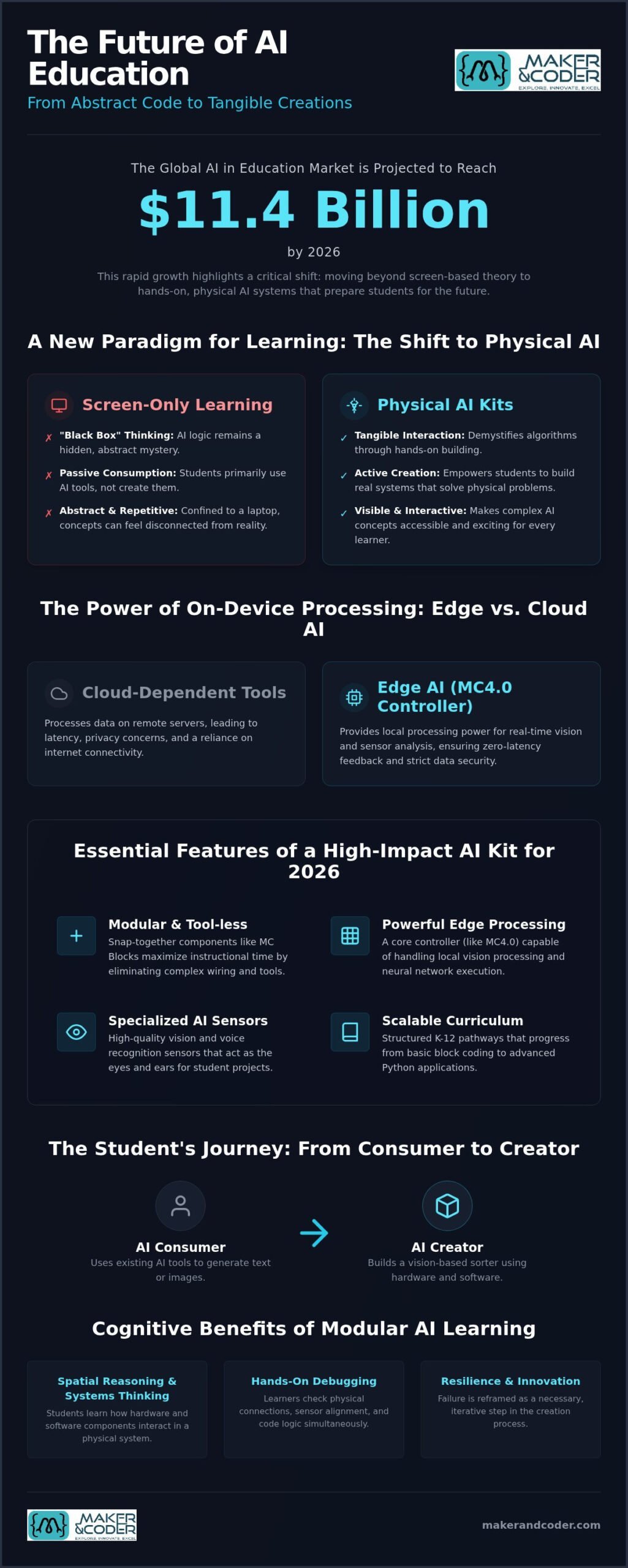
In 2026, AI literacy has moved far beyond the keyboard. Physical AI refers to the integration of machine learning algorithms with tangible hardware. Instead of just observing an output on a monitor, students interact with systems that perceive and react to the physical world. This hands-on approach is vital. Screen-only learning often leads to “black box” thinking, where the internal logic of an algorithm remains a mystery. By using Educational robotics as a foundation, learners can demystify these complex systems and understand the “why” behind the “how.”
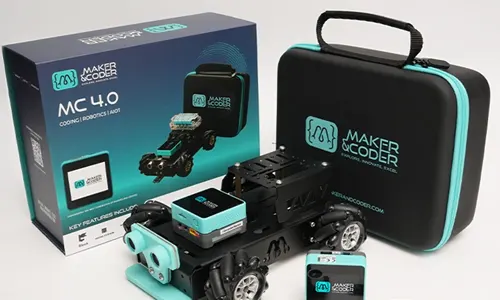
Modern AI projects for students using kits rely heavily on edge computing. The MC4.0 Controller provides the local processing power needed for real-time vision and sensor data analysis. This shift from cloud-dependent tools to edge-based IoT devices allows students to see the immediate impact of their code. It bridges the gap between abstract mathematical models and real-world results. Using these AI projects for students using kits ensures that the logic behind the machine remains transparent, accessible, and exciting for everyone in the classroom.
From Using AI to Building AI Systems
Most students are consumers of AI; they use tools to generate text or images. The goal for 2026 is to move them into the role of creators. Building a vision-based sorter using the MC 4.0 Kit requires an understanding of the hardware-software handshake. This isn’t just about coding. It’s about learning how a camera sensor communicates with a motor through a neural network. This transition from consumer-level tech to creator-level technical education is what defines a future-ready student.
Cognitive Benefits of Modular AI Learning
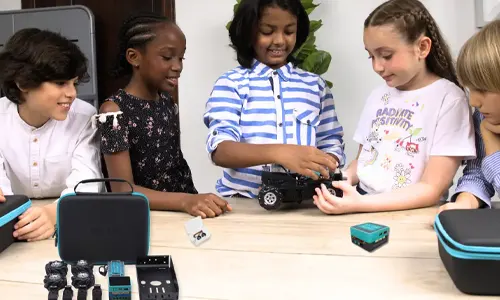
Modular systems like MC Blocks offer a “low floor, high ceiling” learning experience. It’s easy for a beginner to snap components together, yet the potential for complexity is infinite. This physical interaction builds spatial reasoning and systems thinking. When a robot fails to turn correctly, the student engages in hardware debugging. They check connections, sensor alignment, and code logic simultaneously. This iterative process builds resilience. It teaches them that failure isn’t a dead end, but a necessary step in the innovation cycle.
Evaluating AI Kits for Students: Essential Features for 2026
Choosing the right hardware determines whether a student feels like an innovator or a frustrated technician. For high-impact AI projects for students using kits, you need a system that balances raw processing power with classroom efficiency. The 2026 standard for educational technology demands more than just basic connectivity; it requires a modular ecosystem that can adapt to varying skill levels without requiring a complete hardware overhaul.
The MC4.0 Controller provides the necessary muscle for edge AI, handling vision processing and neural network execution locally. Pair this with tool-less MC Blocks to maximize instructional time. In a standard 45-minute lesson, every second spent troubleshooting loose wires or searching for tools is a second lost to genuine discovery. If you have questions about which setup fits your specific lab, you can reach out to our team for a consultation.
The Core Hardware Ecosystem
Move away from fragmented microcontrollers and embrace a centralized platform. The MC 4.0 ecosystem simplifies the hardware-software handshake by providing a stable, unified controller. Specialized sensors, including vision sensors and voice recognition MC Blocks, act as the eyes and ears of a project. These components are designed for high-frequency use, ensuring they withstand the physical demands of a busy classroom. This durability allows students to focus on the logic of their AI projects for students using kits rather than worrying about fragile parts.
Software and Curriculum Compatibility
Hardware without a roadmap leads to “one-off” project fatigue. A structured K-12 MC Curriculum provides the essential learning pathways that move students from basic block-based programming to advanced Python applications. This scalability ensures the kit grows with the learner. Additionally, local processing on the MC4.0 Controller offers a critical advantage: speed and privacy. By processing data on the device rather than the cloud, students experience zero-latency feedback while schools maintain strict data security standards. You can explore the full range of curriculum-aligned hardware in the Maker & Coder shop.
5 Top AI Projects for Students Using Modular Kits
Theory meets reality when students begin building. Moving beyond screen-based simulations, AI projects for students using kits empower learners to solve physical world problems with sophisticated technology. These projects don’t just teach code; they foster a deep understanding of how intelligence can be embedded into everyday objects. By utilizing the modularity of MC Blocks, students can prototype rapidly, shifting their focus from complex wiring to high-level system design. Whether it’s a robot that recognizes faces or a system that manages a garden, these initiatives turn learners into true innovators.
Project 1: The Vision-Based Smart Sorter
Imagine a recycling bin that knows exactly what you’re throwing away. This project uses the MC4.0 AIoT Kit to create a system capable of real-time inference. Students train a simple image classification model to distinguish between plastic, paper, and metal. The hardware setup requires an MC4.0 Controller, a Vision Sensor, and several Servo MC Blocks to physically move the sorting arm. It’s a powerful way to demonstrate how machine learning can tackle environmental challenges. By the end of the build, students understand the entire pipeline from data collection to physical execution.
Project 2: The Path-Finding Autonomous Vehicle
Navigation is a fundamental challenge in robotics. Using the MC4.0 STEAM Kit, students build a vehicle that navigates a maze without any human intervention. This project relies on sensor fusion, combining data from ultrasonic sensors and motor drivers to make split-second decisions. The primary learning objective is mastering decision-making loops. Students program the vehicle to detect obstacles and calculate new paths on the fly. It’s a high-stakes, high-reward challenge that prepares them for the complexities of modern engineering. You can find all the necessary components in the Maker & Coder shop.
Advanced AIoT and Interaction Projects
The innovation doesn’t stop with mobility. Here are three additional AI projects for students using kits that explore the intersection of AI and the Internet of Things:
- Voice-Controlled Home Automation: Build an AIoT-connected room that responds to custom voice triggers. Students learn how to integrate natural language processing with physical switches.
- AI Plant Caretaker: Use moisture and light sensors to feed data into a predictive model. The system optimizes growth conditions, teaching students about data-driven decision making.
- Emotion-Responsive Robot: Create a machine that changes its behavior based on facial expressions. This project explores the human-centric side of AI, using vision sensors to detect joy, surprise, or focus.
These projects represent the pinnacle of hands-on learning in 2026. They provide a clear journey of growth, moving from basic sensor feedback to advanced autonomous systems.
Overcoming Classroom Implementation Challenges
Hardware is only the starting line. The true success of AI projects for students using kits depends on the ecosystem surrounding the device. Many educators feel overwhelmed by the rapid pace of technological change. They worry that a lack of computer science background will hinder their ability to guide students. We address this head-on by prioritizing the human element. Implementation isn’t just about plugging in an MC4.0 Controller; it’s about building a sustainable culture of innovation.
Logistics often present a silent barrier. Managing dozens of modular components like MC Blocks requires a systematic approach to charging and storage. Successful labs treat these kits as professional equipment rather than temporary activities. Additionally, assessment remains a hurdle. How do you grade a machine learning model that fails to converge? We suggest evaluating the logic of the iterative process and the creativity of the solution rather than just the final output. This shifts the focus from a “perfect” result to the development of critical thinking.
Professional Development for Educators
Confidence is a prerequisite for effective teaching. Our Teacher Training Programs are designed to move staff from the role of a “troubleshooter” to a “facilitator.” You don’t need to be a Python expert to lead a high-level AI lab. By focusing on the underlying concepts and providing ongoing support, we help educators embrace the joy of discovery alongside their students. Accessing a community of peers and structured lesson plans ensures that no teacher feels isolated in their journey. If you’re ready to empower your staff, speak with our educational consultants today.
Curriculum Integration Strategies
Integration shouldn’t feel like an “add-on.” The K-12 MC Curriculum maps AI projects for students using kits directly to math, science, and social studies outcomes. For example, middle schools have successfully integrated the MC 4.0 platform into earth science units by building vision-based soil analyzers. This project applies machine learning to real-world environmental data, moving the classroom from basic concepts to advanced applications. This cross-disciplinary approach ensures that technical skills are always grounded in practical utility and aligned with NGSS standards.
The Maker & Coder Advantage: A Complete AIoT Ecosystem
Purchasing a standalone kit is often the first step toward a cluttered storage closet. True innovation requires more than hardware; it demands a unified ecosystem that eliminates technical friction. The MC 4.0 platform stands as the gold standard for AI projects for students using kits because it integrates high-level processing with classroom-tested durability. Instead of wrestling with incompatible third-party sensors or fragile wiring, students focus on the logic of their creations. This shift from “fixing things” to “building things” is what transforms a classroom into a laboratory for the future.
The strength of this system lies in the MC Blocks. These components are tool-less, modular, and virtually indestructible. They provide the physical scaffolding for complex ideas, allowing a primary student to build a simple sensor circuit while a high school senior develops a sophisticated neural network on the same foundation. This hardware journey evolves with the learner. It ensures that the investment made in elementary school remains relevant as the student transitions to advanced Python programming and edge AI applications. Choosing an ecosystem means choosing a partner in education, providing direct support that a generic retailer simply cannot match.
Spotlight on the MC4.0 AIoT Kit
At the heart of our most advanced offerings is the MC4.0 AIoT Kit. It features integrated Wi-Fi and Bluetooth connectivity, paired with a controller capable of high-speed local processing. This power enables students to move beyond basic automation into the realm of advanced edge AI. Imagine a remote monitoring system that uses computer vision to track local wildlife or an environmental sensor array that predicts weather patterns using local data. The potential for original research is limitless. Explore the MC4.0 AIoT Kit in our shop to see the full range of modular sensors and expansion possibilities.
Empowering the Next Generation of Innovators
We don’t just teach students how to code; we prepare them for a job market where AI is the primary driver of change. By engaging with AI projects for students using kits, learners develop the technical fluency and ethical awareness required for 21st-century leadership. Every build process includes critical discussions about data privacy, algorithmic bias, and the societal impact of automation. This holistic approach ensures that the next generation isn’t just proficient with technology but responsible for it. We are building the future, one MC Block at a time.
Building a Future-Ready Classroom
The landscape of education has fundamentally shifted toward tangible innovation. By moving beyond the limits of the screen, you empower your students to solve complex problems using physical intelligence. Developing high impact AI projects for students using kits is no longer just an elective activity; it’s a critical pathway for cognitive development and career readiness. You’ve seen how modular hardware and edge computing demystify the logic of algorithms, turning every lesson into a hands-on discovery.
Success in the modern classroom requires more than just high-performance hardware. It demands a complete support system that grows with your learners. Our comprehensive K-12 MC Curriculum ensures age-appropriate progression, while modular MC Blocks simplify classroom management. We bridge the technical gap with professional teacher training that builds lasting confidence in your staff. It’s time to transform your educational environment into a hub of student-led discovery. Equip your classroom with the MC 4.0 AIoT Kit today and inspire the next generation of pioneers.
Frequently Asked Questions
What is the best age to start using AI kits for students?
Students typically begin their journey around age seven or eight. Our K-12 MC Curriculum provides age-appropriate pathways that grow with the learner’s cognitive development. Early projects focus on foundational logic through modular assembly, while secondary students progress to sophisticated machine learning models. This structured evolution ensures that technology feels like an accessible tool for creative expression at every grade level.
Do students need to know Python before starting an AI project?
No, students don’t need prior Python experience to start AI projects for students using kits. Most learners begin with intuitive block-based programming to master the logic of AI without the frustration of syntax errors. The MC 4.0 platform is designed for scalability, allowing a seamless transition to text-based coding when the student is ready. This approach builds confidence while keeping the focus on innovation and problem-solving.
How much does a classroom set of AI kits typically cost?
Classroom investment depends on the specific hardware models and student capacity required. We recommend focusing on modular ecosystems like MC Blocks that offer high durability for frequent use. While generic components might seem cheaper initially, they often lack the curriculum support and longevity of a professional educational system. Contact our team for a detailed proposal that aligns with your school’s STEM budget and long-term goals.
Can these AI kits be used for remote or hybrid learning?
These kits are perfectly suited for hybrid or remote learning models. The tool-less design of MC Blocks allows students to assemble and disassemble projects safely at home without specialized equipment. Since the MC4.0 Controller processes data locally, students aren’t dependent on high-speed internet to execute their AI models. This autonomy ensures that hands-on learning continues uninterrupted, regardless of whether the student is in a lab or a living room.
What is the difference between a standard robotics kit and an AI kit?
The primary difference lies in how the machine perceives its environment. Standard robotics kits focus on mechanical tasks and simple if-then logic. AI kits include advanced sensors for vision and voice recognition, enabling the system to interpret complex data. While a robot might follow a line, an AI system can identify the specific object at the end of that line. It’s the difference between programmed motion and intelligent reaction.
How do I choose between the MC4.0 Base Kit and the AIoT Kit?
The MC4.0 Base Kit serves as an excellent entry point for fundamental robotics and basic automation. It’s built for durability and ease of use in introductory settings. The MC4.0 AIoT Kit is the premier choice for advanced AI projects for students using kits, adding high-speed processing and wireless connectivity. Choose the AIoT Kit if your curriculum includes edge computing, remote data logging, or internet-connected smart systems.
Is teacher training included with the purchase of Maker & Coder kits?
We provide comprehensive Teacher Training Programs to support our hardware ecosystem. These programs are essential for moving educators from a state of technical anxiety to a state of empowered facilitation. While specific bundle details vary, we always emphasize that the human element is as important as the hardware. Our training ensures that staff feel supported with lesson plans and troubleshooting strategies throughout the entire academic year.
What are the privacy implications of using AI vision sensors in a classroom?
Privacy concerns are mitigated through edge computing. Unlike consumer devices that often require cloud processing, the MC4.0 Controller handles vision and voice data locally on the hardware. No sensitive information ever leaves the classroom or is stored on external servers. This design allows students to explore the potential of computer vision while maintaining total compliance with school data protection policies and student privacy regulations.