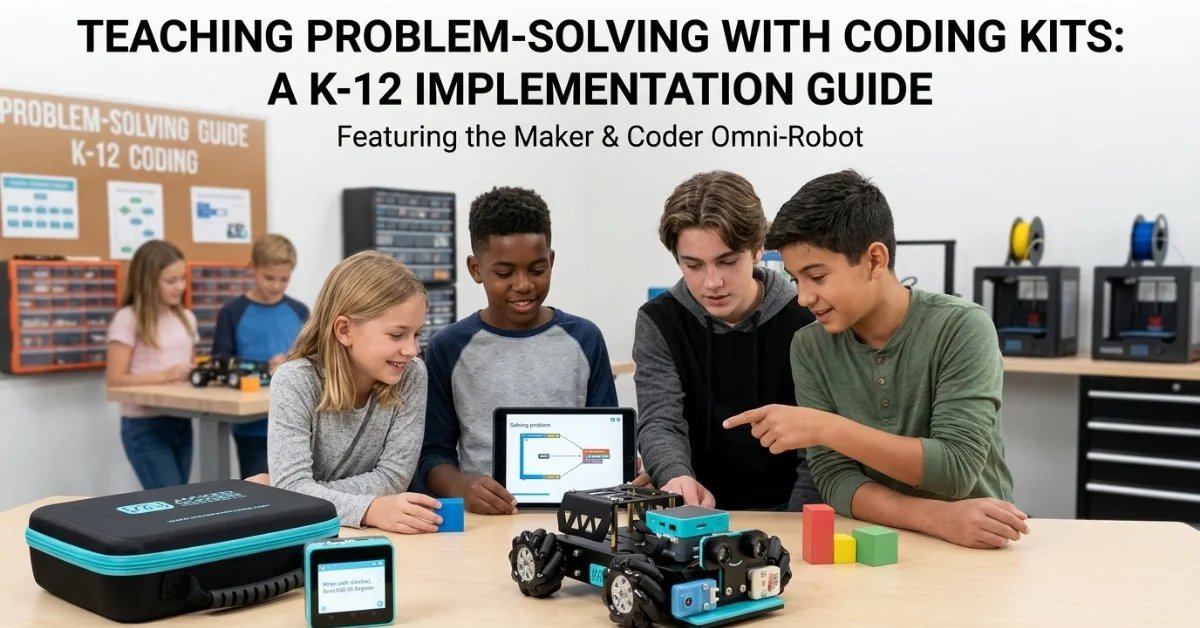
A coding kit is only a toy until you provide the roadmap that turns a plastic block into a logical breakthrough. You’ve likely seen expensive hardware gathering dust because the technical complexity felt like a wall rather than a bridge. It’s a common struggle for educators who want to inspire but feel overwhelmed by the lack of a structured path. Teaching problem-solving with coding kits should be an empowering experience for both the mentor and the student.
We are moving beyond the era of isolated gadgets. This guide shows you how modular coding ecosystems transform abstract logic into tangible problem-solving skills for students of all ages. You will find a clear framework for teaching logic and debugging, ensuring your STEM investment scales from primary to secondary school. We’ll explore how the MC Curriculum and professional-grade tools like the MC 4.0 Kit bridge the gap between curiosity and future-readiness. Prepare to lead your students through technical hurdles with the confidence of a seasoned innovator.
Key Takeaways
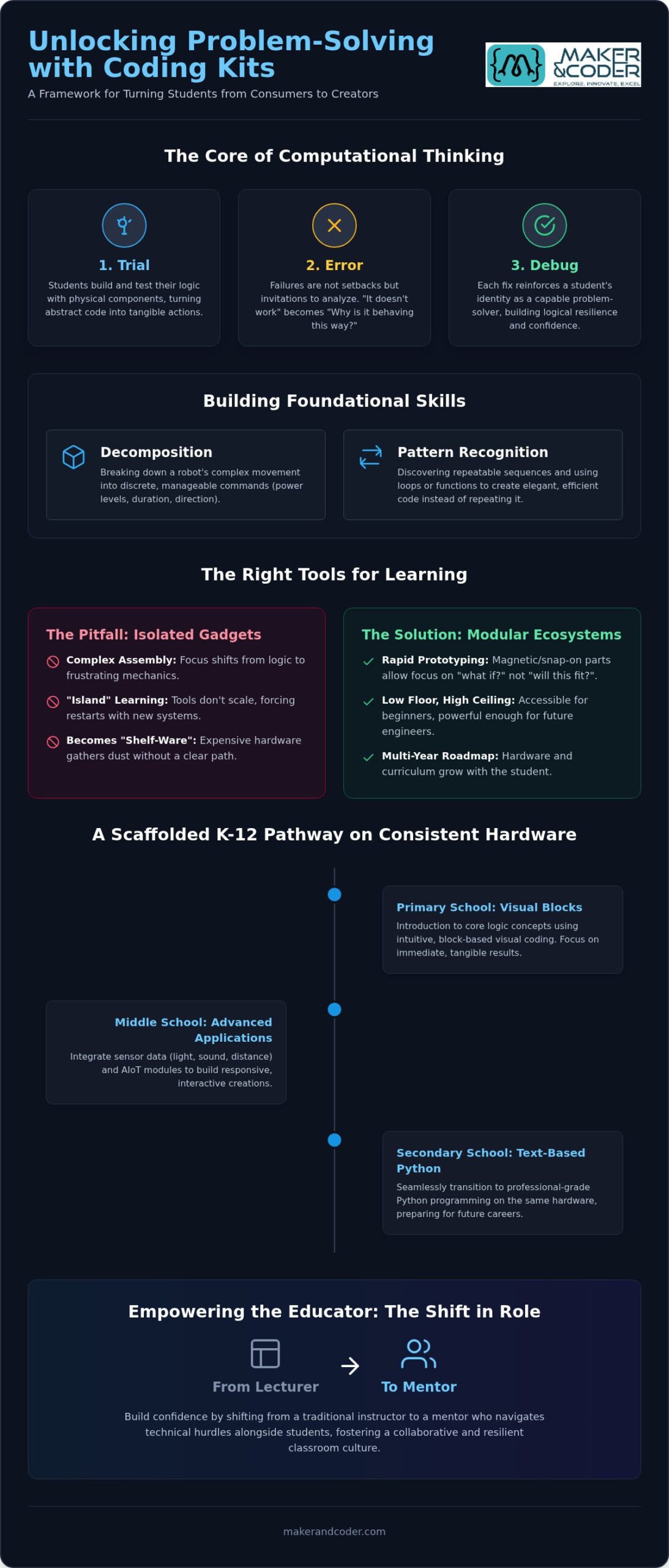
- Unlock the cognitive power of the “Trial-Error-Debug” loop to help students decompose complex challenges into manageable, logical steps.
- Discover why teaching problem-solving with coding kits requires a modular approach that allows for rapid, iterative prototyping in the classroom.
- Evaluate your STEM tools based on curricular alignment and teacher support to ensure hardware provides a multi-year roadmap rather than becoming shelf-ware.
- Transition students from basic syntax to advanced applications using a scaffolded K-12 pathway that prevents repetitive “island” learning.
- Build educator confidence by shifting from a traditional lecturer to a mentor who can navigate technical hurdles alongside their students.
The Cognitive Science of Problem-Solving with Coding Kits
Teaching problem-solving with coding kits is far more than an exercise in memorizing syntax. It is a deliberate restructuring of the student’s cognitive approach to the world. We move learners from a state of passive consumption to one of active creation. By engaging with physical components, students experience the immediate impact of their logic. This transition from abstract code to real-world results is essential for deep understanding. It transforms a screen-based concept into a tangible achievement, grounding high-level technology in a way that feels accessible and exciting. When students use professional-grade tools like the MC 4.0 Kit, they are building the mental muscle required to navigate the complexities of the modern workforce.
Computational thinking serves as the foundation for this journey. It empowers students to view a daunting challenge not as a monolith, but as a collection of solvable parts. This ability to decompose problems is a life skill that extends far beyond the computer lab. It provides a framework for innovation, allowing students to approach any technical hurdle with a methodical, goal-oriented mindset. By interacting with modular hardware, they begin to see themselves as architects of their own digital solutions.
Decomposition and Pattern Recognition
Students begin by learning to break down a robot’s movement into discrete motor commands. A simple turn becomes a sequence of specific power levels, durations, and directional shifts. As they progress, they start recognizing repeatable patterns across different tasks. Instead of writing the same code twice, they discover the power of loops and functions to create elegant, efficient systems. This recognition is amplified when they integrate sensor data. Interpreting environmental feedback teaches them to build responsive logic, ensuring their creations can interact intelligently with their surroundings. It’s the moment they realize they aren’t just following a recipe; they are designing a system.
The Debugging Mindset: Resilience Through Failure
The most profound learning happens when things go wrong. In a STEM classroom, a build that fails to run is an invitation to explore the “Trial-Error-Debug” loop. This process is the core mechanism for building logical resilience. We encourage students to move from the emotional weight of “it doesn’t work” to the analytical clarity of “why is it behaving this way?” Developing this debugging mindset requires emotional intelligence. It teaches students to iterate rather than give up. Every error becomes a data point, and every successful fix reinforces their identity as a capable problem-solver. This is how we prepare the next generation to face unpredictable challenges with confidence and grit.
Beyond Basic Syntax: How Modular Hardware Builds Logical Resilience
Teaching problem-solving with coding kits is most effective when the hardware stays out of the way of the idea. Traditional robotics often stall because of complex assembly or fragile parts that distract from the core objective. Modular systems change this dynamic entirely. They allow students to focus on the “why” rather than the “how” of a connection. This is the essence of a “low floor, high ceiling” toolset. It is accessible for a beginner but powerful enough for a future engineer. We want students to feel the thrill of a working build within minutes, not hours.
The MC 4.0 Controller serves as the sophisticated brain for this journey. It manages increasingly complex AIoT projects while providing a professional-grade foundation. As students outgrow block-based visual coding, they can seamlessly transition to text-based Python programming on the same hardware. This continuity is vital. It prevents the frustration of starting over with entirely new systems every year. By maintaining a consistent technical anchor, students can focus their energy on solving more intricate logical puzzles. You can explore these professional-grade tools in our online shop to see how they fit your classroom needs.
The Power of Modularity with MC Blocks
MC Blocks use magnetic or snap-on connections to eliminate mechanical roadblocks. This design choice isn’t just for convenience; it’s a pedagogical strategy. When students can swap an ultrasonic sensor for an AIoT module in seconds, they spend more time testing hypotheses. They move from “will this fit?” to “what if I use light data instead?”. This rapid prototyping builds logical resilience. It encourages a culture of experimentation where the hardware responds as quickly as the student’s imagination. Rapid iteration turns a mistake into a minor adjustment rather than a project-ending failure.
Scaling Complexity from Base Kits to STEAM Applications
Growth happens in stages. Students typically start with the MC4.0 Base Kit to master fundamental motor and sensor control. Once they’ve grasped these basics, they advance to the AIoT and STEAM kits for data-driven challenges. The MC 4.0 Controller provides a professional-grade technical foundation that supports everything from simple automation to advanced artificial intelligence. This scaffolded approach ensures that the tools remain relevant across all grade levels. If you’re ready to see how these modular systems can transform your classroom, reach out to our team for a tailored implementation plan.
Evaluating Classroom Coding Kits: A Decision Framework
Selecting the right tools for your school is a high-stakes decision that impacts student outcomes for years. It’s easy to get distracted by flashy lights or low price points, but teaching problem-solving with coding kits succeeds only when the hardware is backed by a robust ecosystem. You need a framework that prioritizes educational continuity over novelty. A kit without a plan is just an expensive toy. A strategic choice ensures that your technology remains an active participant in the classroom rather than gathering dust in a storage closet.
Consider these four pillars of evaluation to ensure your investment delivers lasting value:
- Curricular Alignment: Does the kit include a multi-year roadmap like the K-12 MC Curriculum, or will it become shelf-ware after one semester?
- Teacher Support: Professional development is the bridge between a box of parts and a successful lesson. Look for comprehensive teacher training programs that empower non-technical staff to lead with authority.
- Scalability: A scalable solution moves with the student. Making teaching problem-solving with coding kits a consistent experience throughout their academic journey requires hardware that spans from basic motor control to complex data science.
- Technical Depth: Future-readiness requires professional tools. Verify that the kit offers a clear transition from visual blocks to industry-standard languages like Python.
Durability vs. Technical Capability
Classroom environments are demanding. Kits must withstand heavy use and frequent handling without sacrificing the processing power needed for advanced projects. A tool that is too simple limits growth, while one that is too fragile creates constant maintenance hurdles. When you explore the MC 4.0 hardware range, you’ll see a balance of rugged design and sophisticated technical capability. This ensures your students can push the boundaries of AIoT and robotics without the hardware failing at a critical moment in the logical process. It’s about providing professional-grade reliability in a student-friendly package.
The Total Cost of Ownership in STEM
Smart budgeting looks beyond the initial sticker price. The true cost of a coding program includes the value of the curriculum, the quality of training, and the longevity of the parts. Modular systems like MC Blocks reduce the need for frequent replacements because they are designed for iterative use across different grade levels. By investing in a comprehensive ecosystem, you ensure that every dollar supports a long-term K-12 STEM strategy. It’s about building a sustainable culture of innovation where the tools remain as relevant in year five as they were on day one. This approach gives you peace of mind while fostering an environment where discovery never stops.
Integrating STEM into the K-12 Pathway: Curriculum vs. One-Off Kits
One-off kits often lead to “island” learning. This is a common trap where students repeat introductory sequences year after year because there’s no cohesive plan. It’s a missed opportunity for genuine cognitive growth. Teaching problem-solving with coding kits requires a holistic view that connects every grade level through a unified vision. When you move away from isolated gadgets and toward the K-12 MC Curriculum, you create a scaffolded journey. This approach links hardware builds directly to real-world science and engineering standards. It also opens doors for cross-curricular projects in maths, physics, and even art. You aren’t just teaching a technical skill; you’re building a multi-disciplinary mindset for the future.
Scaffolding Logic from Primary to Secondary
Progress begins with simple foundations. In the early years, students use the MC4.0 Base Kit to master basic sequences. They learn that logic is a series of precise, ordered steps. As they enter middle school, the focus shifts to developing complex conditional logic and managing variables. They start building systems that react intelligently to their environment. By the time they reach secondary school, they’re ready for high-level applications. Using the MC4.0 AIoT Kit, students engage with artificial intelligence and the Internet of Things. They analyze real-time data to solve sophisticated problems. This continuity ensures that teaching problem-solving with coding kits remains challenging and relevant as students mature into innovators.
Real-World Project-Based Learning (PBL)
Abstract code becomes powerful when it solves a real problem. Project-Based Learning (PBL) allows students to apply their skills to local community challenges. They might design a smart gardening system to conserve water or model a traffic flow solution for a busy school crossing. The MC Curriculum guides them through the entire engineering design process. They don’t just build; they research, prototype, and iterate. A vital part of this cycle is the final presentation. Students must present and defend their solutions to their peers. This builds the confidence to explain technical logic and handle critical feedback. It turns a classroom exercise into a professional experience that sticks. If you’re ready to implement a complete STEM roadmap in your school, contact our educational specialists today to discuss our K-12 curriculum options.
Empowering the Classroom: The Role of Teacher Training
Technical anxiety shouldn’t be the bottleneck of innovation. Many dedicated educators face a sense of “Imposter Syndrome” when first introducing robotics or AIoT into their classrooms. It’s a natural reaction to the rapid pace of technological change. However, teaching problem-solving with coding kits doesn’t require you to be a computer scientist; it requires you to be a mentor who values curiosity over rote memorization. The goal of Maker & Coder professional development is to transform educators from traditional “lecturers” into confident “facilitators” of discovery. We provide the professional-grade technical foundation so you can focus on the pedagogical magic that happens when a student finally cracks a code. This shift ensures the long-term sustainability of your STEM program, turning a one-year experiment into a permanent pillar of your school’s academic identity.
From Technical Fear to STEM Facilitation
Effective teacher training moves beyond simple “how-to” guides. It focuses on the art of troubleshooting side-by-side with students, turning technical hurdles into shared victories. When a build doesn’t behave as expected, it’s an opportunity to model the logical resilience we discussed in earlier chapters. We train teachers to manage a hands-on, modular classroom environment where MC Blocks and the MC 4.0 Controller serve as the primary tools for inquiry. This preparation ensures the MC 4.0 Kit is utilised to its full potential, moving students beyond basic assembly to deep, iterative learning. By building your own technical confidence, you create a space where students feel safe to fail and eager to try again. You become the bridge between complex modern systems and the classroom environment.
Next Steps for School Implementation
Starting a school-wide initiative is most successful when approached in stages. We recommend launching a pilot program using the MC 4.0 ecosystem to gather data and build internal momentum among staff and students alike. This allows a core group of educators to establish a community of practice, sharing lesson plans and success stories that inspire their colleagues across different departments. Teaching problem-solving with coding kits becomes a shared mission rather than a solo effort. As your program grows, our ongoing support ensures your tools and curriculum stay at the cutting edge of educational technology. We are here to act as your dedicated educational partner. If you are ready to lead your school into the future, contact our educational consultants to plan your STEM implementation and discover how we can support your journey from basic concepts to advanced applications.
Architecting a Generation of Future Innovators
The journey from basic logic to advanced AIoT isn’t just about the hardware you put on the desk. It’s about the ecosystem you build around the learner. We’ve explored how a scaffolded approach prevents “island” learning, ensuring students grow with their tools rather than outgrowing them. By shifting from passive consumption to active creation, students develop the logical resilience required to solve real-world engineering challenges. Success in teaching problem-solving with coding kits relies on this synergy between professional-grade hardware and a robust, multi-year curriculum.
Empower your classroom with a solution designed for long-term growth. Our modular MC Blocks spark endless creativity, while the comprehensive K-12 MC Curriculum provides the roadmap needed for multi-year educational continuity. Supported by professional teacher training programs, you’ll lead your students from fundamental motor control to sophisticated data analysis with confidence. The future of STEM belongs to those who build it. Empower your students with the MC 4.0 ecosystem; contact us today to begin your implementation journey.
Frequently Asked Questions
How do coding kits improve critical thinking skills in students?
Coding kits improve critical thinking by requiring students to decompose complex goals into sequential commands. When a robot fails to execute a task, students must analyze the logic and isolate variables. This process of teaching problem-solving with coding kits builds the mental discipline to evaluate systems objectively. It moves learners from guessing to formulating hypotheses. They learn to test, observe, and refine their approach until they achieve the desired outcome.
Can non-technical teachers effectively teach problem-solving with the MC 4.0 Kit?
Yes, the MC 4.0 Kit is specifically designed to be accessible for educators without a computer science background. We provide a structured K-12 MC Curriculum that acts as a step-by-step roadmap for every lesson. Our Teacher Training Programs bridge the technical skills gap, providing the confidence needed to mentor students. You don’t need to be an expert. You just need to facilitate the inquiry-based learning process we’ve outlined.
What age is best to start teaching problem-solving with coding kits?
Students can begin as early as primary school, typically around age six or seven. Early exposure focuses on basic sequencing and cause-and-effect using the MC4.0 Base Kit. As students mature, the complexity scales to match their cognitive development. Starting young ensures that computational thinking becomes a natural language for them. By the time they reach secondary school, they’re ready for the advanced AIoT and STEAM applications found in our more technical kits.
How does the MC Curriculum align with international STEM standards?
The K-12 MC Curriculum is meticulously mapped to global educational frameworks, including NGSS and various international computing standards. It ensures that classroom activities meet rigorous academic requirements while fostering 21st-century skills. Each module links technical builds to core concepts in physics, mathematics, and engineering. This alignment provides school administrators with the peace of mind that their STEM investment supports official learning objectives and measurable student progress.
What is the difference between a toy coding kit and a professional educational ecosystem?
A toy kit often lacks a structured pedagogical path, leading to short-lived engagement without deep learning. In contrast, a professional ecosystem like Maker & Coder combines high-grade hardware with a comprehensive K-12 curriculum. It offers scalability and long-term support that toys simply cannot match. Teaching problem-solving with coding kits in a professional context ensures that students move beyond basic syntax toward genuine innovation and future-readiness.
Do Maker & Coder kits support Python programming for older students?
How much teacher training is required to get started with the MC 4.0 platform?
Our foundational training programs are designed to get you classroom-ready in just a few dedicated sessions. We focus on hands-on facilitation and basic troubleshooting rather than deep coding theory. This streamlined approach allows schools to launch pilot programs quickly while building long-term internal expertise. We provide ongoing support and a community of practice to ensure you feel mentored throughout the entire implementation process.
Can these kits be used for competitive robotics programs?
The MC 4.0 STEAM Kit and MC 4.0 Controller offer the precision and power necessary for high-level competitive environments. Modular MC Blocks allow students to prototype unique mechanical designs rapidly, while the advanced sensors provide the data needed for complex autonomous tasks. These professional-grade tools empower students to design, build, and program robots that can compete at a national or international level. It’s an excellent way to showcase school-wide innovation.