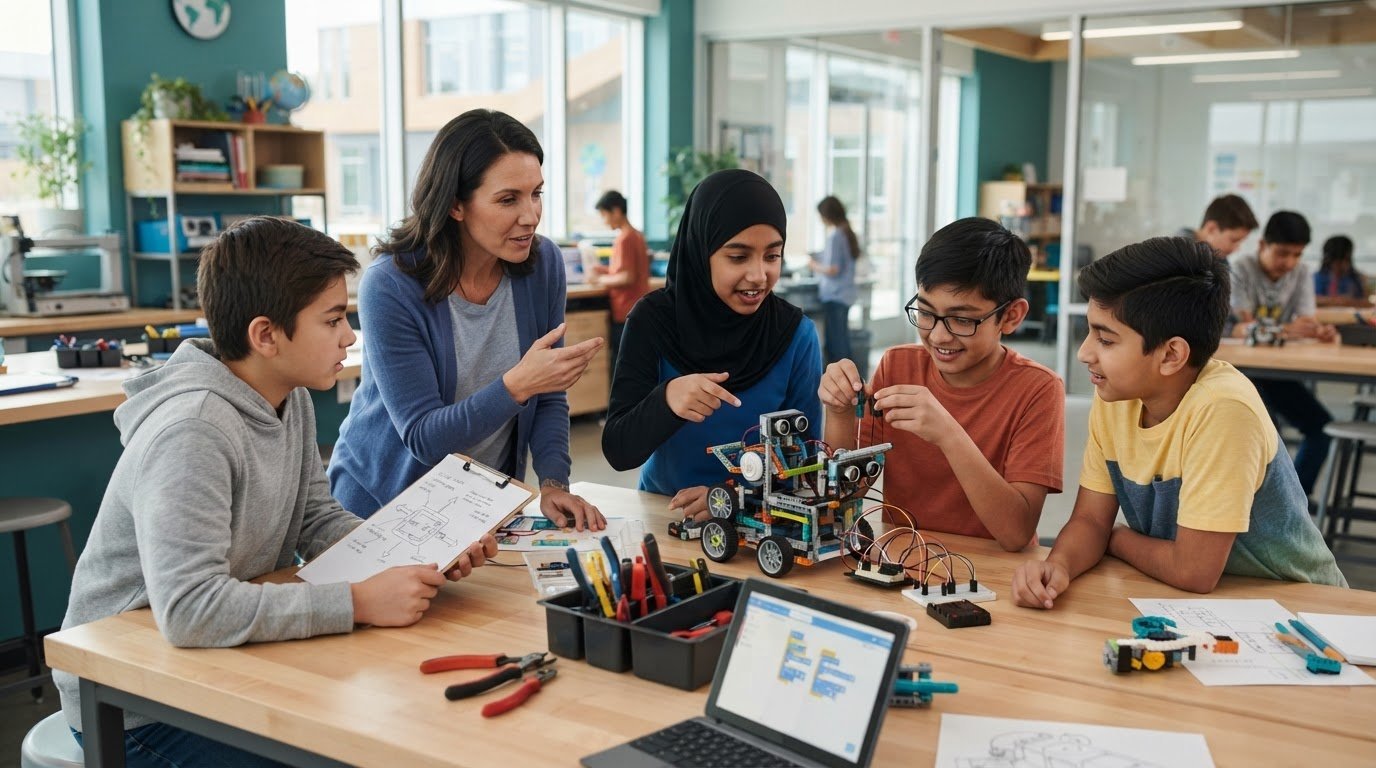
What if a hands-on STEM lesson could spark curiosity and still keep every student moving toward a clear learning goal? The activity alone isn’t enough. Effective STEM instruction strategies connect exploration to explicit objectives, useful feedback, and reflection, so students learn to apply ideas rather than simply finish a project.
Turning a broad STEM goal into a manageable lesson takes planning. Open-ended challenges invite creativity, but students also need structure, encouragement, and room to learn from different starting points. A clear sequence, visible success criteria, and flexible ways to contribute help more learners participate, test ideas, and treat mistakes as part of the process.
This guide offers a repeatable framework for planning inclusive, hands-on STEM lessons, from defining outcomes to supporting iteration and reflection. You’ll find practical ways to connect concepts to real challenges, choose tools that serve the learning goal, and guide students from first questions to confident application. Maker & Coder’s MC 4.0 platform brings together robotics hardware, modular parts, curriculum, and teacher training to help educators turn instructional objectives into tangible projects.
Key Takeaways
- Choose a clear learning objective before selecting an activity, then look for evidence that students understand and can explain the concept.
- Use effective STEM instruction strategies to guide students through asking questions, investigating, designing, testing, revising, and reflecting.
- Match inquiry, projects, labs, or design challenges to the kind of learning evidence you want students to produce.
- Make challenges more accessible with visual instructions, staged tasks, flexible roles, and extension questions.
- Build a sustainable program by starting with one objective and challenge, gathering evidence, and refining your approach with suitable curriculum, preparation, and tools.
What Makes STEM Instruction Effective? Start With Learning, Not the Activity
A lively classroom can still leave the learning unclear. Students may build, code, or experiment with enthusiasm, yet an activity becomes instruction only when it helps them work toward a defined goal and make their thinking visible. Name the concept or skill students should understand first, then choose a task that gives them a reason to use it.
Effective STEM instruction connects a meaningful question to investigation, design, evidence, and explanation. Students don’t just make something. They make decisions, observe what happens, and use what they learn to explain or improve their approach. This is the difference between hands-on learning and activity for activity’s sake: each task has a clear purpose tied to a concept or skill.
Before introducing an activity, ask: What should learners be able to explain or do? What will they observe, measure, compare, or create to show their thinking? How will they use evidence to support an idea? These questions keep the lesson focused without closing off exploration. They’re a practical foundation for effective STEM instruction strategies because they align the challenge, teacher guidance, and evidence of learning.
The broader idea of STEM education brings science, technology, engineering, and mathematics into conversation. In a well-designed lesson, that connection is purposeful, not simply four subject labels placed on one activity.
How do STEM lessons connect science, technology, engineering, and mathematics?
Build the lesson around one shared problem. For example, ask students to design a small bridge that can support a set load. They might investigate how materials behave, use a digital tool to record or compare results, apply engineering design as they create and revise a structure, and use measurement or simple calculations to examine its performance. The balance can shift with the objective: a lesson focused on forces may emphasize science, while one centered on measurement may lean more heavily on mathematics. Make each subject connection explicit by asking students to describe how it helps them solve the problem.
Why does active learning matter in a STEM classroom?
Making and testing give students concrete experiences to discuss: what they tried, what happened, and what they might change. Invite learners to make meaningful choices, investigate questions, and explain their reasoning. Then guide them to connect observations with the lesson goal. Enjoyment and participation can signal interest, but they aren’t proof of understanding. Listen to explanations, review design decisions, and look for evidence that students can connect their experience to the underlying concept.
Build a STEM Lesson Cycle: Ask, Investigate, Create, Test, and Reflect
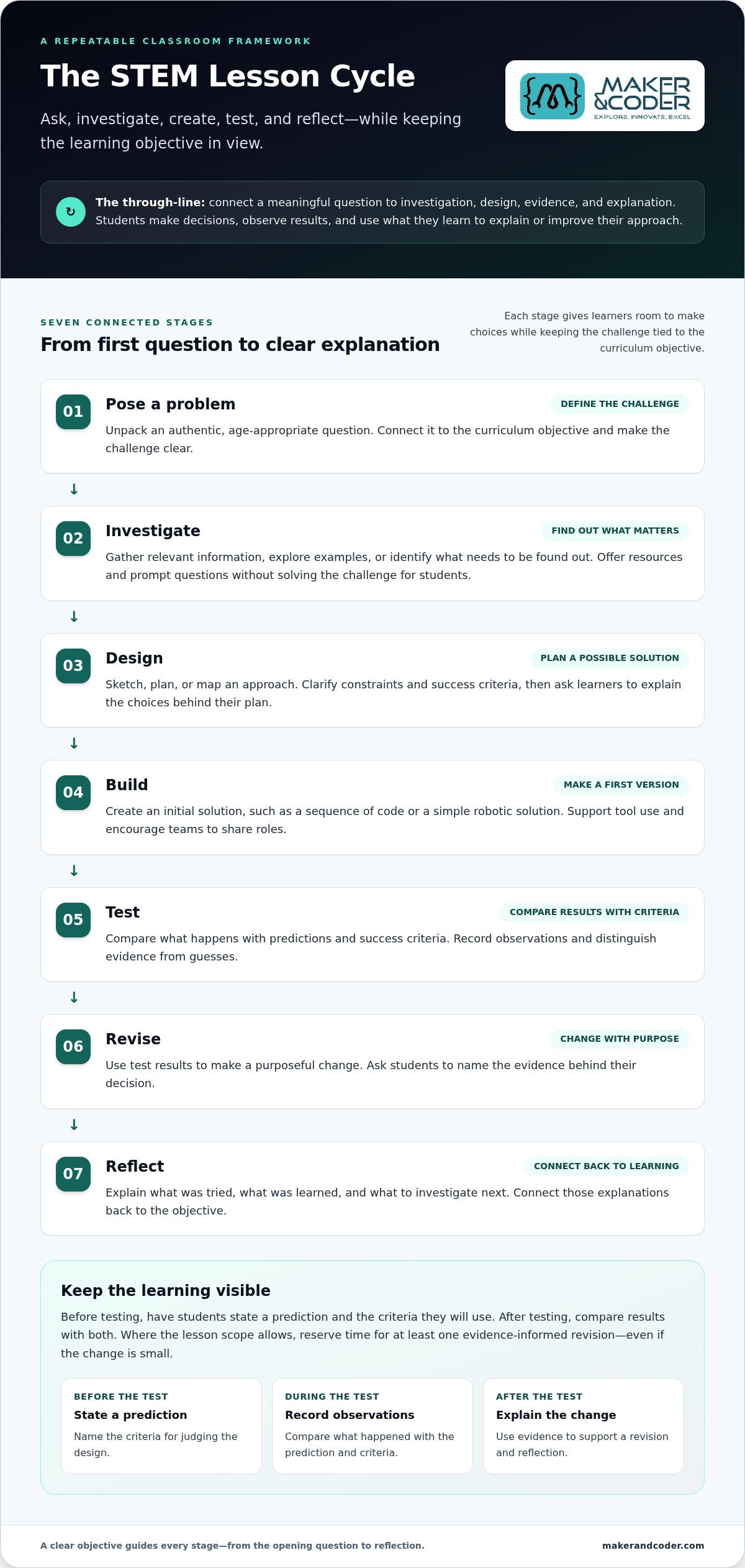
A repeatable cycle helps turn a promising idea into a lesson students can learn from, not just complete. Keep the curriculum objective in view, then guide learners from an open question toward a design they can test and explain. The sequence below gives students room to make choices while helping teachers keep each stage connected to learning.
- Pose a problem. Students unpack an authentic, age-appropriate question. Connect it to the curriculum objective and define the challenge.
- Investigate. Students gather relevant information, explore examples, or identify what they need to find out. Supply resources and prompt questions without resolving the challenge for them.
- Design. Students sketch, plan, or map a possible solution. Clarify constraints and success criteria, then ask learners to explain their choices.
- Build. Students create a first version, such as a sequence of code or a simple robotic solution. Support tool use and encourage teams to share roles.
- Test. Students compare what happens with their predictions and criteria. Help them record observations and distinguish evidence from guesses.
- Revise. Students use test results to make a purposeful change. Ask them to name the evidence behind that decision.
- Reflect. Students explain what they tried, what they learned, and what they would investigate next. Connect those explanations back to the objective.
How can teachers turn a real-world question into a focused challenge?
Choose a problem that gives the curriculum objective a clear purpose. For a coding lesson on sequencing, ask: “How could we program a robot to follow a route and reach a destination?” Set criteria students can observe, such as reaching the destination, and define any limits relevant to the lesson. Leave the route or code open to different approaches. A strong opening question invites learners to investigate how their choices affect the result, rather than recall one correct answer.
How should students test, revise, and explain their designs?
Before testing, have students state what they predict and which criteria they’ll use to judge the design. Afterward, compare the results with both. Where the lesson scope allows, reserve time for at least one revision informed by evidence, even if the change is small. Testing and revision aren’t detours from learning; they’re how students connect ideas to evidence. Close with brief explanations of design decisions, observations, and unanswered questions.
This cycle is one of the most practical effective STEM instruction strategies because it makes student thinking visible at every stage. For robotics and coding lessons, Maker & Coder’s K-12 MC Curriculum includes lesson plans, and its kits include setup guides and required hardware. The MC 4.0 platform’s modular parts support hands-on experimentation as students build, test, and revise. Explore STEM classroom support as you plan a sequence around your learning objectives.
Compare STEM Teaching Strategies by the Learning Evidence They Produce
Choose a teaching approach by asking what you want students to learn and what evidence will make their thinking visible. The same topic can call for different methods: investigating a question, applying ideas over time, observing a process, or improving a solution. These effective STEM instruction strategies work best when the method and the evidence you plan to collect are aligned.
| Approach | Lesson purpose | Useful student evidence | Classroom consideration |
|---|---|---|---|
| Inquiry | Investigate a question or pattern | Questions, observations, explanations supported by evidence | Offer enough guidance to focus exploration without giving away conclusions. |
| Project-based learning | Apply learning over time to create a meaningful product or response | Plans, progress checks, research, and a final explanation | Break the project into milestones so the objective stays visible. |
| Labs | Observe or test a concept within a defined process | Recorded measurements, comparisons, and interpretations | Make the procedure clear while leaving space to interpret results. |
| Design challenges | Create, test, and improve a solution to a problem | Sketches, prototypes, test records, and revisions | Set clear criteria, but allow multiple viable designs. |
Which STEM strategy fits the learning objective?
Match inquiry to a question students need to investigate, and project-based learning to applying ideas across a longer sequence. Use a lab when learners need a bounded way to observe or test a concept, such as comparing how materials respond to a force. Choose a design challenge when the objective includes making and improving a solution. A strategy isn’t effective simply because it’s hands-on; select it for the thinking you want students to practice.
Assessment can happen as learning unfolds. Notice how students participate, listen to their explanations, and review their sketches, test records, and design revisions. These formative signals can reveal a misconception or a promising idea before the final product is complete. National assessment results, including NAEP results, describe student performance in a broader context. They should not be treated as proof that one classroom strategy caused a particular outcome.
How can teachers assess process as well as the final product?
Use a short rubric with four criteria: reasoning, explains decisions; evidence, uses observations or results; iteration, makes or justifies a change; and communication, describes the process clearly. Keep criteria tied to the lesson objective, not polish or complexity alone.
Group work can show collaboration, but it may not reveal what each learner understands. Add a quick individual explanation, annotated sketch, or reflection prompt, such as, “What result changed your thinking, and why?” Treat unexpected results and errors as information to interpret. A failed test may show that a prediction needs refining or that the criteria need a closer look. That evidence helps teachers decide what to revisit and what students are ready to try next.
Make STEM Instruction Inclusive, Manageable, and Adaptable
Effective STEM instruction doesn’t depend on expensive equipment or students arriving with advanced technical knowledge. A well-framed challenge can begin with familiar materials, a clear question, and room to contribute in different ways. What matters is that each learner can access the thinking the lesson asks for, with enough support to participate and enough challenge to keep learning moving.
Access means meaningful participation, high expectations, and the right support for each learner to contribute. Keep the core learning goal consistent while adapting the route students take to reach it. One student might begin by sketching an idea; another may explain it aloud, build a model, or use code. Different entry points can lead to shared investigation and reasoning.
How can teachers adapt one STEM challenge for different learners?
Break a challenge into clear stages, and show each stage with concise text, diagrams, or a completed example. For a lesson on designing a protective package, students might first identify what needs protection, then explore materials, plan a design, and test it. Offer a focused set of materials or prompts for learners who benefit from scaffolding. Invite students ready for more complexity to compare alternatives or justify trade-offs. An extension should deepen reasoning, not simply add tasks.
Keep the goal stable, but vary the supports, materials, and complexity. Make space for learners to show thinking through drawing, building, coding, speaking, or writing. This flexibility helps teachers recognize understanding that a single response format might miss, while maintaining a shared standard for the concept students are exploring.
How can teachers keep hands-on STEM activities manageable?
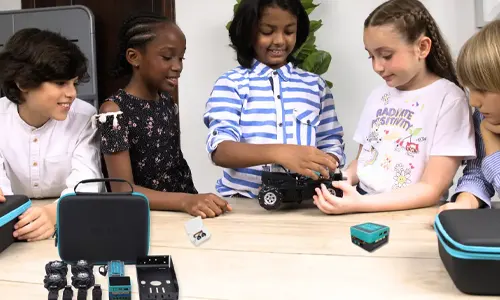
Set up the experience before students begin: prepare materials, display steps where everyone can refer to them, and name checkpoints for pausing and regrouping. Establish collaboration norms, such as listening to each idea before choosing a plan. Rotate roles across lessons so access to materials and decisions is shared rather than fixed by confidence or prior experience.
- Materials lead: organizes and returns shared resources.
- Recorder: captures ideas, observations, or test results.
- Builder or coder: helps put the group’s plan into action.
- Reporter: prepares to explain the group’s reasoning.
Roles should support participation, not limit it. Invite every learner to explain at least one decision or observation, and rotate responsibilities so students practice different contributions. Use brief checkpoints to notice who has spoken, handled materials, or influenced a design choice. A quick prompt such as “What did you change, and what led you to change it?” keeps attention on learning, not just finishing.
These effective STEM instruction strategies help educators adapt a shared challenge without lowering its intellectual purpose. Maker & Coder provides a K-12 MC Curriculum and teacher training programs to support educators planning and facilitating hands-on learning. Explore support for inclusive STEM instruction.
Turn Effective STEM Instruction Into a Sustainable Classroom Program
A strong STEM lesson can spark momentum, but a sustainable program grows through deliberate planning and review. Begin with one objective and a manageable challenge. Gather evidence from the lesson, reflect on what supported student learning, then refine the next experience. This small-cycle approach helps educators build from an initial activity toward a coherent sequence without treating hardware as a substitute for teaching.
- Choose an objective. Identify the concept or skill students should develop, and decide what evidence could show their understanding.
- Plan a first challenge. Shape a focused task around that objective, with clear criteria and room for students to make decisions.
- Gather evidence. Collect observations, student explanations, work samples, or assessment responses that relate directly to the objective.
- Reflect. Consider where students made progress, what caused confusion, and whether the challenge gave them a fair opportunity to show what they know.
- Refine. Adjust the instructions, scaffolds, timing, or tools before extending the learning to a new challenge.
Keep the review practical. A short note after each lesson can record what students understood, where they needed more guidance, and what you would change next time. Over several lessons, those observations can help a school make purposeful decisions about curriculum, teacher preparation, and resources.
What should educators plan before introducing classroom robotics?
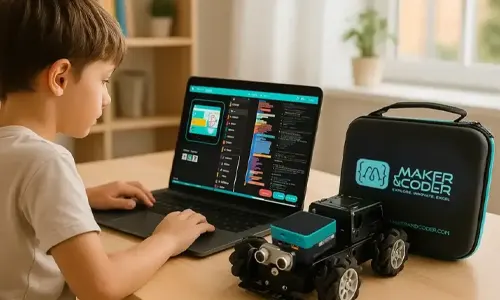
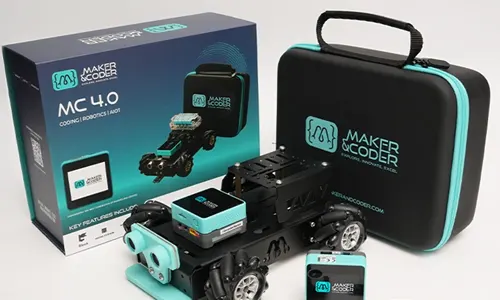
Begin with the intended learning outcome, then select a robotics or coding project that gives students something relevant to examine and explain. Consider learners’ readiness and lesson goals when choosing a coding environment. The MC 4.0 Controller supports Scratch, Python, Arduino, Blockly, and MCLab, so educators can align the programming approach with their instruction. For beginners, the MC4.0 Base Kit is designed for learners with no prior robotics or coding experience and supports block-based coding, with Arduino or Python available later. The AIoT Robotics Kit is aimed at students aged 15 and older, including high-school labs, tech clubs, and makerspaces. Start with the objective, then choose the kit and coding approach that fit the learners and challenge.
How can schools support teachers beyond the first STEM lesson?
Consistency matters. A structured K-12 curriculum, lesson plans, and setup guides can help educators connect classroom activities across learning stages instead of treating each project as a stand-alone event. Maker & Coder’s teacher training programs support classroom implementation, while the Learning Portal provides courses and assessments. Together, these resources can help teachers prepare, teach, and review learning across a sequence of STEM lessons.
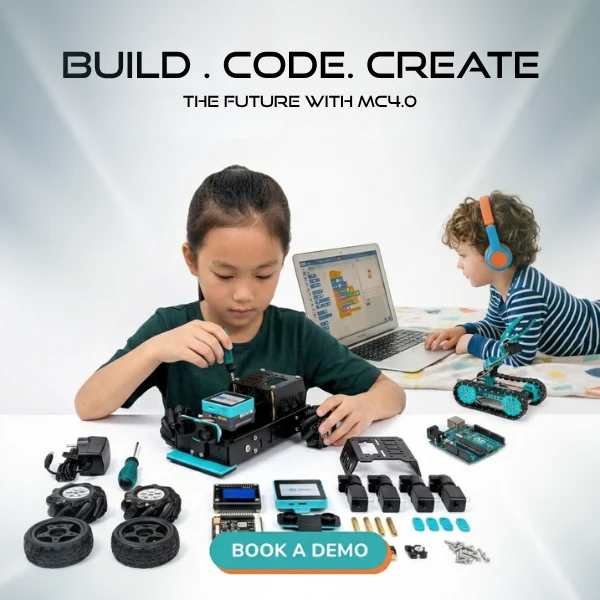
Maker & Coder’s MC 4.0 Robotics Kit brings together hardware, modular MC Blocks, curriculum, and educator support for hands-on coding and robotics learning. The MC 4.0 Controller supports Scratch, Python, Arduino, Blockly, and MCLab, while its touchscreen interface and drag-and-drop programming support hands-on exploration. These tools can support a planned instructional sequence, but the objective, teacher facilitation, and student evidence remain central. Effective STEM instruction strategies grow from that alignment, then strengthen as educators review and refine their practice.
Every school’s goals and starting point are different. Discuss your school’s STEM learning goals and plan how curriculum, teacher preparation, and suitable tools can work together in your program.
Make Your Next STEM Lesson the Start of Something Bigger
A lasting STEM program doesn’t need to begin with a sweeping redesign. Choose one upcoming lesson and make one intentional improvement: clarify what students should learn, build in a chance to explain their thinking, or create space to revisit an idea after testing it. Then use what you notice to shape the next lesson. Small, thoughtful adjustments can help a classroom move from isolated activities toward a learning culture where curiosity and careful reasoning belong together.
The most effective STEM instruction strategies grow through reflection, collaboration, and a willingness to adapt. Your students’ questions can guide what comes next, while your learning goals keep that exploration purposeful. Whether building early foundational problem-solving skills in the classroom or preparing students for advanced health sciences and pharmacology pathways supported by platforms like pharmedu.com, clear objectives ensure that exploration leads to genuine understanding. Start with the challenge in front of you, and build from there.
Discuss your STEM teaching goals with Maker & Coder and explore the MC 4.0 Robotics Kit, curriculum, and teacher training programs for your classroom or school. Choose a learning objective and plan a hands-on next step with Maker & Coder.
Frequently Asked Questions
What are the most effective STEM instruction strategies?
The most effective STEM instruction strategies connect a clear learning goal to meaningful student decisions and evidence of thinking. Start with the concept, then choose a format that fits it: students might model a water cycle, use data to compare conditions, or create a solution to a community need. Build in a brief individual checkpoint, such as asking each student to explain one choice, so group activity doesn’t hide gaps in understanding.
How do you make STEM lessons engaging for students?
Give students a reason to care about the question and some influence over how they explore it. For example, let a class choose which school-space problem to investigate, then gather observations or interview potential users before proposing ideas. Invite students to connect the challenge to interests or experiences they bring to class. Choice can invite participation, while follow-up questions and student explanations help keep the work anchored to learning.
Can STEM instruction work without advanced equipment?
Yes. Students can explore STEM concepts with ordinary classroom materials and careful observation. To study sound, for instance, groups might compare how paper, fabric, or cardboard changes the sound from a simple source, recording what they notice and discussing the limits of their test. For computational thinking, learners can write step-by-step instructions for a partner to follow on a paper grid. The learning goal, not the sophistication of the equipment, should guide the activity.
How can teachers assess learning during a STEM project?
Use brief check-ins at key points rather than waiting until the project is finished. Ask students to annotate a sketch, explain a decision to a partner, or answer an exit question such as, “What evidence supports your current approach?” Compare these responses with later work to see how understanding develops. A group’s finished product can be informative, but individual notes or explanations help reveal who understands the idea and who may need another example.
How can STEM activities support students with different skill levels?
Offer support based on what students need for the specific task, not assumptions about their overall ability. Before a design activity, a quick prompt can show who needs help identifying variables and who is ready to analyze trade-offs. Provide a model, word bank, or planning template where useful; let advanced learners justify why one solution may work better under changing conditions. Revisit supports as learners gain confidence, so scaffolds open the task rather than define a student’s limits.
What is the difference between project-based and inquiry-based STEM learning?
Inquiry-based learning centers on investigating a question; project-based learning centers on applying knowledge toward a sustained product, presentation, or response. Students investigating which surfaces affect rolling distance might gather and interpret evidence through inquiry. A project could use that knowledge to design a tabletop game and explain its choices. The approaches can overlap: a project may include inquiry, while a focused inquiry can prepare students for a later project.
How can a school prepare teachers to use robotics in STEM lessons?
Give teachers time to experience a sample activity as learners before facilitating it. They can identify setup needs, anticipate where students may get stuck, and rehearse prompts that encourage problem-solving without taking over. Maker & Coder offers teacher training programs to support classroom implementation, alongside its K-12 curriculum. Schools can connect preparation to a specific learning objective, then plan how teachers will share observations and refine future robotics lessons together.