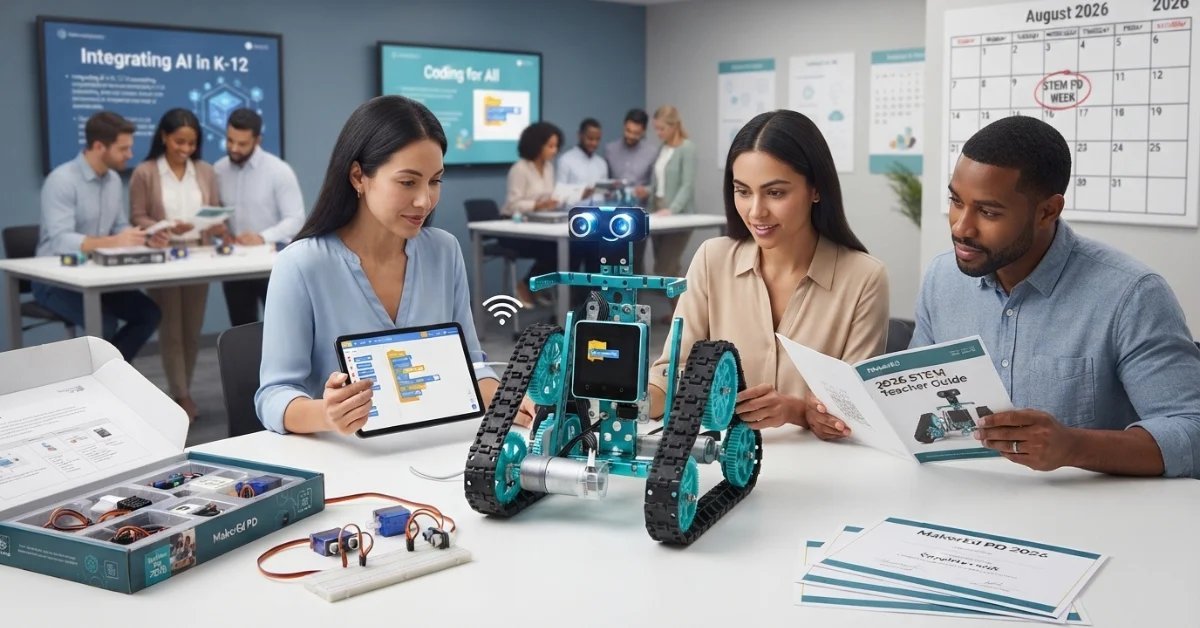
What if the most sophisticated tool in your classroom isn’t the latest robot, but your own confidence to lead a high-tech revolution? Effective STEM professional development for teachers should be more than a checkbox; it should be the spark that turns a daunting challenge into a high-impact classroom reality. You’ve likely felt the disconnect between a one-off workshop and your daily curriculum, or the time constraints that make learning complex systems feel impossible. It’s a common hurdle, yet the journey from basic concepts to advanced applications is closer than it appears.
This 2026 guide provides a clear roadmap for classroom implementation, moving you from technical uncertainty to AIoT mastery. We’ll show you how to gain absolute confidence using modular hardware like the MC 4.0 Kit and MC Blocks to drive measurable student engagement. By aligning with the K-12 MC Curriculum, you can bridge the gap between high-tech labs and primary school settings. You’re about to evolve from a curious learner into a bold innovator and a dedicated educational partner who inspires the next generation of creators.
Key Takeaways
- Transition from one-off workshops to integrated ecosystems that meet 2026 standards for effective STEM professional development for teachers.
- Gain confidence with modular hardware by mastering the MC 4.0 Kit and MC Blocks through hands-on experimentation.
- Align your daily classroom activities with the K-12 MC Curriculum to turn daunting technical challenges into structured learning pathways.
- Evaluate training models to prioritize physical hardware interaction over simulation-only software for deeper pedagogical impact.
- Implement a clear roadmap to audit school capabilities and utilize Teacher Training Programs for sustainable STEM growth.
Beyond the Workshop: Why STEM Professional Development Must Evolve
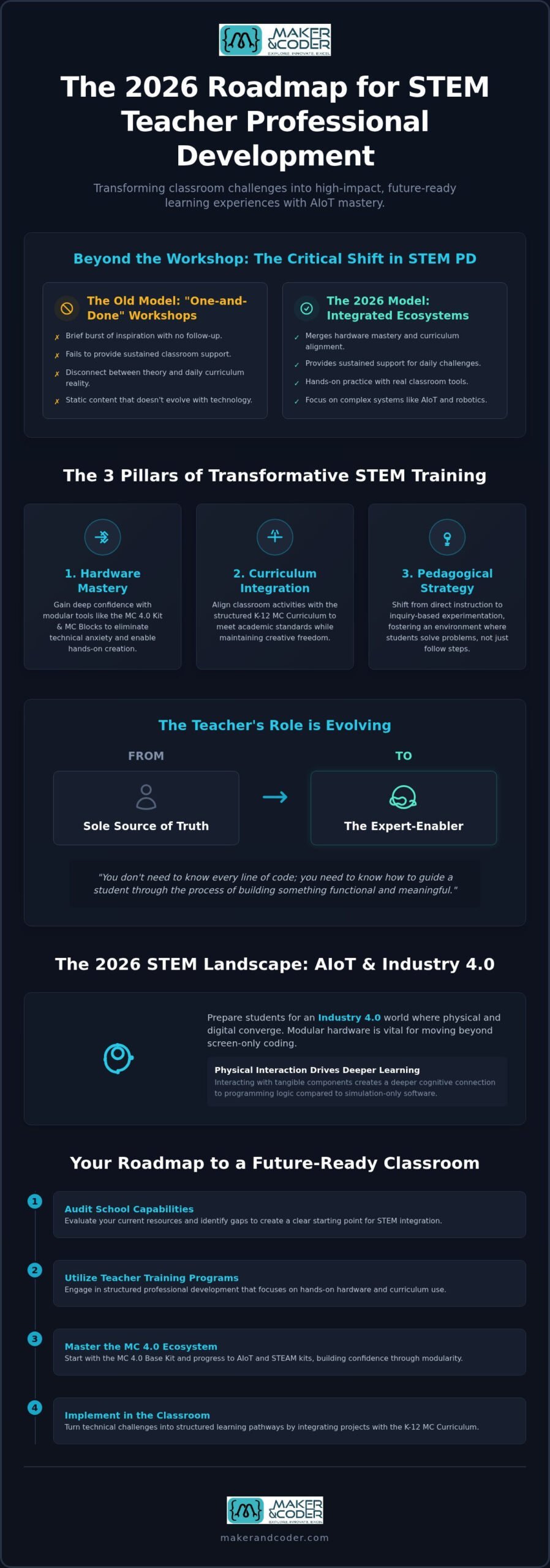
By 2026, the definition of Science, technology, engineering, and mathematics (STEM) education has shifted from isolated subjects to a cohesive, interdisciplinary ecosystem. Traditional STEM professional development for teachers often falls short because it relies on “one-and-done” workshops. These sessions provide a brief burst of inspiration but fail to offer the sustained support needed for complex classroom realities. True professional growth requires an integrated approach that merges hardware mastery, curriculum alignment, and pedagogical shift.
Static seminars don’t account for the rapid evolution of technology. While a teacher might leave a weekend workshop feeling energized, that enthusiasm often evaporates when faced with technical troubleshooting or curriculum gaps on Monday morning. Research indicates that 71% of STEM educators stay current by attending live events, yet the real transformation happens when those events bridge the gap between theory and the daily bell schedule. We must move away from simple coding exercises and toward mastering complex systems like AIoT and robotics.
The 2026 STEM Landscape: AIoT and Industry 4.0
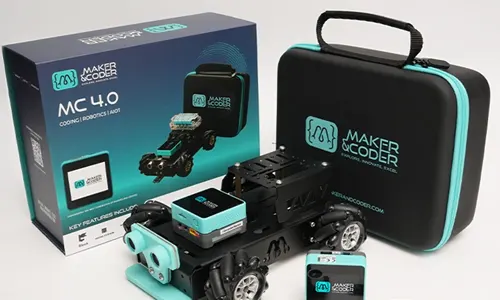
Future-readiness is no longer a buzzword; it’s a requirement. Students must prepare for a world dominated by Industry 4.0, where the physical and digital worlds converge. Modular hardware, such as the MC 4.0 Controller, allows students to move beyond screen-only coding into the world of tangible creation. This transition is vital. By interacting with physical components, learners develop a deeper cognitive connection to the logic they write. Professional development must reflect this by giving educators hands-on time with the same tools their students will use to build the future.
The Teacher as the “Expert-Enabler”
We are seeing a profound shift in the educator’s role. You aren’t expected to be the sole source of truth in a rapidly changing technical field. Instead, you’re a facilitator of discovery. This “expert-as-enabler” model reduces the anxiety many non-technical teachers feel when entering the STEM space. By utilizing “prestige-tech” tools that are both sophisticated and accessible, you can lead with confidence. You don’t need to know every line of code; you need to know how to guide a student through the process of building something functional and meaningful.
To start this journey, explore the Maker & Coder shop to see the modular kits that make this transition possible. Effective STEM professional development for teachers isn’t just about learning a new tool. It’s about gaining the visionary authority to turn your classroom into a laboratory of innovation.
The 3 Pillars of Transformative STEM Teacher Training
To achieve lasting success, STEM professional development for teachers must rest on a stable foundation. We define this through three critical pillars: Hardware Mastery, Curriculum Integration, and Pedagogical Strategy. This framework supports the from-to journey of teacher growth. It moves educators from basic technical literacy to advanced AIoT implementation. Without these pillars, technology remains a novelty rather than a transformative classroom tool. It’s the difference between a one-off activity and a sustainable program.
- Pillar 1: Hardware Mastery. This is the physical anchor. It involves gaining deep confidence with the MC 4.0 Kit and MC Blocks to eliminate technical anxiety.
- Pillar 2: Curriculum Integration. Alignment matters. The K-12 MC Curriculum provides the structure needed to meet academic standards while maintaining creative freedom.
- Pillar 3: Pedagogical Strategy. This shifts the classroom dynamic. It moves the needle from direct instruction to inquiry-based experimentation.
Research indicates that 39% of STEM educators identify collaboration as their top classroom priority. By focusing on these pillars, you create an environment where students don’t just follow instructions; they solve problems. This integrated approach ensures that the investment in technology yields measurable results in student engagement and future-readiness.
Mastering the MC 4.0 Ecosystem
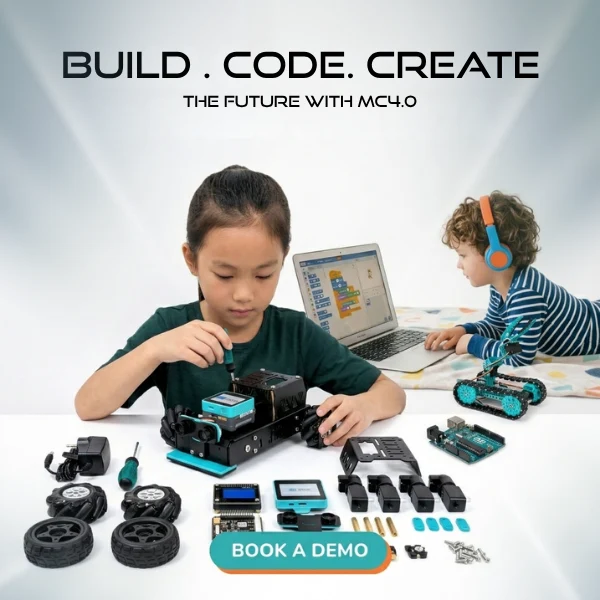
True mastery begins with understanding modularity. The MC Blocks ecosystem offers unparalleled classroom flexibility. You can swap components and build complex systems without soldering or complex wiring. The learning curve follows a logical progression. Start with the MC4.0 Base Kit to learn core electronics. Move to the AIoT and STEAM kits to explore environmental sensing and artistic engineering. The MC4.0 Controller serves as the brain of the entire classroom ecosystem, orchestrating the interaction between code and physical action.
Aligning with the K-12 MC Curriculum
Time is your most precious resource. Structured pathways in the K-12 MC Curriculum reduce the prep burden for busy teachers. You don’t have to invent lessons from scratch. Instead, you can focus on facilitating student breakthroughs. High-quality STEM professional development for teachers ensures that training directly translates to lesson plans you can use the following week. Modular blocks make it easy to adapt these lessons for different age groups. A primary student might use blocks for simple automation, while a high schooler uses the same hardware for advanced data logging.
If you’re ready to build this foundation in your school, reach out to our team for a tailored implementation plan.
Evaluating STEM PD Models: Which Path Drives Outcomes?
Choosing the right path for STEM professional development for teachers is a high-stakes decision. You face a choice between efficiency and impact. Asynchronous online courses offer convenience and “clock-hour” compliance, but they often lack the technical depth needed for robotics and AIoT. They leave educators stranded when a real-world sensor fails or a circuit doesn’t close. Synchronous, hands-on training builds the muscle memory required for technical leadership. It moves you from passive observation to active mastery.
Physical hardware kits provide a tangible ROI that simulation software simply cannot match. Simulations are safe, yet they don’t teach the physics of a loose connection or the tactile joy of a motor spinning for the first time. When teachers have access to “take-home” tools like the MC 4.0 Kit, the learning doesn’t end with the workshop. It continues in the classroom. This is how you address the budget objection: the investment isn’t just for a certificate; it’s for the immediate ability to lead a high-tech lab with confidence.
Hands-On vs. Theoretical Learning
Physical experimentation with MC Blocks leads to significantly higher teacher retention. Theoretical learning often evaporates, but building a functional system creates lasting neural pathways. Collaborative building in professional development workshops mimics the student experience. It allows you to troubleshoot in real-time alongside peers. Using actual classroom hardware during training ensures there are no surprises on Monday morning. You’ve already built it, tested it, and mastered it. Explore the modular possibilities of these kits at the Maker & Coder shop.
Measuring Success in Teacher Training
Success isn’t measured by attendance. Administrators must look at teacher confidence, student engagement, and actual equipment usage. If the kits stay in the cupboard, the training failed. The K-12 MC Curriculum provides built-in assessment tools to track this progress effortlessly. It helps you quantify the shift from basic coding to complex problem-solving. Over time, this builds a sustainable STEM culture. You aren’t just teaching a subject; you’re facilitating a mindset of innovation that permeates the entire school environment. This long-term value outweighs the initial time commitment, turning a workshop into a legacy.
Roadmap: Implementing STEM Technology in Your Classroom
Turning a vision into a functional classroom requires more than just unboxing equipment. It demands a methodical approach. This roadmap ensures that your investment in STEM professional development for teachers translates into a thriving, scalable environment. By following these steps, you eliminate the “Day 1” anxiety and replace it with a structured path toward innovation.
- Step 1: Audit Capabilities. Assess your current hardware needs. Decide if your students are ready for the MC4.0 Base Kit fundamentals or the advanced connectivity of the MC4.0 AIoT Kit.
- Step 2: Build Competency. Enroll in specialized Teacher Training Programs. These sessions provide the technical foundation needed to lead with authority and purpose.
- Step 3: Align the Curriculum. Map the K-12 MC Curriculum to your school’s existing academic standards and weekly schedules to ensure seamless integration.
- Step 4: Launch Experimentation. Introduce MC Blocks to your students. Start with small, tangible projects that build immediate confidence and spark curiosity.
- Step 5: Scale the Ecosystem. Iterate based on classroom feedback. Expand from individual kits to a comprehensive, school-wide STEM culture that prepares students for the future.
Overcoming Implementation Friction
Classroom logistics often derail even the best intentions. Successful implementation requires a strategy for managing hardware; consider dedicated storage and charging stations for your MC 4.0 Kits to keep the momentum high. Embrace the concept of “productive struggle.” It’s okay when things don’t work the first time. These technical hurdles are essential learning moments for both you and your students. You don’t have to navigate this alone. The Maker & Coder community provides a network of peer support and expert guidance to help you overcome local challenges and refine your approach.
Scaling from Base Kits to AIoT Mastery
Growth is a progression. Students should move through the MC4.0 STEAM Kit levels over multiple semesters to deepen their understanding of complex systems. This journey allows for rich, cross-disciplinary projects where engineering logic meets artistic expression. As students master the modular nature of MC Blocks, they prepare for advanced technical certifications. This ecosystem doesn’t just teach coding; it builds the future-ready skills required for the modern workforce. Ready to design your school’s custom roadmap? Consult with our STEM implementation experts today to begin your transformation.
Empowering Educators with Maker & Coder’s Integrated Ecosystem
True educational innovation doesn’t happen in a vacuum. It requires a partner that understands the delicate balance between technical complexity and classroom practicality. Our “expert-as-enabler” philosophy ensures that we don’t just provide hardware; we transfer the confidence and knowledge needed to inspire the next generation. By choosing Maker & Coder, you’re investing in a system where technology is an accessible tool for creative expression. Effective STEM professional development for teachers is the catalyst that turns these tools into transformative learning experiences.
The MC 4.0 Kit stands as the centerpiece of this journey. It’s a versatile teaching tool designed to evolve alongside your students. From basic circuits to complex AIoT projects, this kit provides a tangible foundation for growth. We support this hardware with comprehensive Teacher Training Programs and a fully aligned K-12 MC Curriculum. This integration ensures that every module you teach is backed by expert pedagogy and technical reliability. Visit the Maker & Coder Shop to see the full range of kits designed to support your classroom goals.
Your Partner in Future-Readiness
We are more than a hardware provider. We are an educational partner dedicated to your school’s success. Our vision is simple: provide accessible, creative technology for every classroom, regardless of the teacher’s initial technical background. We want to remove the barriers that make STEM feel daunting. Envision your school as a vibrant hub of innovation where students build, code, and solve real-world problems with confidence. It’s a future where your educators feel empowered to lead with visionary authority and professional peace of mind.
Next Steps: Transform Your STEM Strategy
Taking the next step is straightforward. You can book a customized professional development session for your entire district to ensure every teacher is aligned with the same high standards. Explore our different kit options, from the MC4.0 Base Kit for beginners to the MC4.0 AIoT Kit for advanced learners. Each kit is tailored to specific grade levels, ensuring the content is always age-appropriate and engaging. Don’t wait for the future to happen; build it in your classroom today. Explore our STEM kits and training options to find the perfect fit for your educational ecosystem.
Leading the Future of Classroom Innovation
The journey from technical hesitation to classroom mastery is paved with the right support. We’ve moved beyond the era of isolated workshops. Today, true STEM professional development for teachers requires a holistic ecosystem that bridges the gap between high-tech labs and the daily curriculum. By focusing on hardware confidence and pedagogical inquiry, you empower your educators to become facilitators of discovery. It’s about moving from theory to tangible creation.
Success is within reach when you utilize an integrated K-12 MC Curriculum alongside modular MC Blocks for endless experimentation. Our Teacher Training Programs are specifically designed for all skill levels; they ensure no educator is left behind in the shift toward Industry 4.0. It’s time to transform your school into a vibrant hub of creativity and technical excellence. Envision the breakthroughs your students will achieve when their guides are fully equipped to lead with confidence and purpose.
Equip your educators with the MC 4.0 Ecosystem today. Together, we can build a future where every learner has the tools to create something extraordinary.
Frequently Asked Questions
What is included in Maker & Coder STEM professional development?
Our STEM professional development for teachers provides a comprehensive ecosystem of learning. It includes hands-on training with the MC 4.0 Kit and modular MC Blocks. Participants gain access to the full K-12 MC Curriculum and receive guided instruction on pedagogical strategies like inquiry-based learning. We focus on bridging the gap between technical hardware and classroom reality, ensuring every educator leaves with a concrete roadmap for student engagement.
Do teachers need prior coding experience to participate in the training?
No prior coding experience is required to begin your journey with us. We design our training programs for all skill levels, from absolute beginners to advanced technical leads. We act as an “expert-as-enabler,” guiding you through the fundamentals of the MC4.0 Controller before moving into more complex logic. You’ll build confidence through tangible creation, discovering that technology is an accessible tool for expression rather than a daunting barrier.
How does the MC 4.0 Kit align with national K-12 STEM standards?
The MC 4.0 Kit is built specifically to meet current standards like the Next Generation Science Standards (NGSS). Every project within the K-12 MC Curriculum maps directly to core competencies in engineering design, physical science, and computational thinking. This alignment ensures that your classroom activities aren’t just “fun” but are academically rigorous and future-ready. It provides administrators with clear proof of student progress toward high-level educational benchmarks.
Can the training be customized for specific grade levels or districts?
Yes, we offer tailored training sessions to meet the unique needs of your district or grade level. Whether you are focusing on primary school foundations or high school AIoT mastery, we adapt the curriculum and hardware focus accordingly. This customization ensures that the STEM professional development for teachers is directly relevant to your local environment. We help you audit your current school capabilities to build a sustainable, scalable ecosystem.
What is the difference between the MC4.0 Base Kit and the AIoT Kit?
The MC4.0 Base Kit focuses on foundational electronics and block-based coding for early learners. In contrast, the MC4.0 AIoT Kit introduces advanced technical learning, including environmental sensors and internet connectivity. While both utilize the modular MC Blocks, the AIoT Kit allows students to build complex, data-driven systems. This progression supports a journey of growth, moving from basic logic to sophisticated, real-world applications in the modern tech landscape.
Is the K-12 MC Curriculum available as a standalone product?
The K-12 MC Curriculum is designed as an integrated part of our ecosystem to ensure maximum classroom impact. While it is a distinct offering, it works most effectively when paired with our modular hardware like the MC 4.0 Kit. This combination allows teachers to follow structured pathways that reduce prep burden while providing students with physical tools for experimentation. It creates a cohesive learning experience that standalone software simply cannot replicate.
How long does it take to complete the Teacher Training Programs?
The duration of our Teacher Training Programs varies based on the depth of the implementation. Most foundational workshops are completed in a single day, providing immediate “Day 1” readiness for the classroom. For districts seeking deep mastery in AIoT or robotics, we offer year-long mentorship ecosystems and peer support cohorts. This methodical approach ensures that learning is an ongoing process of engagement rather than a one-time event.
What support is available after the initial professional development workshop?
We provide ongoing support through the Maker & Coder community and our dedicated educational partners. After your initial workshop, you’ll have access to updated lesson plans within the K-12 MC Curriculum and technical troubleshooting guides. We offer follow-up sessions to help you iterate and scale your STEM culture. Our goal is to act as a reliable guide, ensuring you feel fully informed and supported throughout the entire school year.