What if the robotics hardware in your lab today is obsolete before your current students even reach graduation? It’s a valid concern for any educator watching the lightning-fast rise of AI and IoT. You’ve likely felt the frustration of a “one-and-done” workshop that leaves you with zero follow-up support. We agree that professional development for STEM teachers 2026 must do more than just check a box; it should empower you to lead with technical authority.
This guide offers a comprehensive roadmap to future-ready instruction, moving you from hardware hesitation to AIoT mastery. You’ll discover how to secure impactful certifications and stipends through elite programs like the 2026 STEM Teacher Leadership Academy or the NSTA National Conferences. We’ll also show you how the MC 4.0 ecosystem and specialized teacher training programs bridge the gap between abstract code and physical innovation. Step into the role of a bold innovator and build a K-12 pathway that delivers both professional growth credits and genuine classroom excitement.
Key Takeaways
- Shift from learning isolated tools to mastering comprehensive technological ecosystems that prioritize AI literacy for every K-12 grade level.
- Bridge the gap between abstract logic and physical innovation by integrating modular hardware, such as the MC 4.0 Controller, into your daily instruction.
- Identify the most impactful pathways for professional development for STEM teachers 2026, weighing the benefits of intensive summer workshops against sustained, year-round mentorship.
- Solve the common time crunch by utilizing integrated kits and modular MC Blocks that reduce setup anxiety and streamline classroom prep.
- Embrace the Expert-as-Enabler persona to confidently lead advanced AIoT and STEAM projects that inspire the next generation of creators.
Table of Contents
- The Evolving Landscape of STEM Professional Development in 2026
- Core Pillars of Modern STEM Training: Hardware, AI, and IoT
- Selecting the Right PD Format: Workshops vs. Sustained Support
- Overcoming Implementation Barriers in the K-12 Classroom
- Empowering Educators with Maker & Coder’s Teacher Training
The Evolving Landscape of STEM Professional Development in 2026
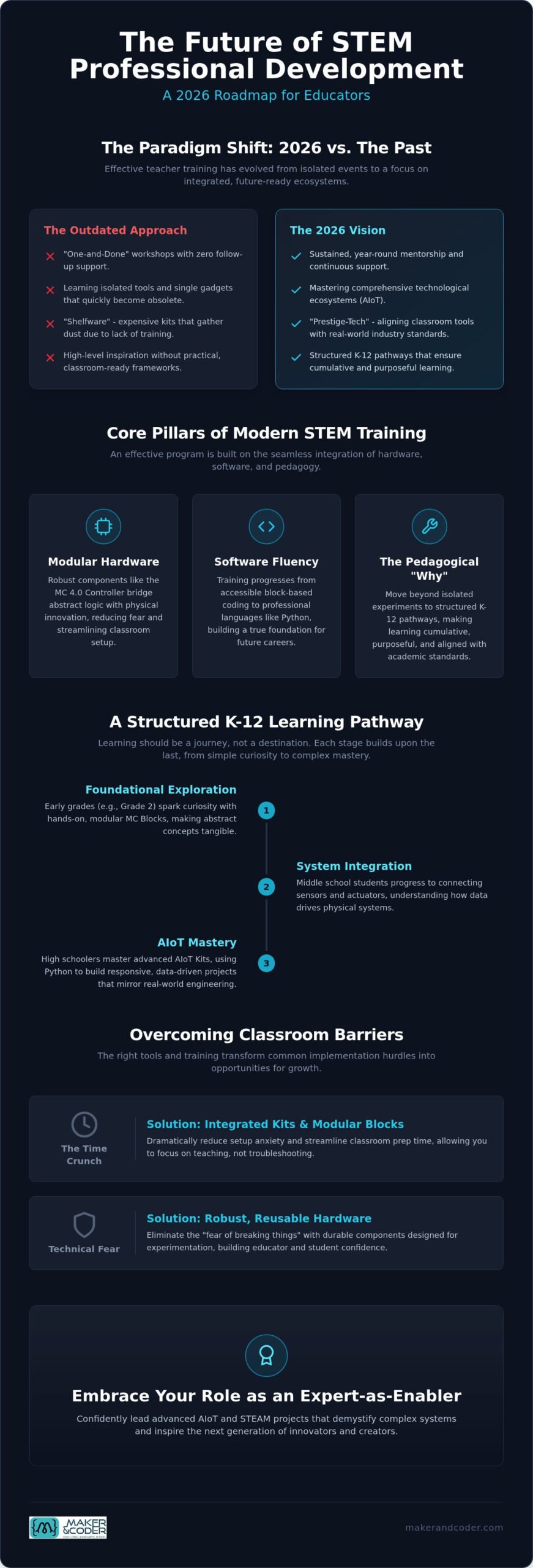
The year 2026 marks a definitive turning point in how we approach Science, technology, engineering, and mathematics (STEM) education. For years, professional development meant attending a Saturday workshop to learn a specific piece of software or a single gadget. That era is over. Effective professional development for STEM teachers 2026 now focuses on mastering a technological ecosystem rather than just learning a tool. It’s the difference between knowing how to fly a drone and understanding the integrated systems that allow it to see, think, and react.
Key Technological Drivers: AI, IoT, and Beyond
The classroom is moving fast. We’ve transitioned from simple block-based coding to sophisticated Python-based robotics that mirror real-world engineering. At the heart of this shift is AIoT. In a K-12 context, AIoT is the intentional integration of artificial intelligence with interconnected modular hardware to create responsive, data-driven physical systems. This technology allows students to build projects that don’t just follow a script but actually perceive their environment. Educators need hands-on confidence with modular hardware, like the MC 4.0 Controller, to facilitate these advanced explorations without fear of technical failure.
The Shift from Inspiration to Implementation
Keynote speeches and high-level inspiration are no longer enough for meaningful growth. Teachers are demanding classroom-ready frameworks that align perfectly with academic standards. The focus has moved from “isolated experiments” to structured K-12 pathways. You need a roadmap that shows how a second-grader’s curiosity with MC Blocks evolves into a high schooler’s mastery of an AIoT Kit. This progression ensures that learning is cumulative and purposeful. By choosing training that emphasizes the “Expert-as-Enabler” model, you can find the right balance between high-tech innovation and practical classroom management. Explore the latest integrated kits and curriculum to see how these ecosystems are built for the modern educator.
Core Pillars of Modern STEM Training: Hardware, AI, and IoT
Modern STEM training is built on three essential pillars: hardware, software, and the pedagogical “why” that connects them. In the past, these elements were often taught in isolation, leaving educators to figure out the integration on their own. Effective professional development for STEM teachers 2026 reverses this trend. It treats physical computing as the essential bridge to abstract logic. When a student sees a line of code manifest as a physical movement in a robot, the concepts of variables and loops become tangible rather than theoretical.
Software fluency in 2026 requires a strategic balance. While easy-to-use interfaces are excellent for lowering the barrier to entry, true “prestige-tech” training pushes toward professional coding languages like Python. This transition ensures that students aren’t just playing with toys; they are building a foundation for future careers. Sustainability also plays a critical role. Choosing modular systems that grow with the student, from basic builds to complex autonomous systems, ensures your curriculum remains relevant year after year. If you’re ready to transition from being a classroom manager to a visionary mentor, reach out to our team to discuss a tailored training roadmap.
The Power of Modular Hardware in PD
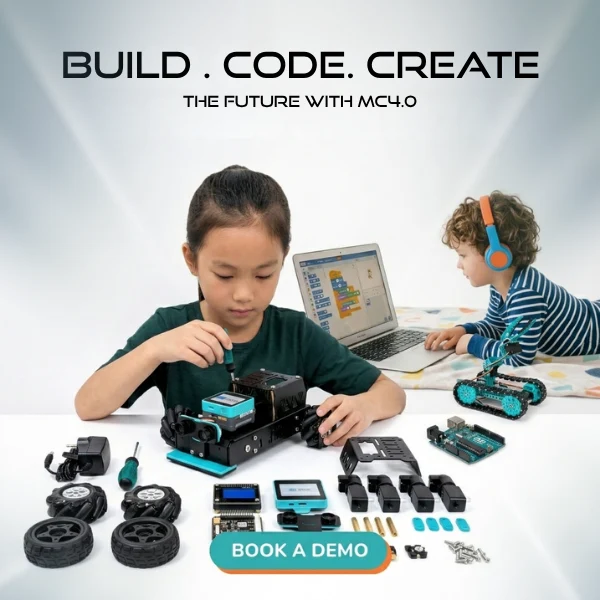
Modular components like MC Blocks are transformative for professional development. They significantly reduce the “fear of breaking things” that often plagues teachers new to robotics. Because these components are designed for robust, repeated use, educators can experiment freely. Centralized controllers, such as the MC4.0 Controller, streamline classroom management by providing a single, reliable hub for all sensors and actuators. This modularity allows a single hardware foundation to support diverse learning paths, including the MC4.0 Base Kit, the MC4.0 AIoT Kit, and the MC4.0 STEAM Kit.
Integrating AI and IoT into the Curriculum
The SERP gap in current STEM training is the lack of specific guidance on the Artificial Intelligence of Things (AIoT). Professional development must move beyond teaching students how to “use” AI tools and start teaching them how to “build” with AI. This requires a deep focus on data literacy. Students need to understand how sensors collect information, how AI processes that data, and how the IoT communicates the results. Practical examples include:
- Smart Agriculture: Building sensors that monitor soil moisture and use AI to optimize watering schedules.
- Urban Planning: Creating IoT-connected traffic lights that adjust based on real-time vehicle detection.
- Environmental Monitoring: Designing wearable devices that track local air quality and upload data to a shared map.
These projects solve real-world problems while teaching the high-level technical skills demanded by the modern workforce.
Selecting the Right PD Format: Workshops vs. Sustained Support
Choosing the right format for professional development for STEM teachers 2026 is about more than just picking a date on a calendar. It’s a strategic decision that determines whether new technology becomes a classroom staple or ends up in a storage closet. Many educators gravitate toward the “Summer Intensive” model. These programs offer a burst of inspiration and a chance to dive deep into new hardware without the pressure of a daily bell schedule. However, the most effective growth usually happens through “Year-Round Mentorship.” This model provides the safety net teachers need when troubleshooting a complex AIoT project on a Tuesday morning in November.
We also need to consider the source of the instruction. “For Teachers, By Teachers” programs offer invaluable practical tips and empathy. They understand the classroom reality. Yet, “Expert-Led Innovation” is what pushes a district toward the cutting edge. Access to industry leaders who understand the modularity of the MC 4.0 Controller ensures that the training isn’t just about survival; it’s about mastery. Evaluating the ROI of these programs requires looking beyond attendance numbers. Districts must measure success by how many teachers actually integrate the MC Curriculum into their daily lessons and how students’ technical confidence grows over time.
The post-hybrid world has also redefined the “where” of training. Virtual sessions offer convenience and immediate access to global experts. In-person workshops, however, provide the tactile experience necessary for hardware mastery. A balanced approach often works best, using in-person sessions for initial hardware setup and virtual check-ins for sustained software support.
The Case for Sustained Professional Learning Communities (PLCs)
Success in STEM doesn’t happen in a vacuum. The most resilient programs rely on sustained peer collaboration. Digital platforms now allow teachers to share code snippets, troubleshooting tips, and lesson successes long after the initial training session ends. This builds a “knowledge transfer” culture within the school. When one teacher masters a new MC Block application, the entire department levels up. It’s about moving from individual silos to a collective brain trust that supports every learner.
Certification and Career Advancement
Professional development shouldn’t just help your students; it should propel your career. Look for programs that offer recognized credentials or graduate credits. In 2026, STEM mastery is a powerful lever for moving into leadership roles, such as technology coordinators or curriculum directors. Earning an MC Curriculum certification provides a prestigious badge of expertise that enhances an educator’s professional portfolio and signals a commitment to future-ready instruction. To assist with the research and documentation involved in career advancement, Clarami provides an intelligent workspace that streamlines academic and professional writing. Don’t just attend a workshop. Invest in a pathway that rewards your dedication with tangible professional growth.
Overcoming Implementation Barriers in the K-12 Classroom
Even the most inspired educator faces the reality of the Monday morning bell. The transition from a high-energy workshop to a crowded classroom is where most initiatives stall. Effective professional development for STEM teachers 2026 must address these logistical hurdles head-on. It isn’t enough to understand the code; you must also master the art of managing thirty students, twenty robots, and a limited supply of charging cables. We see technology as a tool for creative expression, but that expression only happens when the environment is organized and purposeful.
The “Time Crunch” is often the primary reason why new curriculum is abandoned. Integrated kits, such as the MC 4.0 Base Kit, save hours of prep time by providing a cohesive ecosystem where every part works together. No more hunting for loose wires or troubleshooting incompatible sensors five minutes before class starts. Budgeting for these systems also requires a shift in mindset. Instead of chasing one-off grants for flashy gadgets, schools are now prioritizing modular systems that offer a clear K-12 progression. This approach ensures that your investment in training and hardware pays dividends for years to come.
Solving the “Shelfware” Problem
Kits fail when they lack a structured K-12 MC Curriculum to back them up. Without a roadmap, hardware quickly becomes “shelfware,” gathering dust in a supply closet. To prevent this, teacher training must focus on “low-floor, high-ceiling” tools. These are systems that are accessible enough for a beginner to see immediate success but sophisticated enough for an advanced student to explore complex AIoT applications. Modular systems like MC Blocks are the key to longevity. They prevent technical obsolescence by allowing you to add new sensors or controllers to your existing foundation as industry standards evolve. If you’re struggling to secure funding or map out your implementation, contact our educational consultants for a personalized strategy session.
Aligning Tech with Academic Standards
Modern robotics and AI projects shouldn’t be “extra” work; they should be the engine that drives core learning. Mapping your projects to NGSS and ISTE standards ensures that hands-on innovation meets rigorous academic requirements. Explore our hardware kits designed specifically for standard-aligned classrooms, where every build serves a clear educational purpose. Assessing student progress in these environments requires moving beyond traditional tests. We train teachers to use evidence-based strategies, such as portfolio reviews and iterative design journals, to capture the true depth of a student’s technical growth. This shift empowers educators to support both the meticulous “coder” and the creative “maker,” ensuring every learner finds their place in the future of technology.
Empowering Educators with Maker & Coder’s Teacher Training
We believe that technology shouldn’t be a daunting barrier. Instead, it’s an accessible tool for creative expression. Our training philosophy centers on the “Expert-as-Enabler” model. This approach ensures that we don’t just showcase knowledge; we transfer it directly to you. When you engage in professional development for STEM teachers 2026 with Maker & Coder, you aren’t just attending a session. You are entering a comprehensive ecosystem designed to support your growth from your first sensor build to advanced AIoT implementation.
The MC 4.0 Ecosystem provides a seamless journey from initial training to daily classroom reality. We offer customized training pathways tailored to our specific hardware, including the MC4.0 Base Kit, the MC4.0 AIoT Kit, and the MC4.0 STEAM Kit. This modularity ensures that you only learn what you need when you need it. Central to this journey is the MC Curriculum (K-12). It provides a structured 10-year roadmap for student success, ensuring that the skills learned in primary school serve as a solid foundation for high school engineering. This isn’t just about a single lesson; it’s about building a legacy of technical literacy.
What to Expect in a Maker & Coder Workshop
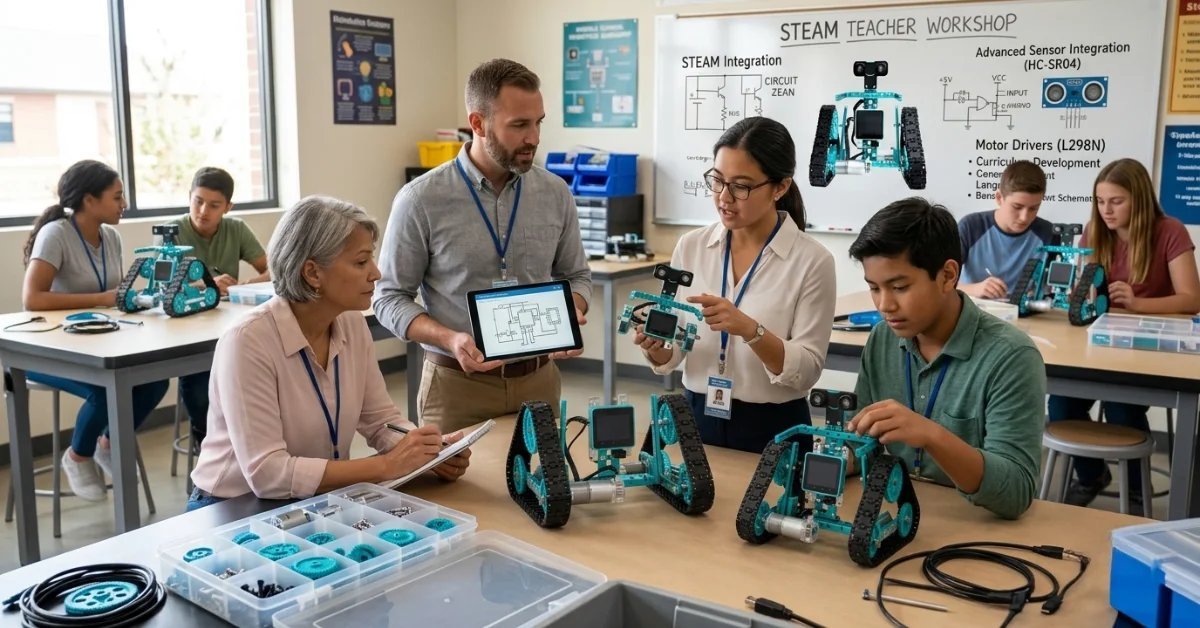
Expect to get your hands dirty. Our workshops emphasize immediate, hands-on experimentation with the MC4.0 Controller and modular MC Blocks. You’ll move quickly from basic assembly to complex system design. We dedicate significant time to collaborative lesson planning using the K-12 MC Curriculum, ensuring you leave with a concrete plan for your next class. You’ll also receive direct support from a team of engineers and veteran STEM educators who understand both the technology and the classroom environment. This blend of professional authority and supportive mentorship gives you the peace of mind to innovate with confidence.
Join the Future of STEM Education
Transforming your classroom starts with the right partnership. We’ve seen educators move from hardware hesitation to technical mastery in a matter of days. Teachers who have embraced our ecosystem report a palpable sense of excitement in their students and a significant reduction in their own prep time. By bringing Maker & Coder professional development to your school or district, you are investing in a future where technology is a bridge, not a wall. Visit our shop to view our kits and training options and take the first step toward becoming a future-ready instructor. Let’s build something tangible together.
Lead the Next Generation of Innovators
The transition to a future-ready classroom doesn’t happen by chance. It requires a deliberate shift from simply teaching tools to mastering integrated technological ecosystems. We’ve explored how AIoT, hardware mastery, and sustained mentorship form the backbone of effective professional development for STEM teachers 2026. By moving past the era of forgotten gadgets and embracing modular hardware, you ensure your lab remains a hub of constant discovery. You’re not just teaching a class; you’re building a foundation for lifelong technical literacy.
Your journey toward becoming an expert-as-enabler is supported by our comprehensive K-12 MC Curriculum integration and modular MC Blocks designed for teacher ease of use. These resources, paired with our global reach and expert-led training programs, provide the peace of mind you need to lead with authority. It’s time to bridge the gap between abstract code and physical innovation in your district. Empower your classroom with the MC 4.0 Ecosystem and Professional Training and watch your students transform into the bold innovators the future demands. The tools are ready and the roadmap is clear. Let’s build the future together.
Frequently Asked Questions
What are the top STEM professional development trends for 2026?
The primary trends include a definitive shift toward AIoT integration and the transition from block-based coding to industry-standard Python. Educators are moving away from isolated gadget training in favor of mastering entire technological ecosystems. There is also a growing emphasis on sustained, peer-led professional learning communities that offer ongoing support rather than one-off summer intensives.
How do I choose between a STEM conference and a specific hardware training program?
Choose a national conference if your goal is high-level networking and pedagogical inspiration. However, if you need the technical confidence to lead a robotics lab on Monday morning, prioritize hardware-specific training. Programs focused on the MC 4.0 Controller provide the tactile, hands-on proficiency that generalized conferences often lack.
Can I get certified in AIoT instruction for K-12 students?
Yes, specialized certification in AIoT instruction is a cornerstone of professional development for STEM teachers 2026. These credentials validate your ability to teach the intersection of artificial intelligence and physical hardware. Maker & Coder offers specific training pathways that result in recognized certifications, helping you establish yourself as a technology leader in your district.
Does Maker & Coder offer virtual professional development for teachers?
We provide a robust hybrid model that includes virtual sessions for software mastery and curriculum planning. While we recommend in-person workshops for the initial tactile setup of hardware, our digital platforms ensure you have expert support long after the first session. This approach allows us to reach a global audience while maintaining a high standard of technical instruction.
Are there grants available for STEM teacher training and hardware kits?
Many state and federal funding pools prioritize AI literacy and workforce readiness initiatives. You should look for grants that specifically target “innovation in the classroom” or “career and technical education” to cover the costs of professional development for STEM teachers 2026. Our educational consultants can help you identify standard-aligned kits that qualify for these specific funding requirements.
How does the MC 4.0 Kit simplify STEM instruction for beginners?
The MC 4.0 Kit uses modular MC Blocks that snap together without the need for complex wiring or soldering. This design removes the technical anxiety often associated with physical computing, allowing beginners to focus on logic and creativity. It’s a “low-floor” entry point that ensures both the teacher and the student see immediate, tangible results from their code.
What is the difference between STEAM and AIoT training for teachers?
STEAM training focuses on integrating the arts and design thinking into traditional science and math lessons. AIoT training is more technically specialized, focusing on the synergy between artificial intelligence and interconnected physical devices. While STEAM encourages broad creative exploration, AIoT training provides the specific data-literacy skills required to build smart, responsive systems.
How long does it take to become proficient with the MC Curriculum?
Most educators gain foundational proficiency after a single three-day intensive workshop. The K-12 MC Curriculum is designed to be intuitive, providing a structured roadmap that allows you to learn alongside your students. Mastery of the more advanced AIoT and STEAM kits typically develops over a full academic year of sustained implementation and peer collaboration.