What if the code your students write didn’t just stay trapped behind a glass screen, but actually breathed life into a machine they built themselves? You’ve likely seen the spark of curiosity fade when learning feels like a series of fragmented, screen-only tasks that lack a clear destination. It’s a common challenge to find resources that bridge the gap between simple logic and the professional engineering skills required by the updated 2026 CSTA standards.
We believe that technology is a tool for creative expression, not a daunting hurdle. This article shows you how a structured curriculum transforms beginners into confident creators through the perfect blend of logic and physical hardware. You’ll discover how to implement block coding robotics projects that keep learners engaged while building a solid foundation for future text-based programming.
We’ll provide a clear roadmap for student progression, moving from the modular simplicity of MC Blocks to the advanced capabilities of the MC 4.0 Controller. Get ready to turn abstract concepts into tangible, high-tech reality that prepares the next generation for a bold, innovative future.
Key Takeaways
- Focus on logical thinking rather than memorizing complex syntax by using visual programming languages that make technology accessible for every learner.
- Boost student engagement by integrating block coding robotics projects that provide immediate sensory feedback and turn abstract concepts into tangible results.
- Establish a clear K-12 roadmap that moves learners from basic loops to advanced variables, ensuring a smooth transition to professional engineering.
- Assess your technical readiness and select a curriculum aligned with 2026 CSTA standards to ensure long-term educational value and scalability.
- Leverage the MC 4.0 ecosystem to bridge the gap between screen-based tasks and real-world hardware applications; it’s the professional step beyond basic screen coding.
Understanding Block Coding: The Foundation of Modern STEM Literacy
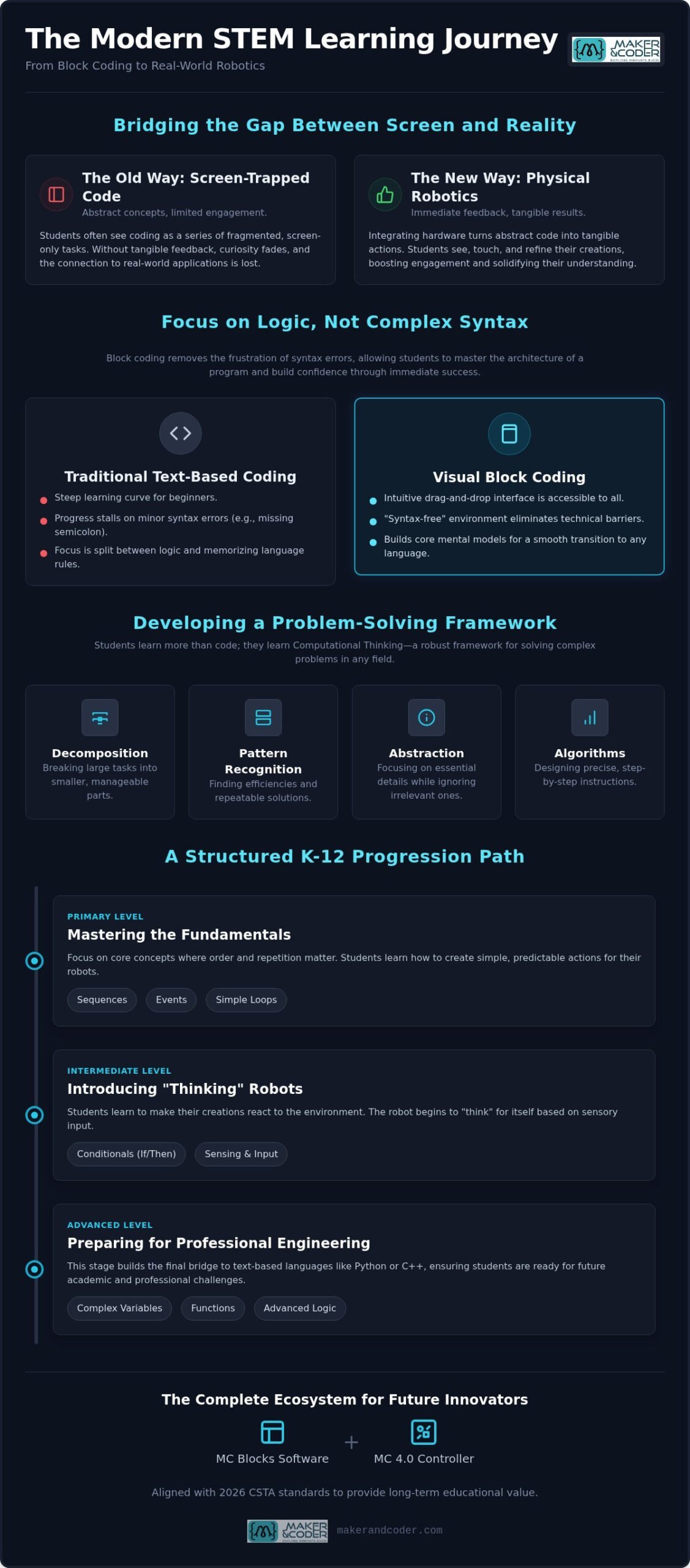
Block coding is more than a simplified entry point for students; it is a sophisticated visual programming language that prioritizes logic over linguistics. By using interlocking graphical elements, learners manipulate complex commands without the friction of text-based errors. This “syntax-free” environment allows beginners to master the architecture of a program before they ever worry about a missing bracket or a misplaced semicolon. It represents the first step in a journey from a curious learner to a future innovator.
At the heart of this methodology lies Computational Thinking. This is not just about computers; it’s a robust problem-solving framework. Students learn decomposition by breaking down massive tasks into manageable parts. They apply pattern recognition to find efficiencies, use abstraction to focus on essential details, and design algorithms to execute precise solutions. Integrating these concepts into block coding robotics projects ensures that logic is not just theoretical. It becomes something students can see, touch, and refine in real-time.
Why Visual Logic Beats Syntax for Beginners
Traditional coding often stalls at the first syntax error. Block-based systems eliminate this cognitive barrier entirely. By removing the fear of technical “gotchas,” we empower students to experiment boldly. Drag-and-drop mechanics mirror the natural flow of human logic, allowing the brain to focus on “what” to build rather than “how” to type it. This builds the essential mental models required for a future transition to professional languages like Python or C++. It’s about building confidence through immediate success.
The Role of Block Coding in the 2026 Job Market
Visual logic has moved far beyond the primary classroom. In 2026, professional environments like high-end game design and industrial automation rely on visual scripting to accelerate development cycles. We’re seeing a fundamental shift from “learning to code” to “coding to learn.” Students use these tools to explore physics, mathematics, and even digital art. As AI and IoT systems become ubiquitous in every industry, understanding the underlying logic of these systems is no longer an optional skill. It’s a requirement for future-readiness.
While exploration is vital, a structured approach like the MC Curriculum ensures long-term skill retention. Free-play often leads to a plateau where students repeat simple tasks without advancing. A guided path ensures that every project builds on the last, turning basic curiosity into professional-grade capability. Visit the Maker & Coder shop to explore how our ecosystem bridges the gap between screen-based logic and physical engineering.
The Anatomy of a High-Impact Block Coding Curriculum
A high-impact curriculum is more than a collection of isolated lessons. It’s a strategic journey that aligns with modern academic standards and research, such as the Foundational Research in Robotics program, to ensure students develop deep technical literacy. By moving away from “free-play” and toward a structured K-12 progression, educators ensure that curiosity leads to measurable skill acquisition. This approach relies on Project-Based Learning (PBL) as its primary engine. When students solve real-world problems through block coding robotics projects, they aren’t just memorizing commands; they’re engineering solutions.
Integration across subjects is vital. A robot that draws geometric shapes brings Math to life. A sensor that monitors soil moisture transforms a Science experiment into a data-driven investigation. By using a hardware-first methodology, we take abstract software concepts and make them visible. This visibility is the key to student engagement and long-term retention. It turns a screen-based task into a tangible achievement.
Tiered Learning: From Basic Sequences to Complex Variables
Effective progression requires a tiered approach that respects a student’s cognitive development. At the Primary Level, the focus is on mastering sequences, events, and simple repetitive loops. Students learn that order matters. As they move to the Intermediate Level, we introduce conditionals and sensing. Here, the robot begins to “think” for itself based on its environment. At the Advanced Level, the curriculum shifts toward complex data handling, including functions, lists, and AIoT integration. This stage bridges the gap between basic logic and advanced STEAM concepts, preparing students for the high-level systems they’ll encounter in professional engineering.
Integrating Hardware: The MC 4.0 Controller Advantage
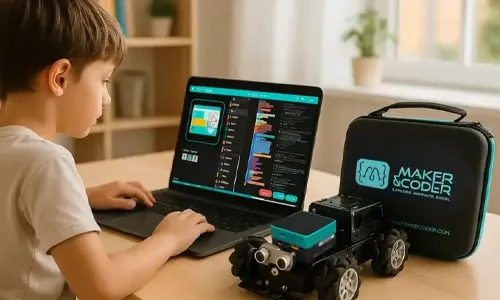
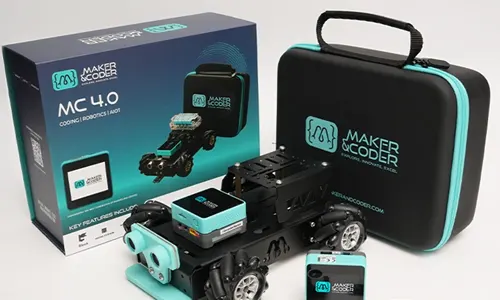
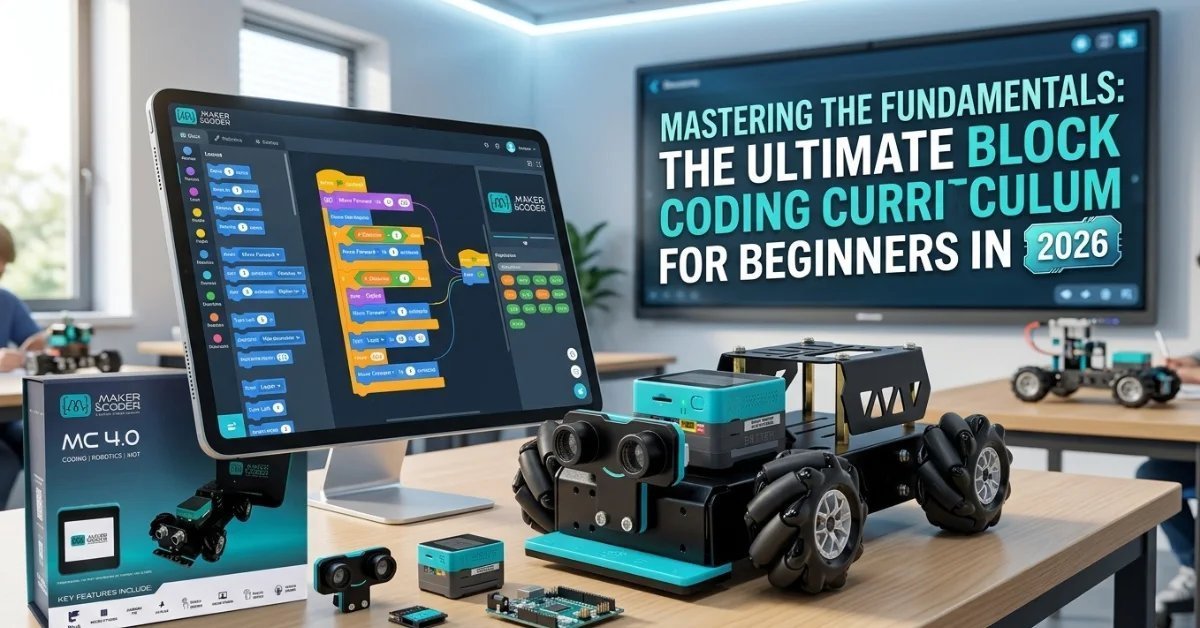
The transition from a screen-only task to a physical build is where the magic happens. The MC 4.0 Controller serves as the professional brain for student projects, allowing them to control motors, LEDs, and high-precision sensors in real-time. It transforms a laptop from a passive viewing device into a powerful command center. Modular MC Blocks simplify complex electrical engineering for beginners by providing a plug-and-play interface that removes the danger of wiring errors while maintaining technical rigor. This ecosystem ensures that students spend their time innovating rather than troubleshooting basic connections. You can explore these components in the Maker & Coder shop. If you’re ready to bring this level of engagement to your classroom, reach out to our team for a consultation on curriculum implementation.
Screen vs. Physical Logic: Why Hardware-Integrated Curriculums Win
Coding on a screen is a vital start, but physical hardware is the ultimate destination for true engineering literacy. While many platforms stop at digital animations, block coding robotics projects offer a tangible feedback loop that screen-only tasks cannot replicate. When a student drags a “Rotate” block and a physical motor turns, the abstraction gap vanishes. They aren’t just seeing pixels move; they’re witnessing the direct application of their logic on the physical world. This transition is essential for building a deep understanding of how software interacts with reality.
Sensory feedback acts as a powerful cognitive catalyst. It transforms a line of code into a physical force, allowing students to hear the hum of a motor or see the glow of an LED. MC Blocks act as the essential bridge here. They provide a modular interface that connects pure software logic to real-world machines without the frustration of proprietary, brick-based limitations. By seeing their code manifest in the physical environment, students develop a more resilient mental model of computational concepts.
The Cognitive Science of Hands-On Learning
Kinesthetic learning reinforces memory and sharpens problem-solving skills in ways that passive observation cannot. There’s a profound difference between a screen glitch and a physical circuit that needs troubleshooting. The “Aha!” moment when a student realizes their sensor is misaligned or their gear ratio is off creates a lasting impact. This modularity in hardware mirrors the structure of professional software. It teaches students to think in components rather than monolithic blocks, a skill that’s directly transferable to high-level engineering roles.
From STEAM to AIoT: Scaling the Curriculum
As students grow, the curriculum must evolve to meet the demands of a high-tech future. We introduce advanced concepts like Artificial Intelligence and the Internet of Things (AIoT) through specialized coding blocks. By using the MC4.0 AIoT Kit, learners move from simple movements to complex data collection and smart system automation. This prepares them for the next level of innovation found in the MC4.0 STEAM Kit. You’ll find these tools and more at the Maker & Coder shop, where we provide the hardware necessary to scale alongside your students’ ambitions. It’s about moving from being a consumer of technology to becoming a creator of intelligent systems.
Implementing a Block Coding Program in Your School or Home
Building a future-ready STEM lab is a strategic investment in cognitive development. It requires more than just purchasing hardware; it demands a methodical approach that balances technical readiness with pedagogical support. Start by assessing your current infrastructure. Ensure your lab has the necessary laptops and connectivity to support multiple block coding robotics projects simultaneously. A well-prepared environment prevents technical friction from stalling the joy of discovery.
Once the foundation is set, select a curriculum that offers a long-term K-12 roadmap. A fragmented approach leads to fragmented learning. A structured path like the MC Curriculum ensures skills build year over year, moving students from basic logic to advanced engineering. The third step is empowering your staff. Technology shouldn’t be a daunting challenge for educators. By integrating professional Teacher Training Programs, schools turn non-technical staff into confident mentors. Finally, shift your assessment model. Traditional tests rarely capture the nuance of engineering. Use project portfolios to document the journey from a basic sequence to a complex, autonomous machine.
Teacher Empowerment: Overcoming STEM Anxiety
Many educators feel a sense of abandonment when technical hardware issues arise in the classroom. We address this directly through our dedicated Teacher Training Programs. These sessions provide the professional authority needed to lead a high-tech laboratory with peace of mind. The structured lesson plans within the MC Curriculum significantly reduce prep time for busy educators. This allows teachers to focus on sparking curiosity rather than troubleshooting connections. Building a community of practice among STEM teachers ensures that innovative project ideas are shared and refined across the school.
Setting Up the Ideal Maker Space
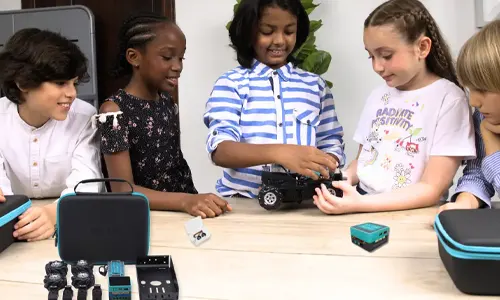
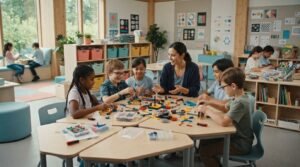
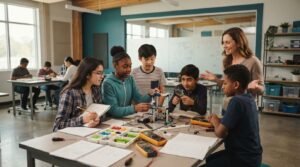
The physical environment should mirror the modularity of the technology itself. An ideal maker space features accessible workstations equipped with MC 4.0 Kits and modular MC Blocks. Organization is key to maintaining momentum. When MC Blocks are stored efficiently, classroom cleanup becomes a quick, collaborative task rather than a chore. Most importantly, foster a “Fail Fast, Learn Faster” culture. In a robotics classroom, code that doesn’t work isn’t a failure; it’s a data point. It’s an invitation to iterate, refine, and eventually succeed. This mindset prepares students for the resilience required in professional engineering fields.
Ready to transform your educational environment with a proven roadmap? Contact our team today to discuss a tailored implementation plan for your school or home lab.
Future-Proofing Education with Maker & Coder MC Curriculum
The 2026 academic year marks a shift in how we approach technical literacy. It’s no longer enough to just move blocks on a screen. The MC 4.0 ecosystem stands as the definitive choice for schools that want to bridge the gap between abstract logic and real-world application. By providing a unified hardware-software environment, it ensures that students aren’t just learning to code; they’re learning to build. This scalability is at the heart of the MC Curriculum. It follows a student’s journey from their first tactile interaction in Kindergarten to complex engineering challenges in Grade 12.
As learners master block coding robotics projects, they develop the mental models required for professional-grade programming. The transition to Python is a natural evolution within our ecosystem. We don’t just teach students where to click; we teach them how to think. This foundation ensures they’re ready for the high-level standards of the modern job market. Educators can finally move beyond fragmented resources and adopt a system that grows alongside their students’ ambitions.
The MC 4.0 Ecosystem: More Than Just Blocks
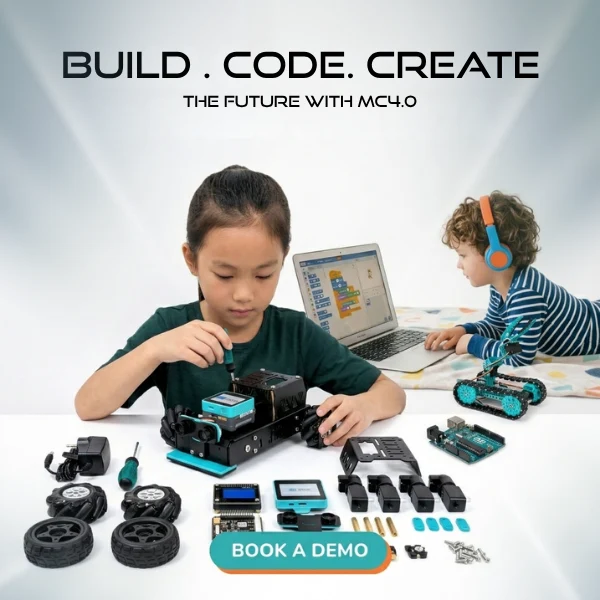
Growth requires specialized tools. Our ecosystem offers tailored pathways through the MC4.0 Base Kit, the MC4.0 AIoT Kit, and the MC4.0 STEAM Kit. Each kit is designed to challenge students at their specific level of development while maintaining technical rigor. At the center of it all is the MC4.0 Controller. It’s not a toy; it’s a durable, professional-grade brain built to withstand the demands of a busy classroom. This hardware-centric focus ensures that every lesson has a tangible outcome. Explore the full range of MC 4.0 Kits and Curriculum to see how these components work together to create a seamless learning experience.
Joining the Global Maker & Coder Community
Innovation thrives in a connected environment. Schools across the globe are adopting the MC Curriculum to ensure their students are future-ready in an AI-driven economy. By choosing a unified system, you’re giving your students a consistent language of discovery. The long-term benefits extend beyond the classroom; they manifest in the confidence of a generation that views technology as an accessible tool for creation. Transform your classroom into a hub of innovation today. We invite you to empower the next generation of builders, thinkers, and problem-solvers. The future isn’t just something that happens; it’s something we build together, one block at a time.
Empowering the Next Generation of Technical Innovators
Mastering the logic of code is the first step, but the true transformation occurs when that logic interacts with the physical world. By integrating block coding robotics projects, you provide students with the sensory feedback necessary to turn abstract concepts into tangible engineering skills. This transition from pixels to physical motion ensures that every learner develops the cognitive resilience required for the advanced technical landscape of 2026. It’s about moving from being a user of technology to becoming a purposeful creator of intelligent systems.
Success in this digital evolution depends on a foundation of reliability and professional authority. Our ecosystem offers a Comprehensive K-12 Curriculum Alignment that grows with your students, supported by Modular MC Blocks for Scalable Learning that simplify complex connections without sacrificing technical rigor. We ensure no educator feels abandoned through our Professional Teacher Training Support, turning every classroom into a center for discovery and peace of mind. Every motor that turns and every sensor that triggers is a testament to a student’s growing mastery.
Contact our team to implement the MC 4.0 Curriculum in your school and start building a bold, innovative future today. Your students are ready to build something remarkable.
Frequently Asked Questions
What is the best age to start a block coding curriculum?
Kindergarten is the ideal starting point for a structured educational pathway. Our MC Curriculum begins at the primary level, focusing on sequences and simple repetitive loops. By starting early, students develop the computational thinking skills necessary for more complex block coding robotics projects in later years. This foundation ensures that technology feels like a natural tool for expression rather than a daunting academic hurdle.
Can block coding really prepare students for professional careers?
Absolutely. Block coding builds the essential mental models required for professional engineering. Modern industries, including industrial automation and high-end game development, frequently utilize visual scripting environments to accelerate production. By mastering these concepts, students learn the underlying logic of algorithms and data structures. This knowledge is directly transferable to professional text-based languages like Python or C++ as they advance in their education.
Do teachers need a computer science degree to teach the MC Curriculum?
You don’t need a specialized degree to lead a successful STEM lab with our tools. We provide comprehensive Teacher Training Programs specifically designed to empower non-technical staff. Our structured MC Curriculum includes detailed lesson plans that reduce prep time and offer clear pedagogical guidance. This support system ensures that educators can focus on mentoring students through their technical discoveries with complete professional confidence.
How does the MC 4.0 Kit differ from consumer coding toys?
The MC 4.0 Kit is a professional-grade technical ecosystem, not a consumer product. While toys often prioritize entertainment, our platform focuses on engineering rigor and long-term scalability. It features the powerful MC 4.0 Controller and modular MC Blocks that allow for sophisticated technical experimentation. This professional step beyond basic screen coding prepares students for the real-world hardware applications they’ll encounter in the workforce.
What hardware is required to run a block coding curriculum effectively?
To run an effective program, you’ll need a laptop or tablet and a hardware kit centered on the MC 4.0 Controller. Modular MC Blocks are essential for providing hands-on technical learning without the risks of complex wiring errors. This combination allows students to see their logic manifest in physical reality. Having these tools in a dedicated maker space encourages a culture of iteration that drives innovation.
How do you transition students from blocks to text-based languages like Python?
Transitioning is a natural evolution within our K-12 roadmap. We start with visual blocks to build logical confidence without the fear of syntax errors. As students mature, the MC Curriculum introduces text-based coding standards, specifically Python. This journey ensures that learners understand the architecture of logic before they worry about semicolons or brackets, making the shift to professional code seamless and intuitive.
Is the MC Curriculum aligned with international educational standards like CSTA?
Yes, the MC Curriculum is fully aligned with the revised 2026 CSTA K-12 Computer Science Standards and ISTE guidelines. We’ve verified that our pathways meet the latest academic requirements for technical education across all grade levels. This alignment provides schools with the peace of mind that their investment in block coding robotics projects delivers long-term value and prepares students for future-ready certifications.
What is the difference between the MC4.0 Base Kit and the AIoT Kit?
The MC4.0 Base Kit focuses on the core fundamentals of sequences, loops, and basic hardware control. In contrast, the MC4.0 AIoT Kit is designed for advanced learners who are ready to explore Artificial Intelligence and the Internet of Things. It includes specialized components for data collection and smart system automation. This progression allows schools to scale their STEM offerings as students master more complex engineering challenges.