Does your current classroom robotics kit inspire future engineers, or does it just feel like another toy? Many educators face the same hurdle. You invest in technology only to find it lacks structured lesson plans or fails to grow with your students as they move from middle to high school. It’s frustrating to see curiosity stall because the hardware isn’t powerful enough to handle real-world challenges. You deserve a solution that empowers both the teacher and the learner.
Discover how to select a robotics ecosystem that bridges the gap between simple play and professional-grade engineering. We’ll show you how to build a unified K-12 pathway that moves students from basic blocks to advanced Python programming on a single, scalable platform. By the end of this guide, you’ll have a clear strategy for choosing hardware that builds confidence and prepares your students for the high-tech workforce. Let’s transform your STEM lab from a playroom into a launchpad for innovation.
Key Takeaways
- Distinguish between simple “robot toys” and a professional-grade classroom robotics kit built for technical and creative expression.
- Master the “Floor, Ceiling, and Walls” framework to select hardware that grows with students from basic block coding to advanced engineering.
- Prioritize modularity and core controllers to minimize classroom setup time while maximizing student engagement with real-world technology.
- Secure the long-term success of your STEM program by pairing high-quality hardware with structured teacher training and a unified K-12 curriculum.
- Future-proof your lab with a scalable ecosystem that bridges the gap between foundational play and professional-grade Python applications.
What Defines a Modern Classroom Robotics Kit?
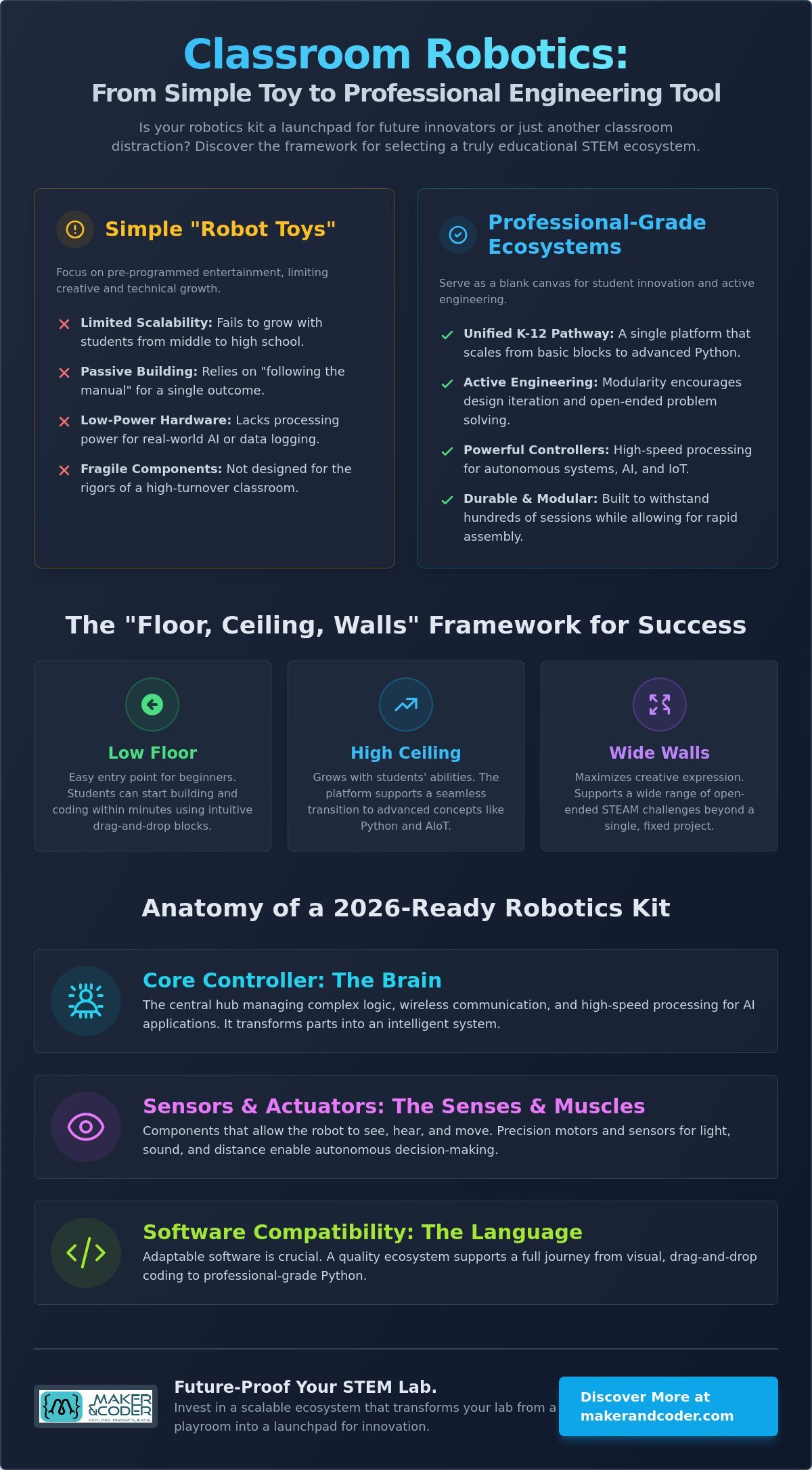
A modern classroom robotics kit is far more than a collection of plastic gears and motors. It’s a modular platform designed for both technical precision and creative expression. While consumer “robot toys” focus on pre-programmed entertainment, professional-grade educational kits serve as a blank canvas for student innovation. They provide the structural integrity and electronic depth required to bridge the gap between simple play and the rigorous demands of educational robotics.
In a high-turnover school environment, durability is non-negotiable. Components must withstand hundreds of hands-on sessions without failing. Beyond physical toughness, the 2026 standard for robotics emphasizes intelligence. We’ve seen a definitive shift toward integrated sensors and onboard processing. This allows students to move from basic remote control to autonomous systems that utilize AI and data logging. It’s about building a foundation that lasts and grows with the learner.
The Shift from Passive Building to Active Engineering
The 2026 classroom requires kits that support real-world problem solving. Gone are the days of simply “following the manual” to build a specific model. Today’s students must move from passive building to active engineering. Modularity plays a vital role here, allowing learners to iterate on designs quickly and test new theories in real-time. This flexibility encourages open-ended STEAM challenges where there isn’t just one right answer. It empowers students to think like innovators, transforming a pile of parts into a solution for a local or global problem. It’s a journey from following instructions to creating original blueprints.
Key Components of a Standard-Aligned Kit
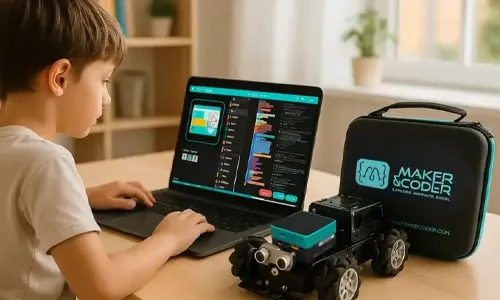
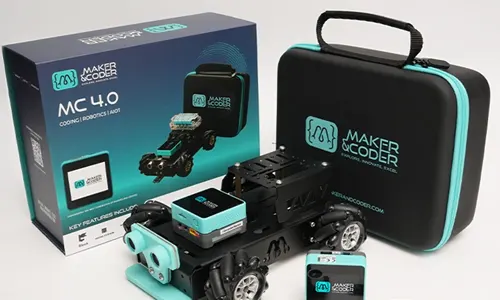
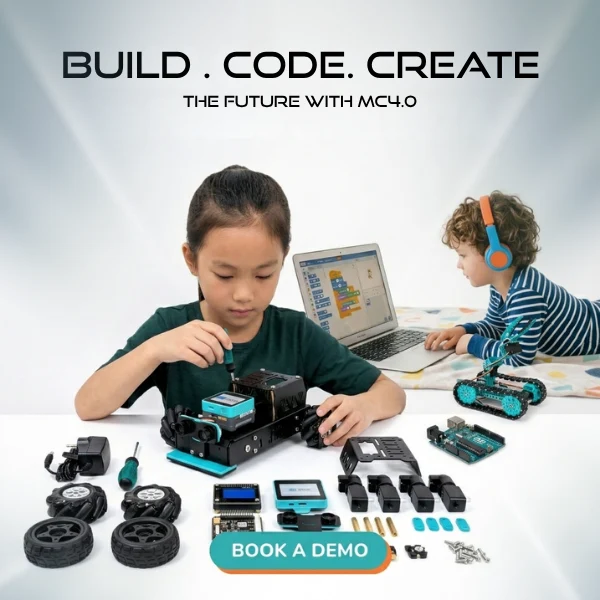
To meet modern academic standards, a kit must include sophisticated hardware that mirrors industry tools. You can find these professional-grade components in the MC 4.0 Kit, which is built for long-term classroom success. A standard-aligned kit focuses on three essential pillars:
- Microcontrollers: The “brain” of the robot. Advanced controllers, such as the MC4.0 Controller, enable complex logic, wireless connectivity, and high-speed processing for AI applications.
- Actuators and Sensors: These components allow the robot to interact with its environment. Precision motors provide movement, while sensors for light, sound, and distance provide the data needed for autonomous decision-making.
- Software Compatibility: The best hardware is useless without adaptable software. A quality ecosystem supports a journey from drag-and-drop MC Blocks to professional-grade Python coding.
By focusing on these core elements, schools can ensure they aren’t just buying a product, but investing in a scalable learning ecosystem. This approach prepares students for the technical realities of the future while keeping the joy of discovery at the center of the lesson.
The Anatomy of a High-Performance STEM Ecosystem
Selecting a classroom robotics kit involves more than picking a brand. It requires choosing a scalable architecture. A high-performance STEM ecosystem begins with a “Core Controller.” This central hub manages sensors, motors, and wireless communication; it transforms a simple machine into a sophisticated tool for discovery. When the curriculum is baked into the hardware design, students spend less time troubleshooting connections and more time solving problems. This synergy ensures that the technology serves the learning objectives rather than distracting from them.
Efficiency matters in a 50 minute class period. Plug-and-play modularity ensures that students can assemble and test designs rapidly. This speed is critical for maintaining momentum. As we move toward 2026, AI and IoT (AIoT) integration has become the classroom standard. Students aren’t just building cars. They’re creating smart systems that analyze data and interact with the cloud. Research highlighting the Benefits of Robotics in Education shows that these high-level interactions significantly boost student motivation and academic performance. It’s about giving them the tools used in modern laboratories today.
The MC 4.0 Platform: A Case Study in Modularity
The MC 4.0 platform exemplifies this modular approach. The MC4.0 Controller serves as the central hub for our entire technical lineup. You can begin with the MC4.0 Base Kit to learn fundamentals. As skills grow, you can easily transition to the MC4.0 AIoT Kit or the MC4.0 STEAM Kit available in our online shop. Using MC Blocks allows for rapid prototyping without the frustration of complex wiring. This scalability ensures your investment remains relevant as students progress. If you need help mapping out your school’s tech path, you can reach out to our team for a consultation.
Software Versatility: Blocks to Python
Software versatility is the final piece of the puzzle. Block-based coding is essential for early learners. It removes the barrier of syntax and builds immediate confidence. However, a professional ecosystem must provide a bridge. Students eventually need to transition to text-based coding seamlessly. Python has emerged as the industry-standard language for secondary education robotics. By using a platform that supports both, you ensure students don’t hit a “ceiling” in their learning journey. They move from simple logic to professional-grade engineering within the same familiar environment. This progression is the key to long-term STEM success.
Choosing the Right Kit for Every Grade Level
Selecting a classroom robotics kit requires a deep understanding of cognitive development. You aren’t just teaching assembly; you’re nurturing a mental model of how systems work. To ensure long-term success, evaluate tools using the “Floor, Ceiling, and Walls” framework. The floor represents how easily a beginner can start. The ceiling is the limit of its technical capability. The walls are the diverse directions a project can take. If the floor is too high, younger students get discouraged. If the ceiling is too low, older students lose interest. A unified ecosystem solves this by providing a consistent hardware language that expands as the student grows.
Total cost of ownership is another critical factor. Fragmented labs are expensive. When you switch brands every few years, you lose teacher expertise and hardware compatibility. A unified system reduces the total cost of ownership by streamlining training and maximizing the lifespan of every component. Don’t worry about younger students finding the tech too difficult. With block-based interfaces, learners grasp complex logic before they can even type. They are digital natives ready for sophisticated tools, provided the entry point is intuitive.
Elementary and Middle School: Building the Foundation
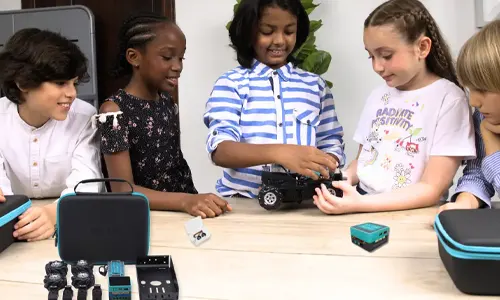
Focus on tactile learning and immediate feedback during these formative years. The MC4.0 Base Kit allows students to see the physical results of their logic instantly. Use these tools to integrate STEAM concepts into core subjects like math and science. Robotics makes abstract ideas like sequencing and algorithmic thinking tangible. When a student programs a robot to draw a geometric shape, they aren’t just coding; they’re mastering spatial reasoning and mathematical precision. This foundational work ensures they’re ready for more complex challenges in later grades.
High School and Beyond: Advanced Technical Literacy
High school students require more than just building blocks. They need the MC4.0 AIoT Kit to explore complex systems like cloud connectivity and machine learning. By 2025, it’s expected that 45% of educational robots will have AI capabilities. This shift makes advanced literacy essential for workforce readiness. Research into the Role of Robotics in K-12 Education emphasizes that high school programs must bridge the gap between academic theory and industrial application. You can find these advanced systems in our online shop. With proper teacher training, these kits facilitate high-level engineering projects that prepare students for the technical realities of the future.
Overcoming Implementation Hurdles in Schools
The most sophisticated classroom robotics kit will collect dust if the human element is ignored. Industry data suggests that the lack of teacher support is the primary reason STEM programs fail. Even the most advanced labs can become stagnant if educators feel overwhelmed by complex hardware or a lack of clear direction. Success requires shifting the focus from hardware acquisition to human empowerment. You need a strategy that addresses hardware inventory, classroom logistics, and the professional growth of your staff.
Managing a lab is about more than just charging batteries. It involves creating a system where hardware is organized and lesson plans are ready to deploy at a moment’s notice. When your equipment is accessible and your teachers feel prepared, the technology becomes a seamless part of the day rather than a source of stress. This transition from chaos to clarity is what ensures a long-term return on your investment. It turns a collection of parts into a thriving center for innovation.
Empowering Educators through Training
Move your staff from tech-anxious observers to tech-confident mentors. We believe in an “Expert-as-Enabler” model where teachers don’t just learn to follow instructions; they learn to lead creative discovery. One-off workshops often fail because they don’t provide the depth needed for real-world classroom challenges. Ongoing support systems are the only way to ensure educators feel capable of troubleshooting and inspiring their students. By leveraging specialized Teacher Training Programs, you provide your team with the pedagogical tools to turn every technical hurdle into a learning opportunity.
Curriculum Integration and Lesson Planning
Align your robotics projects with national standards to ensure academic rigor. Every lesson should map clearly to CSTA and ISTE frameworks, providing a structured, multi-year learning pathway. Busy educators don’t have time to build a curriculum from scratch. They need “ready-to-teach” plans that are baked into the hardware design. Using the MC Curriculum allows you to bridge the gap between technical skills and core subjects like math and science. This integration ensures that robotics isn’t just an “add-on” but a fundamental part of your school’s academic success. To build a customized implementation plan for your district, connect with our educational consultants today.
Future-Proofing Your STEM Lab with Maker & Coder
Choosing the right classroom robotics kit is more than a purchase; it’s a strategic investment in the next generation of innovators. The MC 4.0 ecosystem provides the logical choice for schools aiming to build a future-ready environment. By integrating hardware, software, and curriculum into one seamless experience, we remove the friction that often stalls STEM progress. This unified platform ensures that students don’t just learn to build; they learn to think, iterate, and solve complex problems within a single, professional-grade framework.
Partnering with a global leader committed to K-12 innovation gives your school a distinct advantage. You gain access to a platform that scales from simple block-based logic to advanced engineering. This consistency builds deep technical literacy over time. It’s about moving beyond isolated projects to create a coherent, multi-year learning journey. When your hardware and software speak the same language, your students can focus on the creative expression of their ideas rather than the limitations of their tools.
The Maker & Coder Advantage
The MC4.0 Controller stands at the forefront of 2026 educational standards. It offers the processing power required for real-time AI data analysis and sophisticated IoT connectivity. This technical superiority ensures your lab remains relevant as technology evolves. Additionally, the modular design of MC Blocks prevents hardware obsolescence by allowing you to swap and upgrade components as needed. We invite you to explore the Maker & Coder Shop to discover specialized kits that meet your specific classroom needs.
Next Steps: From Planning to Launch
Transforming your STEM lab begins with a clear vision. Start by evaluating your current lab and identifying the gaps in your K-12 pathway. Does your hardware grow with your students, or does it hold them back? We recommend requesting a consultation for whole-school implementation to ensure every grade level is aligned. Professional development is the final piece of the puzzle. You can contact the Maker & Coder team to learn more about our teacher training programs and implementation strategies.
Your classroom has the potential to be more than just a room filled with kits. It can be a hub of innovation where students tackle real-world challenges with confidence. Take the first step today. Move from fragmented tools to a unified ecosystem that empowers both teachers and learners. Let’s build a future where every student has the skills to lead in a tech-driven world.
Empowering the Next Generation of Engineers
Building a successful STEM program requires more than just hardware; it requires a vision for long-term growth. You’ve seen how the right classroom robotics kit acts as a bridge between foundational play and professional-grade engineering. By choosing a unified ecosystem, you eliminate the fragmentation that often stalls student progress. This approach ensures your investment grows alongside your learners, providing a consistent and scalable pathway from primary school to graduation.
Success is within reach when you pair high-performance tools with the right support systems. Our comprehensive K-12 MC Curriculum and professional Teacher Training Programs move your staff from tech-anxious to tech-confident. With the modular MC 4.0 hardware platform, your lab becomes a dynamic hub of innovation ready for the challenges of 2026 and beyond. It’s time to transform your classroom into a launchpad for creative expression and technical mastery.
Ready to redefine what’s possible in your school? Explore the MC 4.0 Ecosystem and K-12 Curriculum to start your journey toward STEM excellence. Let’s build the future together.
Frequently Asked Questions
What age group is the MC 4.0 Kit suitable for?
The MC 4.0 Kit is engineered to support the entire K-12 spectrum. It provides a unified hardware language that adapts to a student’s cognitive growth. Primary students begin with tactile building and simple logic, while secondary students tackle complex engineering and data science projects. This versatility ensures that the same ecosystem remains relevant throughout a student’s academic career.
Do I need prior coding experience to teach with these robotics kits?
You don’t need prior coding experience to lead a successful lesson. Our system is designed to move you from tech-anxious to tech-confident through structured support. We provide the pedagogical tools and “ready-to-teach” plans necessary for immediate implementation. You act as a mentor and enabler, learning alongside your students as they discover the joy of building something tangible.
How does the MC 4.0 system support both block-coding and Python?
The MC 4.0 system utilizes a “bridge” approach to software development. Students start with MC Blocks, a drag-and-drop interface that builds foundational logic without syntax errors. As they mature, they transition seamlessly to industry-standard Python coding within the same environment. This ensures a classroom robotics kit that grows with the learner rather than being outgrown as they reach higher grade levels.
Can these kits be used for competitive robotics programs?
These kits are highly effective for competitive robotics programs. The professional-grade MC4.0 Controller and precision actuators provide the reliability needed for high-stakes challenges. Because the system is modular, students can iterate on custom designs quickly to solve specific competition prompts. It’s a platform built for both the laboratory and the competitive arena, encouraging students to push the limits of their designs.
What is the difference between the Base, AIoT, and STEAM kits?
Each kit serves a specific stage of technical and creative development. The MC4.0 Base Kit focuses on mechanical fundamentals and basic logic. The MC4.0 AIoT Kit introduces advanced concepts like cloud connectivity and machine learning. Finally, the MC4.0 STEAM Kit bridges the gap between technology and creative arts, offering a truly interdisciplinary learning experience that prepares students for a future-ready workforce.
How long does it take to train a teacher on the MC 4.0 platform?
Initial proficiency can be achieved quickly through our structured Teacher Training Programs. While you can lead basic lessons almost immediately, we emphasize ongoing professional development to ensure long-term ROI. Our goal is to provide a continuous support system that builds your confidence as you move from foundational concepts to high-level engineering projects with your class. You’ll never have to figure it out alone.
Are the kits compatible with Mac, Windows, and Chromebooks?
Our software is fully compatible with Mac, Windows, and Chromebooks. This flexibility ensures that your classroom robotics kit works with your school’s existing hardware infrastructure. Whether you are in a dedicated computer lab or using a 1:1 laptop initiative, students can access the coding environment and manage their projects without technical friction. It’s a truly accessible tool for any learning environment.
Is there a specific curriculum provided with the classroom kits?
Every kit is supported by the comprehensive MC Curriculum (K-12). These lesson plans are mapped to national standards like CSTA and ISTE to ensure academic rigor. You receive a structured, multi-year pathway that takes the guesswork out of STEM instruction. It’s a complete package designed to turn your classroom into a thriving hub of innovation while meeting all your educational requirements.