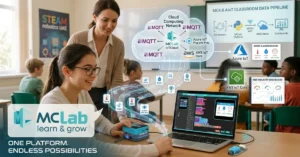
AI kits in classrooms are transforming how students understand complex technology through hands-on, practical application. These comprehensive toolsets provide everything educators need to bring machine learning, coding, and robotics directly to their students’ desks. By bridging the gap between theory and reality, these kits make advanced concepts easily digestible for young learners.
You will learn exactly how to integrate these powerful tools into your curriculum effectively. We will explore the core benefits of AI kits in classrooms, the specific tools available for schools, and how they elevate standard STEM programs.
By the end of this guide, you will understand how to select the best AI education kits for classroom teaching to prepare your students for a tech-driven future.
Why Schools Need Artificial Intelligence Kits for Education
Schools must adopt Artificial Intelligence Kits for Education to keep their curriculums relevant and engaging. Traditional textbook learning simply cannot match the interactive, immediate feedback provided by building and programming a physical AI model. These kits turn abstract computer science theories into physical realities that students can touch and manipulate.
Educators rely on these toolsets to dramatically increase student participation and focus. When students build something that responds to their code, their engagement levels naturally skyrocket. This hands-on approach builds crucial problem-solving skills and resilience in the face of academic challenges.
Core Benefits of AI Kits in Classrooms
The primary benefits of AI kits in classrooms center on building practical, future-ready skill sets. Students develop critical thinking, logical reasoning, and teamwork skills as they collaborate on complex building and coding projects. Technology becomes an accessible tool for creation rather than just a medium for consumption.
- Immediate concept validation: Students see exactly how their code impacts physical objects in real-time.
- Increased technical confidence: Breaking down complex AI concepts removes the intimidation factor for beginners.
- Enhanced collaboration: Group projects require students to communicate and delegate tasks effectively.
- Career readiness: Early exposure to AI prepares students for lucrative fields in software and engineering.
Hands-On AI Learning for Students
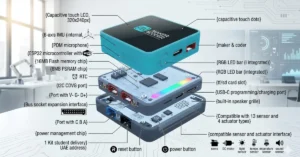
Hands-on AI learning for students is the most effective way to teach modern computer science. By physically assembling sensors, motors, and microcontrollers, students build a deep mechanical understanding alongside their coding skills. They learn how hardware and software communicate to execute tasks.
This tactile experience is essential for kinesthetic learners who struggle with standard lectures. Moving away from a screen-only approach allows students to test variables, make mistakes, and physically adjust their projects.
Engaging All Learning Styles
These physical kits cater to visual, auditory, and kinesthetic learners simultaneously. The varied nature of building, programming, and testing ensures that every student finds a learning mode that works best for them.
Reducing Academic Anxiety
When students frame learning as a “building project” rather than a “test,” their academic anxiety decreases. This playful environment encourages experimentation and bold problem-solving.
How AI Kits Improve STEM Education
Educators constantly ask how AI kits improve STEM education across multiple disciplines. The answer lies in their interdisciplinary nature; a single robotics project requires math to calculate speed, engineering to build the chassis, and technology to write the code. This unifies isolated subjects into one cohesive educational experience.
STEM programs thrive when students tackle real-world problems. By using AI Learning Kits for STEM, students can build weather sensors, automated plant waterers, or sorting machines. These projects mirror the exact challenges adult engineers face daily.
AI Learning Kits for STEM Integration
Integrating AI Learning Kits for STEM requires a curriculum that values project-based learning. Teachers use these kits as the foundational anchor for their semester, tying weekly lessons back to the ongoing robotics project. This gives students a clear, tangible reason to learn the required math and science concepts.
- Math application: Students use geometry and algebra to program robotic movements and sensor angles.
- Scientific method: Learners hypothesize outcomes, test their robots, and analyze the resulting data.
- Engineering design: Students learn to prototype, test, and iterate on their physical builds.
Robotics and AI Kits for STEM Labs
Modern science spaces heavily rely on robotics and AI kits for STEM labs to provide cutting-edge resources. A well-equipped lab gives students the freedom to experiment beyond the standard curriculum. These kits act as the primary building blocks for invention and innovation during lab hours.
Schools building new STEM facilities must prioritize these adaptable, reusable kits. They offer a much higher return on investment than static lab equipment because software updates continually refresh their capabilities.
Choosing the Best AI Kits for Schools
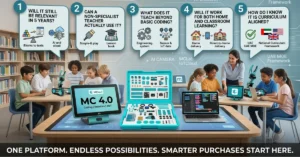
Selecting the right AI Kits for Schools requires evaluating your specific classroom goals and student age groups. Administrators must look for durable hardware, intuitive software interfaces, and comprehensive teacher resources. The best kits provide a low floor for beginners but a high ceiling for advanced students.
Budget is always a consideration, but durability and ongoing support matter just as much. A cheaper kit that breaks easily or lacks curriculum support will ultimately cost the school more in wasted time and replacements.
AI Robotics Kits for Students
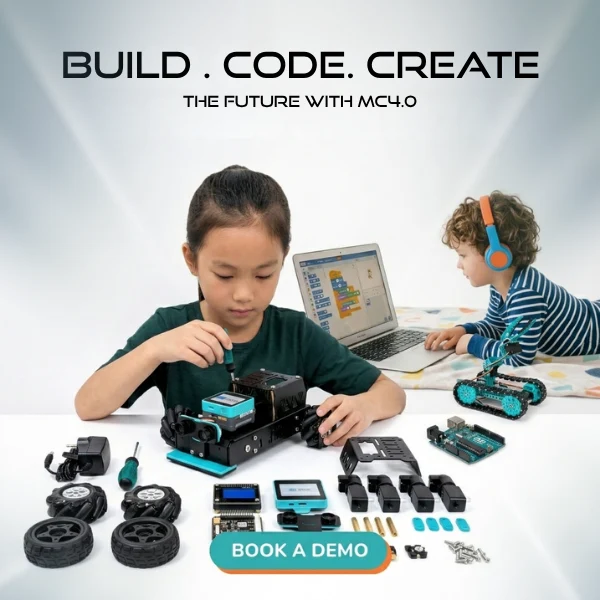
AI robotics kits for students generally fall into block-based coding for beginners or text-based coding for older learners. Beginners use visual blocks that snap together, eliminating syntax errors so they can focus purely on logic. Advanced learners transition to Python or C++ to gain industry-standard programming experience.
The best hardware includes modular pieces that students can reconfigure endlessly. This flexibility ensures the kit does not become a “one-and-done” activity.
Key Features of AI Education Kits for Classroom Teaching
When evaluating AI education kits for classroom teaching, educators must prioritize ease of use and curriculum alignment. The hardware should take less than ten minutes to set up so instructional time is not wasted.
- Detailed lesson plans: Kits must come with structured guides to help teachers run the class smoothly.
- Cross-platform compatibility: Software should run on Chromebooks, iPads, and standard PCs.
- Sturdy components: Motors, sensors, and cables must withstand daily use by energetic students.
- Built-in troubleshooting: The software should clearly highlight where a student’s code went wrong.
Scalability and Global Standards
Top-tier kits adhere to global and international educational standards, ensuring your students learn the same core principles as their peers worldwide. This standardization makes it easier to measure success against recognized benchmarks.
Future-Proofing the Curriculum
Choosing scalable platforms means the school won’t need to buy entirely new systems next year. Modular kits grow alongside the students, allowing for more complex add-ons as their skills improve.
The International Impact of AI Robotics Kits
The adoption of AI robotics kits for school students is a worldwide movement reshaping education. From North America to Asia, educators use these tools to close the digital divide and democratize access to advanced technology. Students across the globe now share a common language of coding and automation.
This global community of young makers frequently collaborates through international robotics competitions. These events push students to innovate and showcase their skills on an international stage.
Preparing Students for a Worldwide Tech Landscape
Familiarity with hardware and machine learning prepares students for the global workforce. Employers worldwide actively seek candidates who possess strong computational thinking and robotics experience. Starting this education in the classroom gives students a massive head start.
Conclusion
Implementing AI kits in classrooms is the most effective way to modernize your school’s STEM program. These powerful tools transform passive learners into active creators, builders, and programmers. By utilizing the right AI Kits for Schools, educators can spark a lifelong passion for technology and engineering.
Start by evaluating your current STEM curriculum and identifying areas where hands-on projects could replace standard lectures. Invest in scalable, durable robotics and AI kits for STEM labs to give your students the resources they need to thrive. Equip your classroom with these tools today, and watch your students build the future.
Frequently Asked Questions (FAQ)
What are the primary benefits of AI kits in classrooms?
The main benefits include increased student engagement, hands-on application of complex concepts, and the development of critical problem-solving skills. Students learn to code and build physical projects simultaneously.
How do AI kits improve STEM education?
They unify science, technology, engineering, and math into single, practical projects. Students use math to calculate robot movements and engineering principles to build functional models.
What should I look for in AI Kits for Schools?
You should look for durable hardware, intuitive coding software (both block-based and text-based), and comprehensive teacher lesson plans. Cross-device compatibility is also essential.
Are AI robotics kits for students suitable for beginners?
Yes, most kits offer visual, block-based coding interfaces designed specifically for absolute beginners. As students progress, they can transition to more complex text-based programming languages.
How do these kits connect to global education standards?
Top educational kits are designed to meet international STEM benchmarks. This ensures students learn the same highly competitive computational skills as their peers worldwide.
Author Bio
Maker and Coder
Maker and Coder is a premier educational platform dedicated to empowering the next generation of digital innovators. Specializing in robotics, coding, and AI education, Maker and Coder provides schools and students with the practical tools they need to succeed. Through hands-on projects and intuitive learning platforms, they are transforming how students understand and apply artificial intelligence in the real world.