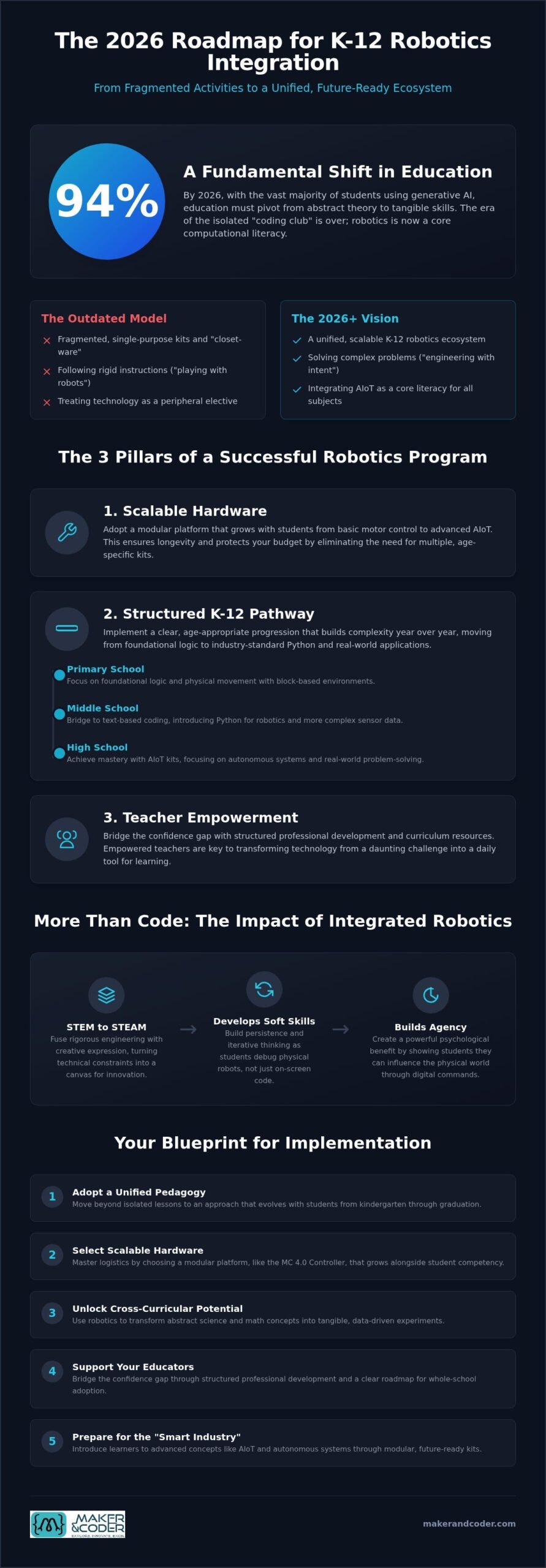
By 2026, 94% of students are already using generative AI for their schoolwork, yet many classrooms still treat high-level technology as a peripheral elective rather than a core literacy. You likely recognize that a few isolated coding lessons aren’t enough to prepare students for a world defined by automation and AIoT. However, the move toward integrating robotics into the school curriculum often feels stalled by fragmented hardware that doesn’t scale or the daunting task of aligning new tech with strict academic standards. It’s a common frustration for leaders who want to innovate but fear leaving their teachers unsupported.
This guide provides a clear roadmap to move from scattered activities to a comprehensive K-12 robotics ecosystem that empowers your entire staff. You will learn how to build a scalable foundation using modular hardware and structured resources that meet the updated 2026 CSTA standards. We will explore how to bridge the confidence gap for educators while ensuring students develop the industry-standard Python skills and critical thinking necessary for their future. From initial teacher training to full classroom implementation, discover how to turn technology from a daunting challenge into a powerful tool for creative expression and professional growth.
Key Takeaways
- Move beyond isolated coding lessons by implementing a unified pedagogical approach that evolves with students from kindergarten through graduation.
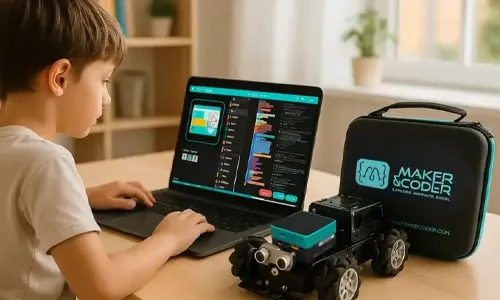
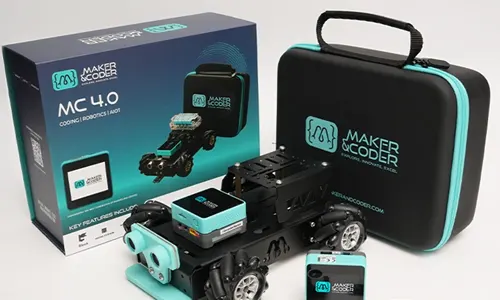
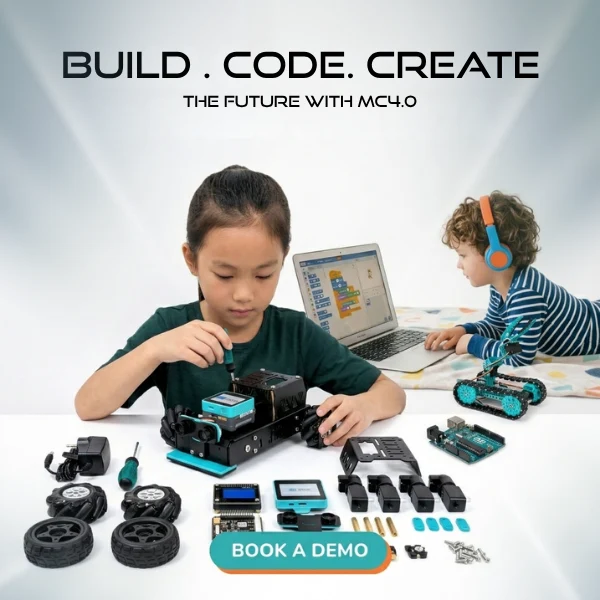
- Master the logistics of integrating robotics into the school curriculum by selecting scalable hardware, such as the MC 4.0 Controller, that grows alongside student competency.
- Unlock cross-curricular potential by using robotics to transform abstract science and math concepts into tangible, data-driven experiments.
- Bridge the confidence gap for educators through structured professional development and a clear roadmap for whole-school adoption.
- Prepare learners for the “Smart Industry” era by introducing advanced concepts like AIoT and autonomous systems through modular, future-ready kits.
What is Robotics Integration in a 2026 Educational Context?
The era of the isolated “coding club” has ended. In 2026, educational robotics has matured from a niche extracurricular activity into a core component of computational literacy. Successfully integrating robotics into the school curriculum now means moving beyond basic screen-based logic toward a multi-disciplinary pedagogical approach. It’s about bridging the gap between digital theory and physical reality. We are witnessing a fundamental shift in how schools perceive technology. It’s no longer just a subject; it’s the medium through which all other subjects are explored.
With 94% of students already using generative AI for their schoolwork, the educational landscape requires a pivot toward AIoT (Artificial Intelligence of Things) literacy. We must distinguish between “playing with robots” and “engineering with intent.” The former involves following rigid instructions; the latter demands that students use sensors, data, and autonomous logic to solve complex, real-world problems. This transition prepares learners not just to use technology, but to architect it. Build. Test. Refine. This is the cycle of the modern innovator.
The Shift from STEM to STEAM
Robotics serves as the ultimate bridge between abstract mathematics and tangible art. By using modular components, students learn that engineering isn’t just about functionality; it’s about form and creative expression. STEAM in the context of modular MC Blocks represents the seamless fusion of rigorous engineering with artistic expression, where technical constraints become the canvas for creative problem-solving. This modularity allows for rapid prototyping, encouraging students to take risks and iterate on their designs without the fear of permanent failure. You can explore these creative tools in our online shop to see how they fit into a modern classroom.
Why Robotics is the New Foundational Literacy
Preparing students for a workforce dominated by automation and AI requires more than just technical knowledge. It demands “soft skills” like persistence and iterative thinking. When a robot fails to navigate a turn, the student doesn’t just see an error message; they see a physical problem that requires a logical solution. This manifestation of code in physical movement provides a psychological benefit that screen-based learning can’t match. It builds a sense of agency. Students realize they have the power to influence the physical world through their digital commands. This is the heart of future-readiness. It’s about developing the confidence to navigate a world where the boundary between the digital and the physical continues to blur.
The Three Pillars of Successful Curriculum Integration
Successful technology adoption isn’t a transaction; it’s a strategic alignment. Many schools fall into the trap of “closet-ware,” where expensive hardware sits unused because it lacks a supporting ecosystem. To avoid this, leaders must focus on three non-negotiable pillars: scalable hardware, a structured K-12 pathway, and continuous teacher empowerment. When these elements work in harmony, robotics moves from a novelty to a necessity. It becomes a tool that students and teachers rely on daily.
Choosing a Scalable Hardware Platform
Modularity is the secret to longevity. Modular systems like MC Blocks outperform single-purpose kits because they allow for infinite reconfiguration across different grade levels. Instead of purchasing specialized sets that only serve one specific age group, schools should adopt a unified platform. The MC 4.0 Controller provides a professional-grade foundation that supports everything from basic motor control to advanced data processing. This versatility ensures that your hardware remains relevant as students progress, protecting your long-term budget sustainability. Explore our modular hardware options to see how one platform serves an entire school.
The K-12 Curriculum Pathway
A fragmented approach leads to fragmented learning. Effectively integrating robotics into the school curriculum requires a clear, age-appropriate progression that builds complexity year over year. For primary students, the focus remains on foundational logic and physical movement. Middle school serves as the bridge, introducing Python-based robotics to replace block-based environments. By high school, students are ready for mastery, utilizing MC4.0 AIoT Kits for real-world applications and “Smart Industry” simulations. Academic research on Robotics for Educational Transformation confirms that a structured pedagogical framework is essential for fostering deep technical competency and engineering intuition.
Teacher empowerment is the final, and perhaps most critical, pillar. One-off workshops rarely lead to lasting change. Educators need ongoing training and structured resources to maintain their technical confidence. Our Teacher Training Programs are designed to transform “tech-hesitant” staff into expert mentors who can guide students through complex problem-solving. If you want to ensure your technology investment translates into student success, reach out to our team for a personalized integration strategy.
Strategies for Integrating Robotics Across Subjects
Stop viewing robotics as a siloed elective. True innovation occurs when technology becomes a universal tool for inquiry across every department. While stand-alone robotics blocks are essential for building deep technical competency, the most profound impact happens when students apply these skills to solve problems in other disciplines. By integrating robotics into the school curriculum, you transform abstract concepts into tangible, interactive experiences. It’s the difference between reading about a system and building one yourself.
The humanities also find a new voice through automation. Students can use robots to navigate historical simulations or act out narrative storytelling through complex, choreographed movements. This convergence of logic and literacy encourages a unique form of creative problem-solving. It moves the learner from passive consumption to active architectural design. Whether they are recreating a trade route or programming a character’s dialogue, students are learning to manifest their ideas in the physical world.
Robotics in the Science Lab
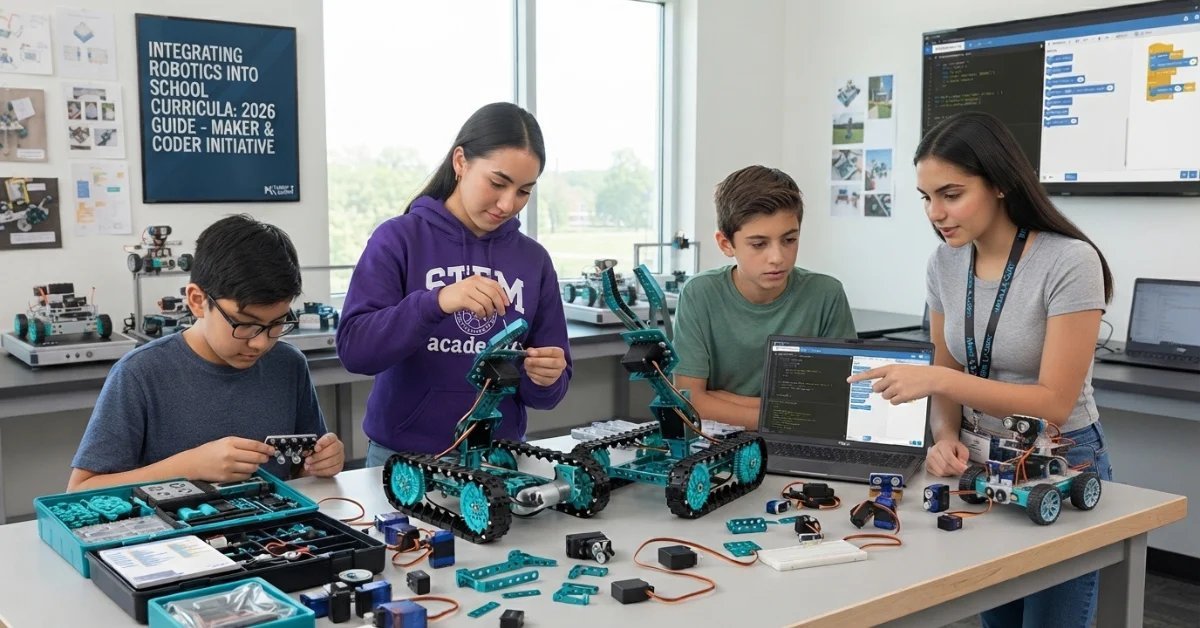
Transform your science lab into a hub of high-level data analysis. By utilizing the MC4.0 AIoT Kit, students can design autonomous environmental monitoring systems that track humidity, temperature, and soil moisture in real-time. This allows them to move from simple observation to advanced hypothesis testing. They can explore the intersection of biology and robotics through biomimicry design, creating machines that replicate the movement of living organisms. Educators who want to elevate their laboratory experiments should explore specialized STEAM kits designed for rigorous scientific inquiry.
Mathematics in Motion
Move from abstract equations on a whiteboard to physical proofs on the classroom floor. Robotics provides a concrete way to teach angles, distance, and coordinate geometry through precise navigation challenges. Students must use variables and logic gates to help their robots solve physical mazes or calculate optimal trajectories. The MC4.0 hardware simplifies complex math concepts by translating abstract algebraic variables into observable physical movements, allowing students to see the immediate impact of their calculations. This iterative process turns math from a daunting subject into an accessible tool for building something real. It builds a bridge from theoretical logic to engineering mastery.
Implementing a Whole-School Robotics Roadmap
Scaling a vision requires a structured blueprint. Moving from a single enthusiastic classroom to a unified campus ecosystem demands more than just a purchase order; it requires a strategic phased approach. When integrating robotics into the school curriculum, the goal is to create a self-sustaining culture of innovation where technology feels like a natural extension of the learning environment. This transformation doesn’t happen overnight. It is the result of methodical planning and consistent execution.
- Step 1: Audit Infrastructure. Evaluate your current Wi-Fi capacity, storage solutions, and baseline teacher confidence levels before introducing new hardware.
- Step 2: Launch a Pilot. Start with a controlled implementation using the MC4.0 Base Kit to identify local challenges and celebrate early wins.
- Step 3: Establish PD Rhythms. Move away from one-off workshops toward a recurring Professional Development schedule that supports core staff throughout the year.
- Step 4: Scale Grade-by-Grade. Expand the program incrementally to ensure vertical alignment and curriculum continuity across all key stages.
- Step 5: Measure Success. Utilize performance tasks and student portfolios to document growth in computational thinking and engineering design.
Overcoming the Teacher Confidence Gap
Professional training is the glue that holds your roadmap together. Many educators feel a natural hesitation when faced with sophisticated hardware, often fearing they lack the technical depth to lead. Successfully integrating robotics into the school curriculum relies on shifting the focus from “tech support” to “pedagogical mentorship.” Teachers don’t need to be master coders; they need to be expert facilitators of inquiry. To lower the barrier to entry, you can view the K-12 MC Curriculum to see pre-built lesson plans that provide a structured safety net for staff. This support allows educators to focus on what they do best: inspiring students to think critically.
Budgeting for Sustainability
Sustainability depends on understanding the Total Cost of Ownership. This goes beyond the initial hardware purchase to include maintenance, software updates, and ongoing training. Choosing modular systems like MC Blocks significantly reduces long-term replacement costs because you can upgrade individual components rather than replacing entire kits. This modularity makes your investment future-proof. Many schools also find success by seeking specific STEM grants or public-private partnerships to fund their initial rollout. If you are ready to build a customized plan for your campus, contact our integration specialists to discuss your specific needs.
Future-Proofing Education with AIoT and Advanced Robotics
The horizon of educational technology is shifting from static automation to connected intelligence. We are no longer just teaching students to build a machine; we are teaching them to architect a nervous system for the physical world. This convergence of Artificial Intelligence and the Internet of Things (AIoT) represents the next frontier for any institution integrating robotics into the school curriculum. By 2026, the “Smart Industry” won’t just be a professional reality; it will be the standard by which we measure student readiness. Preparing learners for this era requires tools that can handle high-level data processing while remaining accessible to a young mind.
Modularity remains your greatest asset in this rapid technological evolution. As new sensors and AI models emerge, a flexible platform like the MC 4.0 ecosystem allows you to swap and upgrade components without discarding your entire infrastructure. This adaptability ensures that your curriculum remains relevant even as the industry pivots. It’s about building a foundation that doesn’t just survive change but thrives because of it. Successfully integrating robotics into the school curriculum ensures that your students aren’t just consumers of technology, but its creators.
Teaching AI through Physical Computing
AI can often feel like an abstract or even mystical concept to students. Physical computing demystifies these systems by turning invisible algorithms into smart, reactive robotic behaviors. When a student builds a robot that recognizes a specific object or responds to a voice command, they see the logic behind the “magic.” This hands-on approach also opens the door to critical ethical considerations. Who decides how the robot should react? What happens when the data is biased? These are the questions that will define the next generation of engineers. If you’re ready to bring these advanced concepts to your campus, Contact Maker & Coder today to design your school’s custom implementation plan.
Building a Culture of Innovation
A successful robotics program eventually outgrows the four walls of a classroom. It transforms the school into a vibrant “Maker Space” where students tackle community-specific problems through collaborative engineering. Moving beyond traditional lessons toward robotics competitions and public showcases builds a unique sense of pride and ownership. These events allow students to demonstrate their mastery and see how their peers solve the same challenges using different logic. The MC 4.0 platform is designed to grow with these ambitions. It scales from the foundational MC4.0 Base Kit to advanced MC4.0 AIoT Kits, ensuring that as a student’s curiosity expands, their hardware is ready to meet them. We aren’t just teaching code; we’re empowering the next generation of makers to build the world they want to see.
Empowering the Next Generation of Innovators
The transition from isolated experiments to a school-wide ecosystem is a journey of transformation. By prioritizing scalable hardware like the MC 4.0 platform and aligning with a structured K-12 curriculum, you provide students with the foundational skills needed for a world driven by AIoT. Success isn’t just about the technology itself; it’s about the confidence of your educators and the clarity of your roadmap. Integrating robotics into the school curriculum is no longer a futuristic goal. It’s a present-day necessity for any institution committed to future-readiness.
We are here to act as your dedicated educational partner. With our professional K-12 MC Curriculum alignment, scalable MC 4.0 Hardware ecosystem, and comprehensive Teacher Training programs, your school can move from basic coding to advanced engineering with ease. Let’s work together to turn technical challenges into creative opportunities for every learner on your campus. The potential for discovery in your classrooms is limitless, and we look forward to helping you build something extraordinary.
Ready to transform your curriculum? Contact our STEM integration experts today.
Frequently Asked Questions
How do we start integrating robotics if our teachers have no coding experience?
Start by adopting visual, block-based environments and providing structured teacher training. Professional development bridges the confidence gap by focusing on pedagogy rather than just syntax. Structured lesson plans provide a safety net; they allow teachers to learn alongside their students. This approach turns technology from a daunting hurdle into an accessible tool for shared discovery and creative expression.
What is the ideal age to begin robotics in the school curriculum?
The ideal age to begin is as early as Kindergarten using tactile, screen-free logic. Early exposure builds the foundational computational thinking required for more complex engineering later in life. By starting young, students normalize technology as a creative medium. Successfully integrating robotics into the school curriculum at a young age ensures a smooth transition to text-based coding in middle school.
Can robotics be integrated into non-STEM subjects like English or Art?
Yes, robotics serves as a powerful medium for narrative storytelling and artistic expression. In English, students program robots to act out scenes from literature or historical events. In Art, modular blocks become kinetic sculptures that respond to their environment. This multidisciplinary approach proves that technical tools can enhance creative literacy across the entire school campus and every department.
What hardware is best for a scalable K-12 robotics program?
Modular hardware that evolves with the student is the gold standard for scalability. You need a unified platform, such as the MC 4.0 Controller, which supports both simple motor functions and advanced AIoT sensors. This versatility prevents the need for constant reinvestment in new sets. One professional-grade system can serve a primary classroom and a high-tech laboratory equally well.
How does the MC 4.0 Kit compare to consumer-grade robotics toys?
The MC 4.0 Kit is a professional-grade engineering platform, whereas consumer toys often lack technical depth and durability. While toys provide entertainment, our kits focus on engineering with intent. They offer open architecture, industry-standard Python compatibility, and modular expansion. This ensures students build transferable skills used in modern industry environments rather than just following rigid, pre-defined play patterns.
What are the most common mistakes schools make when implementing robotics?
The most frequent error is treating hardware as a standalone purchase rather than an ecosystem. Schools often buy expensive kits without investing in teacher training or a structured curriculum. This leads to “closet-ware” where technology sits unused in storage. Successful integration requires a three-way alignment between modular hardware, professional development, and age-appropriate learning pathways that grow with the students.
How do we align robotics projects with existing educational standards?
Align your projects by mapping technical tasks to core learning objectives in math, science, and computer science. Integrating robotics into the school curriculum becomes seamless when you use frameworks like the 2026 CSTA standards. For instance, a navigation task in robotics can directly satisfy geometry requirements for angles and distance. This ensures that technology time is also high-value academic time.
Is professional teacher training really necessary for robotics success?
Professional training is the single most important factor in long-term program sustainability. It moves educators from being tech support to becoming pedagogical mentors. Training provides the technical confidence and troubleshooting skills needed to manage a dynamic, high-tech classroom. Without it, even the best hardware fails to reach its full educational potential or provide peace of mind for the staff.