What if the robotics kit in your lab is actually holding your students back from the high-tech careers they want? It’s a common frustration for educators who see 17-year-olds snapping together plastic bricks that feel more like childhood toys than professional tools. You know your students are ready for the complexity of Python and real-world sensors, yet the leap to advanced AI often feels like a daunting cliff. You need hardware that matches their ambition while providing the support your teachers deserve.
In this guide, you’ll discover how to transition from basic coding to professional-grade engineering using the most advanced robotics kits for high school available in 2026. We’ll show you how to move from simple logic to sophisticated AIoT applications that mirror industry standards. We explore modular ecosystems, turnkey curricula, and the specific hardware designed to turn curious students into career-ready innovators. It’s time to replace toylike components with the technical rigor required for the next generation of engineering.
Key Takeaways
- Understand the transition from “learning to code” to “engineering with code” by aligning your lab with modern Career and Technical Education (CTE) standards.
- Identify the technical must-haves for 2026, including native support for Python and C++ alongside advanced Artificial Intelligence and Internet of Things (AIoT) capabilities.
- Discover how a structured K-12 ecosystem like the MC Curriculum prevents repetitive learning and ensures a seamless technical progression for every student.
- Learn why professional teacher training programs are the most critical factor in successfully implementing advanced robotics kits for high school.
- Explore the strategic advantages of modular hardware like the MC 4.0 platform to maximize your STEM budget and future-proof your school’s engineering laboratory.
Table of Contents
Why High School Robotics Requires More Than Just “Smart Toys”
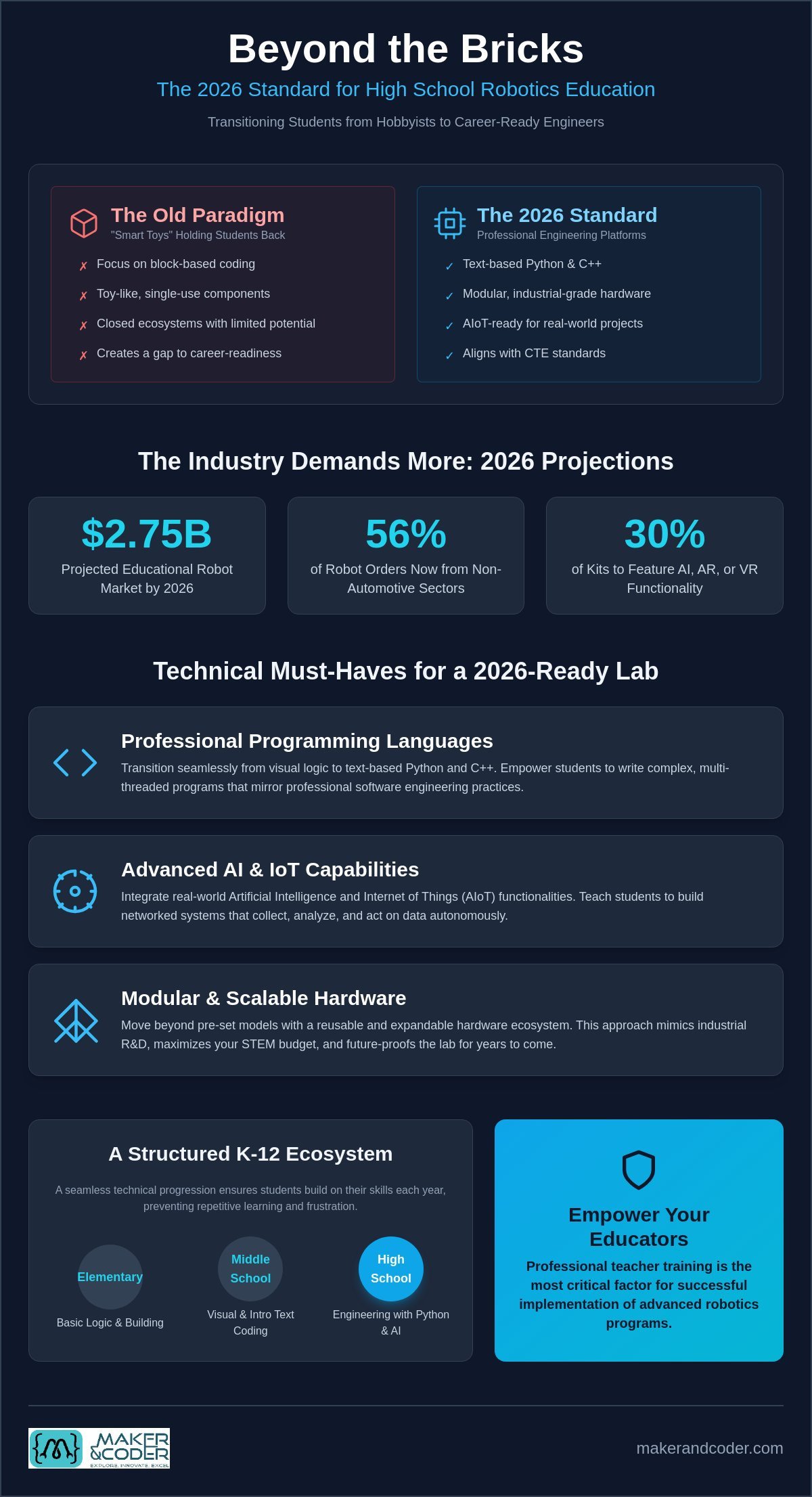
High school marks a definitive turning point in a student’s technical journey. It’s the moment where “playing with robots” must evolve into genuine systems engineering. Most robotics kits for high school fall short because they prioritize ease of use over technical depth, leaving students with skills that don’t translate to the workforce. In 2026, the global educational robot market is projected to reach $2.75 billion, driven by a desperate demand for graduates who can do more than just follow a build guide. We’re seeing a fundamental shift from simply learning to code toward the practice of engineering with code. This means moving away from closed, single-use robots and toward modular ecosystems that mirror professional prototyping.
The Gap Between Middle School and Career Readiness
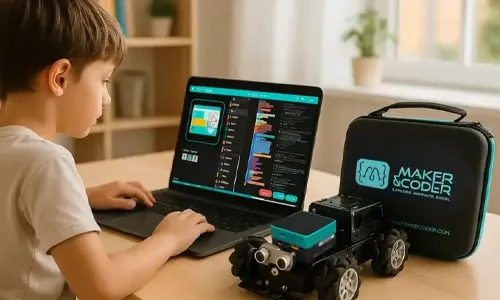
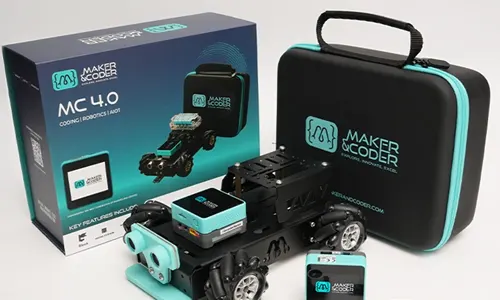
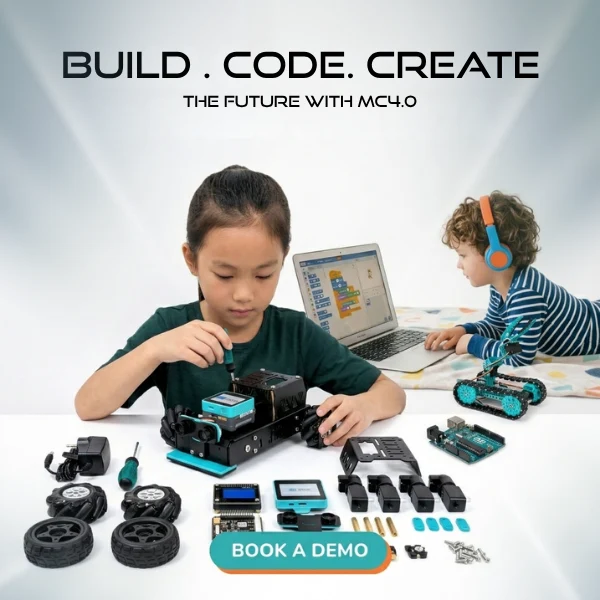
By age 14, students outgrow the colorful, plastic aesthetics of middle school kits. There’s a psychological need to engage with “prestige-tech” that feels authentic and challenging. While block-based coding serves as a great introduction, it’s no longer sufficient for the rigors of high school. The field of Educational robotics has matured to recognize that students need a clear pathway to text-based languages like Python and C++. Professional-grade hardware, such as the MC4.0 Controller, provides this bridge. It allows learners to transition from basic logic to complex, multi-threaded programs without changing their entire hardware stack. This continuity builds confidence rather than frustration.
Industry Standards in the Classroom
Preparing for the 2026 job market requires an understanding of AI, IoT, and automation. Industry data shows that non-automotive sectors now account for 56% of all robot orders; robotics is no longer just for car factories. To stay relevant, classroom hardware must support real-world protocols. Modular components like MC Blocks allow students to experiment with sensors and actuators in a way that mimics industrial R&D. This approach builds technical literacy that lasts. Instead of learning how one specific toy works, students learn how complex systems communicate. You can explore these professional-grade tools at the Maker & Coder shop to see how modularity changes the classroom dynamic. Consider these essential standards for any modern lab:
- AI Integration: By 2026, it’s projected that 30% of educational robots will feature integrated AR, VR, or AI functionalities; educators can learn more about how AI-powered platforms are revolutionizing classroom instruction.
- IoT Connectivity: Students must learn to collect and analyze data across networks, moving beyond standalone machines.
- Modular Design: Hardware should be reusable and expandable, allowing for custom builds rather than pre-set models.
This shift toward professional-grade robotics kits for high school ensures that students aren’t just consumers of technology. They become creators who understand the underlying architecture of the modern world. When the hardware aligns with Career and Technical Education (CTE) standards, the classroom becomes a launchpad for the next generation of engineers and innovators.
Essential Features of High-Level Robotics Kits for 2026
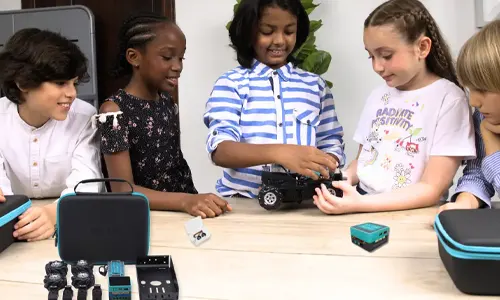
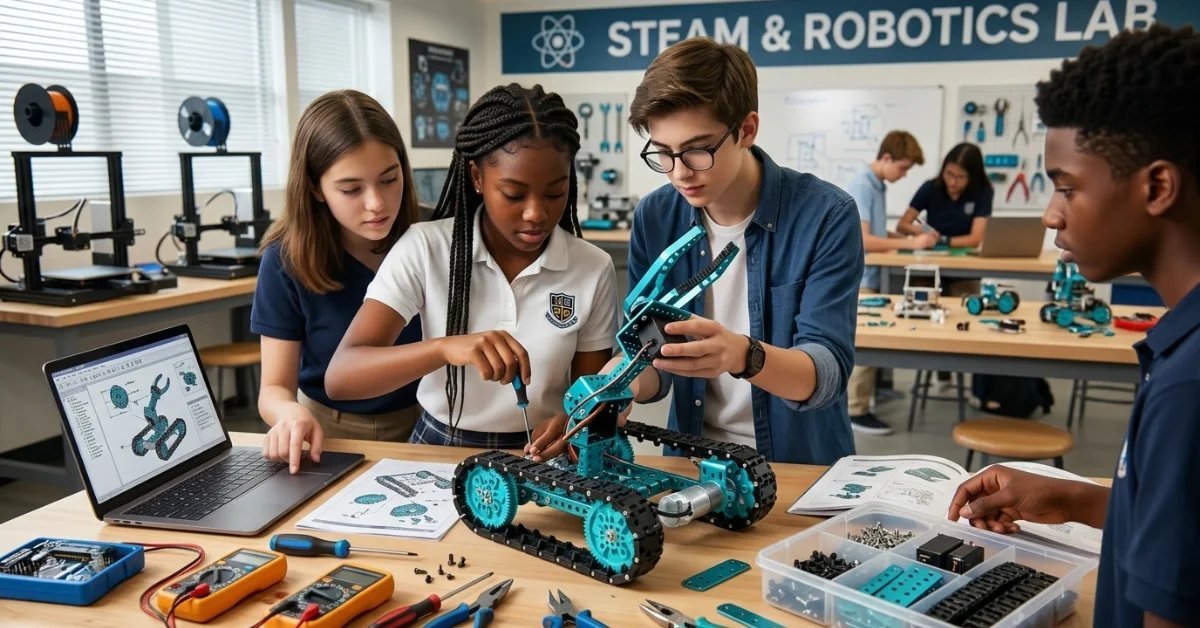
In 2026, the standard for robotics kits for high school has shifted from assembly-line projects to sophisticated research and development platforms. High schoolers need hardware that survives the daily rigors of a busy lab while offering the processing power required for complex neural networks. This requires a move away from fixed-purpose robots toward modular systems like MC Blocks. These components allow students to rebuild, iterate, and innovate without the constraints of a pre-molded plastic shell. Authentic engineering happens when the hardware is as flexible as the student’s imagination.
Python and Beyond: The Software Backbone
Python is now the non-negotiable standard for high-level engineering and data science. While middle schoolers often begin with visual blocks, the transition to text-based coding must be seamless to maintain student engagement. The best kits allow learners to toggle between visual logic and Python within the same interface. This approach teaches students to think like software engineers. They move from simply moving a motor to managing complex multi-threaded operations and real-time debugging. This level of technical rigor is essential for students aiming to participate in advanced competitions like NASA’s Botball program, where autonomous decision-making is the key to success.
AIoT: The Frontier of High School STEM
The most significant technological leap in modern classrooms is the integration of Artificial Intelligence and the Internet of Things. AIoT is the convergence of connectivity and intelligence in robotics. This transformation turns a simple rover into a smart system capable of facial recognition, voice commands, or environmental data logging. Using the MC4.0 AIoT Kit, students can design smart-city models that communicate with cloud databases in real-time. This isn’t just about mechanics; it’s about data management and autonomous response. These projects prepare students for a job market where 56% of robot orders now come from non-automotive sectors, including logistics and smart agriculture.
Durability is equally critical. High school labs need robotics kits for high school that feature classroom-ready components designed to withstand multiple semesters of experimentation. Standardized sensors and modular hardware ensure that your school’s investment grows alongside your curriculum. If you’re ready to upgrade your lab with these 2026 standards, you can consult with our education specialists to design a hardware package that aligns with your specific CTE goals.
Comparing Ecosystems: Hardware, Curriculum, and Scalability
Selecting robotics kits for high school involves more than comparing motor torque or sensor counts. It requires evaluating the entire ecosystem that supports the hardware. A great kit provides the tools, but a great ecosystem provides the roadmap. In an era where the educational robot market is expanding toward a $2.75 billion valuation, schools must look beyond the initial purchase. Success depends on how well the hardware integrates into a multi-year learning pathway that prevents students from hitting a “knowledge ceiling” after their first semester. Scalability is the difference between a one-off project and a career-ready STEM program.
The Role of a Structured K-12 Curriculum
A kit without a plan is just a box of expensive parts. In the high school environment, robotics must move beyond extracurricular clubs and into the core of Physics, Math, and Computer Science courses. This integration requires a curriculum that aligns hardware projects with rigorous academic standards. Institutions like the Carnegie Mellon Robotics Academy have long emphasized that the most effective programs use robotics as a vehicle for broader technical literacy. To achieve this, schools need a structured sequence that moves students from foundational logic to advanced systems engineering. Explore the Maker & Coder K-12 Curriculum to see how these structured pathways bridge the gap between classroom theory and industrial application. This approach ensures that every hour spent in the lab contributes to a student’s professional portfolio.
Modular vs. Fixed-Form Robotics
High schoolers gain the most value when they are forced to solve mechanical problems alongside software challenges. Fixed-form robots, while easy to deploy, often limit students to “programming a box.” In contrast, modular systems encourage true mechanical engineering. By using MC Blocks, students can build custom chassis and specialized attachments, learning how weight distribution and gear ratios affect performance. This modularity is essential for managing the cost per student over a three-year implementation. A single investment in a modular “Base Kit” can be expanded with specialized sensors or the MC4.0 STEAM Kit as students progress. This flexibility allows a lab to grow organically, starting with foundational mechanics and scaling up to the high-level automation required for the 2026 job market. Consider these factors when evaluating your next robotics kits for high school:
- Mechanical Versatility: Can the kit be disassembled and used to create entirely different machines?
- Software Longevity: Does the platform support the transition from visual logic to professional Python environments?
- Pathways: Is there a clear curriculum that guides the student from grade 9 through graduation?
By prioritizing modularity and a structured K-12 pathway, schools can justify the ROI of high-quality hardware. It turns the STEM lab into a professional prototyping space where students don’t just follow instructions; they engineer solutions.
Building a Sustainable Robotics Program in Your School
Launching a high-tech lab is an ambitious vision. Sustaining it for years requires a strategic shift from purchasing gear to building a culture. Many schools fall into the trap of buying expensive equipment that eventually gathers dust because the implementation plan lacked depth. To secure the ROI of your robotics kits for high school, you must view the hardware as one piece of a larger puzzle. This puzzle includes funding strategies, lab organization, and a clear path toward community showcases or competitions like the FIRST Tech Challenge. In the 2025-2026 season, team registration and build kits can represent a significant investment; your program must be resilient enough to justify these costs every year.
Empowering Educators Through Training
The most sophisticated hardware in the world is useless if the teacher feels intimidated by it. Implementation friction is the silent killer of STEM initiatives. We see many educators struggle with “tech-phobia” when moving from simple block coding to advanced AI and IoT. Professional Teacher Training Programs are the solution to this hurdle. These workshops do more than teach technical skills; they build the confidence required to lead a classroom of 18-year-old aspiring engineers. When teachers move from hesitant instruction to expert-led mentorship, student engagement skyrockets. You don’t just need a manual. You need a community of practice where staff can share troubleshooting tips and project ideas. This support system ensures that your lab remains a vibrant center of discovery rather than a source of frustration.
Maintenance and Longevity
Classroom environments are notoriously tough on hardware. High schoolers push components to their limits, and parts will inevitably wear out. This is where the value of modularity becomes clear. Using systems like MC Blocks allows you to replace individual sensors or structural elements without discarding an entire robot. It’s a “repair over replace” philosophy that stretches your budget further. Managing a lab also requires a focus on software compatibility and network security. You need robotics kits for high school that integrate seamlessly with school Wi-Fi and administrative protocols without requiring a degree in network engineering. Consider these pillars for a long-term lab strategy:
- Modular Inventory: Standardize on components like the MC 4.0 Kit to ensure parts are interchangeable across different classes.
- Scheduled Audits: Set aside time each semester to inventory sensors and update firmware on your MC4.0 Controller.
- Student Responsibility: Empower students to manage their own kits, mirroring the accountability found in professional engineering firms.
Building a future-ready program is a journey that starts with the right partnership. If you’re ready to move beyond basic assembly and start engineering for the future, contact our educational consultants to design a custom implementation plan for your school.
Future-Proofing Your STEM Lab with the MC 4.0 Platform
High school labs in 2026 require more than a collection of parts. They need a strategic foundation that evolves alongside the rapid pace of technological change. Choosing the right robotics kits for high school is the first step in transforming a classroom into a professional-grade engineering hub. The MC 4.0 platform stands as the gold standard for this transition. It doesn’t just provide hardware; it delivers a 100% integrated ecosystem where the MC4.0 Controller, modular MC Blocks, and the MC Curriculum work in perfect harmony. This synergy ensures that administrators aren’t just buying equipment for today but are investing in a system that remains relevant as AI and IoT continue to reshape the global economy.
The MC 4.0 Advantage
At the heart of every successful lab is the MC4.0 Controller. Think of it as the brain of the modern classroom. It provides the processing power required for advanced Python scripts while remaining accessible enough for students to master complex systems. For labs seeking the ultimate in technical breadth, the MC4.0 STEAM Kit offers a comprehensive toolkit that covers everything from foundational mechanics to sophisticated automation. This modularity allows students to move from basic builds to custom, data-driven prototypes without switching platforms. You can browse the full MC 4.0 range to find the specific configuration that fits your school’s unique goals.
Closing the Skills Gap
The ultimate goal of any STEM program is to prepare students for the world beyond graduation. High-quality robotics education does more than teach coding; it fosters the problem-solving mindset required in the 2026 job market. We’re seeing a definitive shift toward “expert-as-enabler” models where teachers act as mentors, guiding students through the same challenges faced by industrial engineers. This approach turns the STEM lab into a launchpad for future innovators. By integrating AI, IoT, and text-based coding into a single hardware platform, schools can finally move past the limitations of toylike systems. Maker & Coder bridges classroom learning and industry reality by providing the tools and training necessary to develop career-ready talent.
Upgrading your STEM offerings is a strategic move toward future-proofing your institution. Start by assessing your current lab’s ability to support professional-grade protocols and text-based programming. If your current robotics kits for high school feel like they’ve hit a ceiling, it’s time to embrace a modular, integrated platform that grows with your students. Focus on systems that prioritize technical rigor and teacher support to ensure your investment delivers lasting value for years to come.
Building the Future of Your STEM Lab
The journey from basic logic to professional engineering requires a platform that evolves as fast as the industry itself. High school is the definitive moment to replace smart toys with modular, career-ready systems that mirror real-world challenges. By prioritizing native Python support and AIoT integration, you ensure your students gain the technical rigor required for the 2026 workforce. Success depends on more than just hardware; it requires a commitment to structured pathways and empowered educators who can lead with confidence.
Choosing the right robotics kits for high school is a strategic investment in your students’ futures. You don’t have to navigate this technical transition alone. When you equip your classroom with the MC 4.0 Ecosystem, you gain access to our comprehensive K-12 Aligned Curriculum and modular AIoT ready hardware. We also include professional teacher training with school-wide implementations to ensure your staff is fully supported from day one. It’s time to turn your lab into a professional prototyping hub. Let’s build something extraordinary together.
Frequently Asked Questions
What is the best programming language for high school robotics in 2026?
Python has solidified its position as the premier programming language for high school robotics in 2026. Its dominance in data science, artificial intelligence, and industrial automation makes it the most valuable skill for students entering the workforce. While C++ remains vital for low-level hardware control, Python’s readability and extensive libraries allow learners to tackle complex AIoT projects quickly. Most modern platforms now offer a dual-mode interface to help students transition from visual blocks to text-based Python.
How do I choose between a modular kit and a pre-built robot for my classroom?
Modular kits are the superior choice for high school labs because they teach mechanical engineering alongside software development. While pre-built robots offer a faster start for pure coding lessons, they often limit a student’s ability to innovate or solve structural problems. Modular systems like MC Blocks encourage students to prototype custom chassis and specialized attachments. This flexibility mirrors professional R&D environments and ensures your robotics kits for high school provide lasting educational value across multiple semesters.
Are robotics kits for high school students compatible with Chromebooks?
Most professional-grade robotics kits for high school students are fully compatible with Chromebooks through web-based coding environments. In 2026, educational technology has moved toward cloud-integrated IDEs that don’t require heavy software installations. This allows students to code in Python or use visual logic blocks directly through their browser. It’s important to verify that the kit’s controller supports Bluetooth or USB connectivity with ChromeOS to ensure a seamless upload process for your student projects.
How much does a typical high school robotics program cost to implement?
Implementation costs for a high school robotics program vary based on team size and the level of technical complexity required. Industry data from early 2026 shows that competitive team registration and build kits can range from a few hundred to over a thousand dollars per team. Schools should also budget for ongoing maintenance and potential component upgrades. Investing in modular ecosystems often lowers the long-term cost per student because parts are reusable across different grade levels and projects.
Do I need special electrical work in my classroom to support a robotics lab?
You typically don’t need specialized electrical work to support a standard robotics lab. Most kits rely on rechargeable battery packs and standard wall outlets for charging stations. However, it’s beneficial to organize your space with dedicated power strips and cable management systems to handle multiple chargers simultaneously. If you’re planning to integrate heavy industrial arms or large-scale CNC machines alongside your kits, you should consult with your school’s facilities manager regarding power load requirements.
What is the difference between the MC4.0 Base Kit and the AIoT Kit?
The MC4.0 Base Kit focuses on foundational mechanics and core programming logic, while the MC4.0 AIoT Kit introduces advanced sensors for Artificial Intelligence and Internet of Things projects. The Base Kit is perfect for students beginning their engineering journey. In contrast, the AIoT Kit includes the specialized hardware needed for smart-city modeling, facial recognition, and cloud data logging. Both kits utilize the same MC4.0 Controller, allowing for a smooth technical progression as student skills advance.
Is teacher training included with the purchase of robotics kits?
Professional Teacher Training Programs are typically included with school-wide implementations of the MC 4.0 platform. We believe that empowering educators is the most critical step in building a sustainable STEM program. These workshops cover everything from basic hardware assembly to advanced Python debugging and AI integration. By providing hands-on training, we help teachers overcome implementation friction and move from a state of curiosity to a state of expert-led classroom mentorship.
Can these kits be used for competitive robotics leagues?
These kits are specifically designed to support both classroom learning and competitive robotics leagues. The modular nature of the hardware allows students to build robust robots that meet the strict mechanical requirements of major 2026 competitions. Whether your school participates in the FIRST Tech Challenge or local innovation showcases, the precision sensors and powerful MC4.0 Controller provide a competitive edge. This duality ensures that your investment supports both daily curriculum and high-stakes extracurricular excellence.