The era of robotics as a mere extracurricular activity is over. In 2026, a truly effective middle school robotics curriculum framework must do more than just entertain; it has to bridge the gap between elementary play and professional-grade engineering. You’ve likely seen students outgrow basic block-based kits in a single semester. This leaves them bored and leaves you searching for a more rigorous path. It’s a common pain point for educators: students are ready for the complexities of Python and AI, but the tools in their hands are often still stuck in the sandbox.
We know that transitioning from Scratch to text-based coding feels like a massive leap for both your confidence and your school’s budget. This guide empowers you to build a program that scales with your learners. You’ll discover a clear 6th-8th grade roadmap that integrates AIoT and utilizes modular hardware like the MC 4.0 Kit to maximize your classroom’s ROI. We’ll explore how to align your program with the latest 2026 CSTA standards, moving your students from basic assembly to sophisticated systems design. It’s time to stop just teaching robotics and start engineering the future.
Key Takeaways
- Understand why grades 6-8 represent the critical window for STEM retention and how a structured middle school robotics curriculum framework integrates mechanics with computational thinking.
- Align your program with 2026 CSTA and NGSS standards to ensure academic rigor and clearly demonstrate career-ready outcomes to stakeholders.
- Master the transition from block-based coding to Python by utilizing hybrid environments that scaffold the cognitive leap for middle school learners.
- Maximize your budget by selecting modular hardware like the MC4.0 Base Kit that scales across grade levels and supports diverse project types.
- Future-proof your classroom by integrating AI and IoT (AIoT) capabilities that prepare students for the professional engineering landscape.
Defining the Middle School Robotics Curriculum Framework
Middle school represents a pivotal crossroads where curiosity transforms into a career path. A robust middle school robotics curriculum framework acts as the blueprint for this transformation. It’s much more than a collection of lesson plans or a box of parts. This framework is a structured pedagogical roadmap for grades 6 through 8 that merges mechanical engineering, electronics, and computational thinking into a single, cohesive experience. By grounding your program in the principles of Educational Robotics, you provide a foundation that supports lifelong technical literacy.
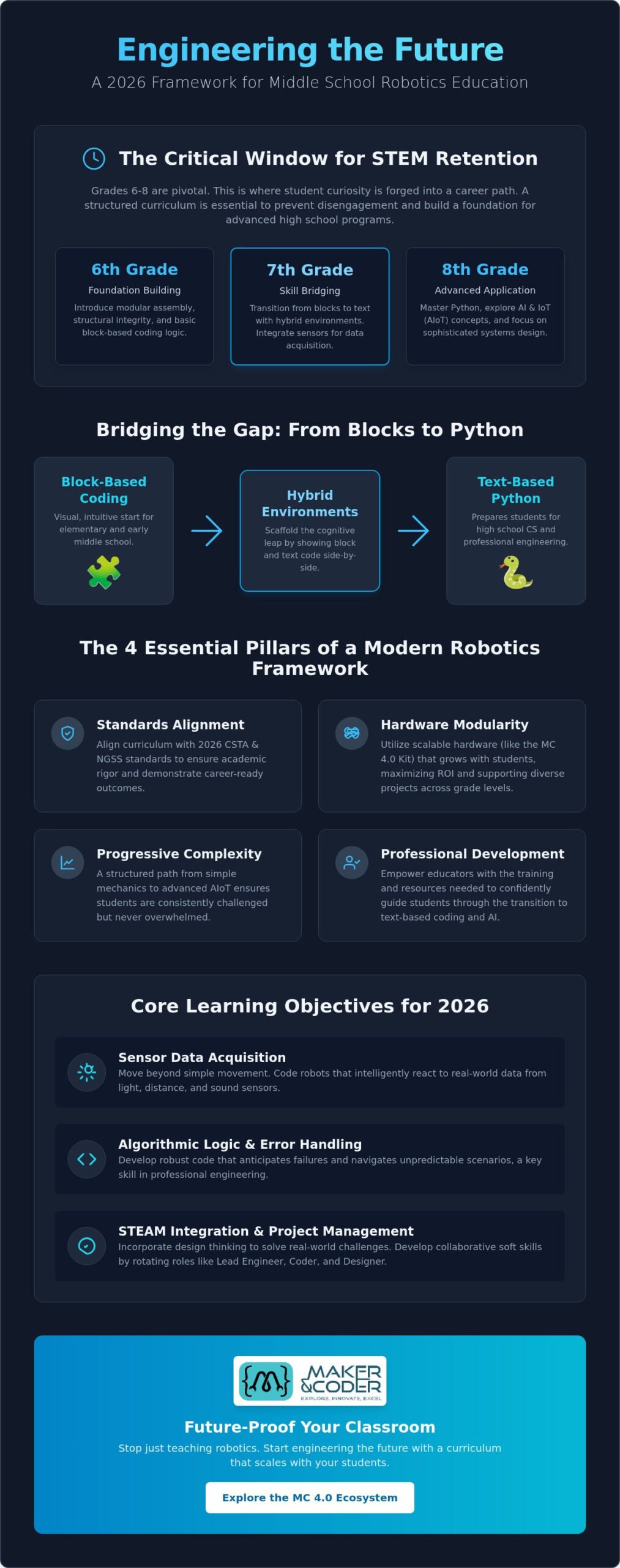
This period is the “critical window” for STEM retention. Students often define their academic identity during these three years. If the curriculum is too simple, they lose interest; if it’s too abstract, they feel discouraged. A well-designed framework moves students from consumption to creation. They stop playing with robots and start engineering systems. This transition is vital for vertical alignment with high school computer science tracks. It ensures that the skills learned in 6th grade directly support the advanced text-based coding they’ll face in 9th grade. Master the build. Code the logic. Deploy the solution.
Core Learning Objectives for 2026
Modern robotics education requires a focus on professional-grade skills. Your framework should prioritize these three pillars:
- Modular Hardware Mastery: Students must understand structural integrity. Using tools like the MC 4.0 Kit allows them to experiment with modular assembly, learning how components interact in a physical space.
- Sensor Data Acquisition: Moving beyond simple movement, students learn to interpret real-world environmental data. They gain the ability to code robots that react intelligently to light, distance, and sound.
- Algorithmic Logic: This involves developing complex error handling. Students learn to anticipate failures and build robust code that can navigate unpredictable scenarios.
The Shift from STEM to STEAM in Robotics
The most successful programs integrate design thinking into technical builds. This shift from STEM to STEAM encourages students to consider aesthetics and user experience. It’s about using robotics to solve humanitarian and environmental challenges. When learners see their work as a tool for social good, engagement skyrockets. We also recommend assigning specific project management roles. By rotating through positions like Lead Engineer, Coder, and Designer, students develop the collaborative soft skills required in the modern workforce. This holistic approach ensures every learner finds their place in the technology ecosystem. It’s about building confidence as much as it’s about building circuits.
The 4 Essential Pillars of a Modern Robotics Framework
Building a future-ready program requires more than just buying a fleet of robots. It demands a holistic strategy that ensures every lesson builds toward a larger goal. A truly effective middle school robotics curriculum framework rests on four essential pillars: standards alignment, hardware modularity, progressive complexity, and professional development. Without these, a program risks becoming a series of isolated activities rather than a comprehensive educational journey. You need a system that doesn’t just teach students how to follow instructions, but how to think like engineers.
Alignment with the 2026 CSTA PK-12 Standards and NGSS is non-negotiable. Educators must move beyond the “toy” phase and into rigorous, outcome-based learning. Research into any NASA-Supported Robotics Program reveals that in-class instruction, rather than just after-school clubs, is what truly prepares students for STEM careers. This means your hardware must be as flexible as your teaching. Using a versatile brain like the MC4.0 Controller allows you to bridge the gap between grades. It’s about creating a path from 6th-grade structural foundations to 8th-grade AIoT applications without needing to purchase entirely new kits every year.
Standards and Outcome-Based Learning
Mapping your projects to educational standards ensures your program is defensible to school boards. Success in a modern framework isn’t defined by whether a robot moves. Instead, we ask: “How efficiently does this code solve the problem?” We use formative assessments to track the growth of computational thinking. This allows teachers to identify where students struggle with logic before they ever touch a piece of hardware. It’s about measuring the process, not just the final prototype.
Modularity and Sustainability
Sustainability is both an environmental and financial necessity. Modular components, such as MC Blocks, significantly reduce school waste by allowing parts to be reused across hundreds of different builds. A sustainable middle school robotics curriculum framework relies on a single, powerful controller that can grow with the student. While 6th graders might use it for basic motor control, 8th graders can leverage the same unit for advanced AI and IoT projects. This longevity ensures your tech infrastructure remains relevant even as new sensors emerge. If you’re ready to design a program that lasts, you can reach out to our curriculum specialists for a personalized consultation.
Bridging the Gap: Transitioning from Block-Based to Python Coding
Visual blocks provide the spark, but text-based code provides the power. For many students, the transition from dragging colorful icons to typing lines of syntax feels like hitting a wall. We call this the “Cognitive Leap.” It’s the moment where the logic of “what” to do is overshadowed by the frustration of “how” to type it. A future-ready middle school robotics curriculum framework must solve this by providing a scaffolded journey. By using hybrid environments that display blocks and code side-by-side, you help students realize that the underlying logic remains identical; only the medium of expression has evolved.
In 2026, Python stands as the undisputed industry standard for robotics and artificial intelligence. Its readability makes it the perfect successor to Scratch, yet its professional utility ensures students are building resumes, not just toys. As students progress, the framework should move them into the world of AIoT (Artificial Intelligence of Things). This is where robots stop being isolated machines and start acting as part of a global network. They “think” by processing cloud data and reacting to machine learning models, transforming a classroom project into a sophisticated engineering solution.
The Evolution of Logic
Growth in computational thinking happens in stages. Your framework should mirror this natural development:
- 6th Grade: Focus on “If-Then” logic and simple loops using visual blocks to master basic flow control.
- 7th Grade: Introduce variables and custom functions. Students begin to see how data can be stored and manipulated to create more efficient routines.
- 8th Grade: Execute full Python scripts. At this level, students program autonomous navigation, handling real-time sensor interrupts and complex error logging.
AI and IoT in the Classroom
The integration of the MC4.0 AIoT Kit allows students to engage with data-driven robotics. Imagine a smart greenhouse robot that queries weather APIs to decide when to activate its irrigation system. This project doesn’t just teach mechanics; it teaches students how to leverage the power of the internet to solve environmental challenges. These hands-on experiments also provide the perfect platform to discuss the ethics of AI. When students build their own machine learning models, they gain a firsthand understanding of bias and data privacy. They don’t just use technology; they understand its impact on the world around them. It’s about developing responsible innovators who are ready for the high-stakes engineering of tomorrow.
Strategic Implementation: Integrating Hardware and Teacher Training
Implementation is where the vision meets the reality of the classroom. A successful middle school robotics curriculum framework requires a methodical rollout that prioritizes people over parts. Start with a comprehensive audit. You need to assess your existing Wi-Fi infrastructure, storage capabilities, and, most importantly, your staff’s current technical comfort level. This baseline allows you to set realistic milestones for growth. It’s not about how many kits you have on day one; it’s about the quality of the instruction those kits support.
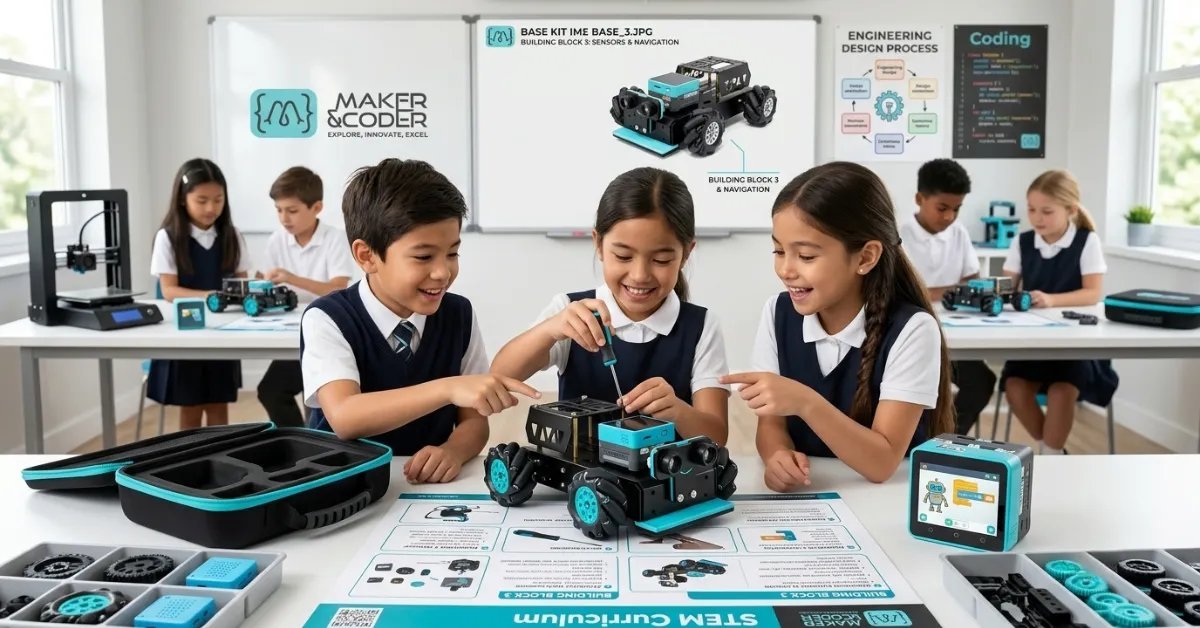
Next, select an ecosystem designed for longevity. The MC4.0 Base Kit offers a foundation that scales across multiple grade levels. It’s modular. It’s durable. It ensures your initial investment supports everything from basic structural builds to advanced automation. Once the hardware is in place, adopt a “Train the Trainer” model. By developing internal experts, you create a sustainable program that isn’t dependent on a single staff member. Launch with a high-profile pilot project to build “lighthouse” classrooms. These initial successes generate the student and parent excitement necessary for a district-wide expansion. Finally, establish a continuous feedback loop to refine the middle school robotics curriculum framework based on real-world classroom performance.
Professional Teacher Training Programs
Hardware is only half the battle. Professional development is the catalyst that transforms a kit into a learning experience. Many educators face significant “tech anxiety” when transitioning from traditional sciences to robotics. Our Teacher Training Programs focus on building confidence through hands-on mastery. We help teachers move from feeling like novices to acting as expert-enablers. By fostering a community of practice, STEM educators can share troubleshooting strategies and project ideas, ensuring no one feels isolated in their technical journey.
Classroom Management for Robotics
Chaos is the enemy of curiosity. Effective management starts with organization. We recommend using labeled bins for MC Blocks and controllers to ensure five-minute setup and cleanup routines. This leaves more time for actual engineering. In the lab, manage group dynamics by assigning specific roles like Lead Coder or Structural Engineer. This prevents one student from dominating the build and ensures everyone contributes to the logic. Teach your students to “debug” hardware issues before asking for help. This develops independence and keeps the momentum of the lesson alive. If you’re ready to design a custom rollout for your district, contact our implementation team today for a strategic consultation.
Scaling STEM Excellence with the MC 4.0 Ecosystem
Scaling a program from a single classroom to a district-wide initiative requires more than just good intentions. It requires a partner that understands the intersection of pedagogy and high-level engineering. Maker & Coder provides the essential architecture for a high-impact middle school robotics curriculum framework by unifying hardware, software, and professional support into a single, turnkey ecosystem. This isn’t just about providing tools; it’s about delivering a vision for what your students can achieve when the barriers to entry are removed.
The MC4.0 Controller serves as the heart of this transformation. It is designed to be the only brain your students need for three years of intensive learning. In 6th grade, it powers basic STEAM projects. By 8th grade, it’s managing complex AIoT routines that communicate with cloud-based data. This continuity is the secret to long-term student success. The MC Curriculum (K-12) provides the roadmap that ensures every grade level builds upon the last, preventing the “skill plateau” that often occurs with less integrated systems. Schools that adopt this ecosystem frequently see a surge in STEM enrollment. When students see a clear, exciting path from their first build to professional-grade coding, their commitment to the track skyrockets. In competitive robotics, teams using MC Kits find an edge through hardware reliability and the ability to deploy sophisticated Python scripts that leave basic block-based competitors behind.
The MC Hardware Advantage
Success in the classroom depends on hardware that can survive the enthusiasm of middle schoolers. Our components are built for high-use environments, ensuring your investment lasts for years. You can choose the right starting point for your specific goals:
- MC4.0 Base Kit: Ideal for 6th-grade foundations, focusing on structural integrity and basic motor control.
- MC4.0 STEAM Kit: Perfect for 7th-grade projects that merge creative design with functional engineering.
- MC4.0 AIoT Kit: The pinnacle for 8th-grade learners, enabling advanced machine learning and internet-connected robotics.
Explore the full range of MC 4.0 Kits and hardware to see how these modular systems fit your classroom needs. The durability of MC Blocks ensures that your students spend their time innovating, not replacing broken parts.
Your Partner in STEM Innovation
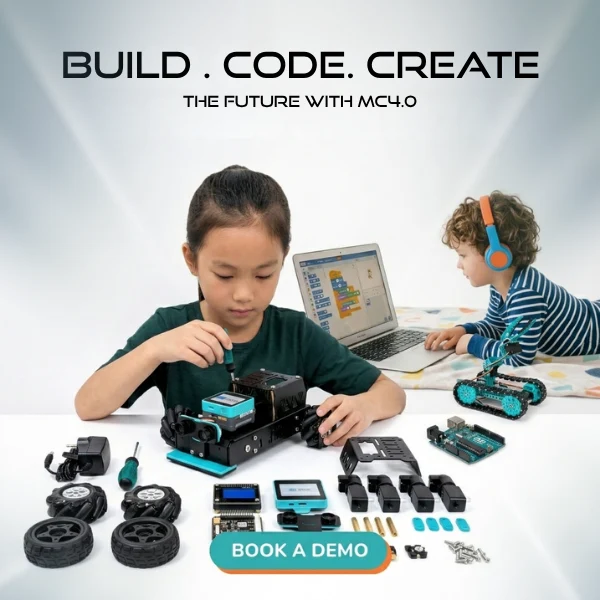
We don’t just ship boxes; we build programs. Maker & Coder supports schools with customized curriculum mapping to ensure your implementation of a middle school robotics curriculum framework aligns perfectly with your district’s specific standards and goals. The MC4.0 STEAM Kit plays a vital role here, fostering the kind of creative engineering that wins grants and engages diverse learner profiles. We’re here to act as your expert-as-enabler, providing the peace of mind that your tech infrastructure is ready for the future. If you’re ready to see the ecosystem in action, you can book a live demo or request a curriculum sample to start your journey toward STEM excellence.
Engineering the Future of STEM Education
The journey from basic blocks to sophisticated systems doesn’t have to be a daunting leap. By adopting a robust middle school robotics curriculum framework, you’re doing more than just teaching code; you’re cultivating the innovators of tomorrow. We’ve explored how standards alignment and hardware modularity create a sustainable foundation. This roadmap ensures the transition to Python and AIoT prepares students for real-world professional environments while keeping engagement high through grades 6 to 8.
Maker & Coder is proud to be a dedicated partner in this mission. Our systems are used in K-12 schools worldwide, ensuring your program is part of a global movement toward technical excellence. With Professional Teacher Training included and our modular MC Blocks designed for sustainable learning, you have every resource needed to scale success. It’s time to move beyond the sandbox and into the laboratory. Equip your classroom with the MC 4.0 ecosystem today and start building a future-ready robotics program. The next generation is ready to create. Let’s give them the tools to build something incredible.
Frequently Asked Questions
What is the best age to start a middle school robotics curriculum?
Starting a middle school robotics curriculum framework in the 6th grade, typically ages 11 to 12, is the ideal window for maximum impact. This is the stage where students possess the fine motor skills for complex assembly and the cognitive maturity to grasp abstract logic. By beginning early, you ensure they have three full years to progress from basic mechanics to professional coding languages like Python.
How do I align a robotics framework with NGSS standards?
Align your framework by focusing on the “Engineering Design” (MS-ETS1) and “Physical Science” (MS-PS) performance expectations within the Next Generation Science Standards. You should design projects that require students to define a problem, develop multiple solutions, and iteratively test their prototypes. This evidence-based approach ensures that every robotics lab session supports core academic requirements while building technical literacy.
Should we use block-based or text-based coding for 7th graders?
Seventh grade is the optimal time for a hybrid approach that bridges visual blocks and text-based syntax. Start the year with blocks to reinforce complex logic like nested loops and variables, then gradually introduce Python for specific robot behaviors. This scaffolding prevents the frustration of syntax errors while building the confidence needed for full script execution in the 8th grade.
What is the difference between the MC4.0 Base Kit and the AIoT Kit?
The MC4.0 Base Kit focuses on fundamental mechanical engineering and basic sensor control, whereas the AIoT Kit adds modules for cloud connectivity and machine learning. You can think of the Base Kit as the essential foundation for structural builds. The AIoT Kit is the advanced extension that allows students to program robots that interact with real-time weather data or recognize visual patterns using AI.
How much professional development do teachers need for a new robotics program?
Teachers typically benefit most from an initial two-day intensive workshop followed by targeted quarterly check-ins to master new modules. Our Teacher Training Programs are designed to empower educators regardless of their previous computer science background. This ongoing support ensures that teachers feel like expert-enablers rather than just facilitators, keeping the program’s momentum strong throughout the school year.
Can this framework be used for after-school robotics clubs?
Yes, the framework is highly effective for after-school environments, especially those preparing for competitive events. While the core curriculum is designed for the rigor of the classroom, its modular nature allows clubs to focus on specialized “deep dives” into areas like autonomous navigation or advanced structural design. It provides a structured path that keeps club members engaged beyond simple free-play activities.
What are the hardware requirements for the MC 4.0 platform?
The MC 4.0 platform centers on the MC4.0 Controller and requires a standard laptop or tablet with a web browser for coding. Because the system utilizes modular MC Blocks, you don’t need specialized workbenches or expensive proprietary tools. A stable Wi-Fi connection is recommended for projects that leverage the cloud-based features of the AIoT Kit, but many core functions work perfectly offline.
How do I justify the cost of a robotics curriculum to my administration?
Justify the cost by highlighting the long-term “ROI of readiness” and the sustainability of modular hardware. Explain how a structured middle school robotics curriculum framework improves student retention in STEM tracks and aligns with state-mandated standards. Emphasize that modular components like MC Blocks reduce waste and replacement costs, making the program a more responsible financial investment than disposable, single-use kits.