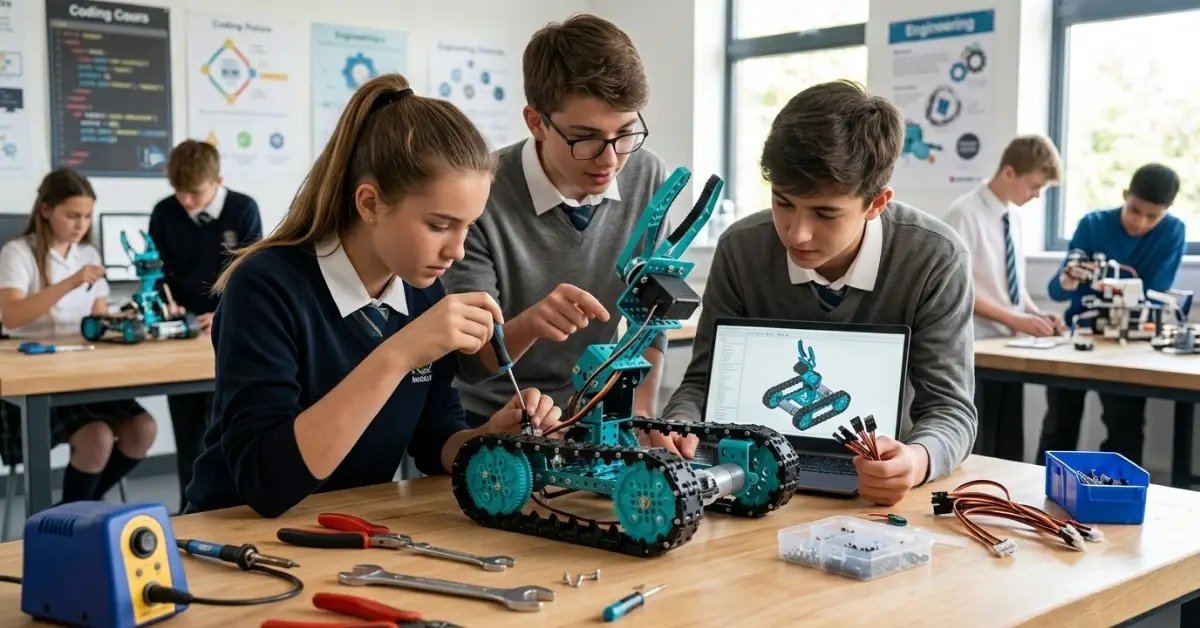
Your classroom robotics kit shouldn’t have an expiration date on a student’s curiosity. Many educators struggle with a robotics kit for schools that feels like a toy in middle school but becomes an impenetrable wall of complexity by high school. You want your students to move from basic assembly to professional AIoT engineering, yet the tools often fail to bridge that gap. We understand the pressure of trying to deliver high-tech lessons when the hardware doesn’t integrate with modern AI or IoT concepts.
Finding the right solution is about more than just buying parts; it’s about adopting a unified ecosystem that scales from K to 12. This article shows you how to transform your STEAM lab into a hub of real-world innovation. You’ll discover how the MC 4.0 platform provides a seamless journey from modular play to sophisticated Python coding. We’ll explore how to build teacher confidence through professional development and empower students to tackle global challenges using the same technology found in elite research labs.
Key Takeaways
- Transition from static toys to professional-grade modular hardware that supports a progressive journey from primary logic to advanced engineering.
- Identify the ideal robotics kit for schools by evaluating its ability to integrate emerging technologies like Artificial Intelligence and the Internet of Things.
- Close the educational gap by pairing high-performance hardware with a structured K-12 curriculum aligned to global academic standards.
- Overcome implementation barriers through dedicated teacher training programs that empower educators to lead high-tech lessons with confidence.
- Future-proof your STEAM investment by selecting an ecosystem designed for longevity and scalability across all grade levels.
What Defines a Modern Robotics Kit for Schools?
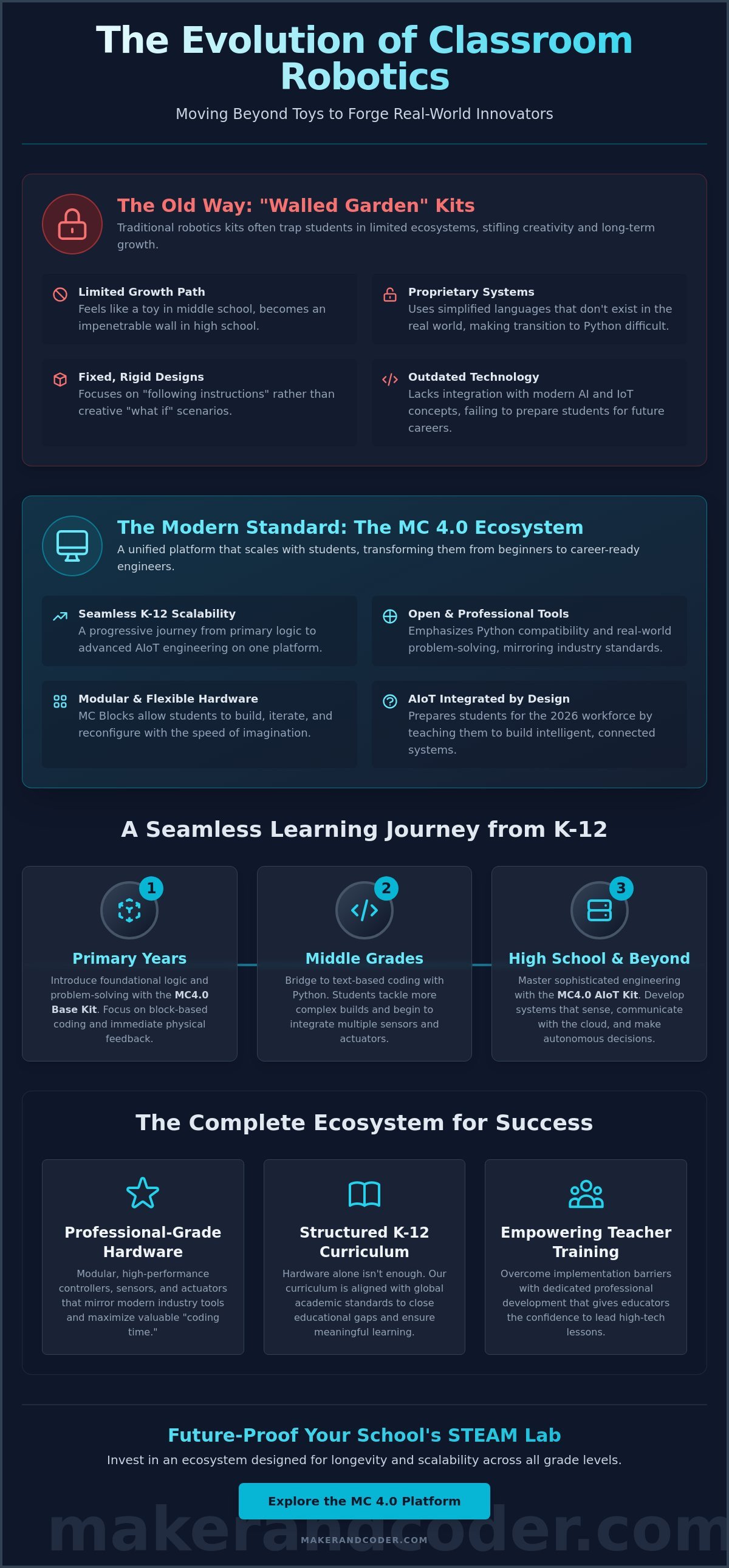
The era of the plastic classroom toy is over. A modern robotics kit for schools must act as a bridge, carrying students from their first lines of block-based code to sophisticated, career-ready engineering. We are seeing a decisive shift away from “toy-like” robots that offer limited paths for growth. Instead, forward-thinking institutions are adopting professional-grade modular hardware that mirrors the systems used in modern industry. Educational robotics has evolved into a discipline where the hardware is as serious as the academic standards it supports.
The controller serves as the “brain” of any successful STEM strategy. It isn’t just a battery pack; it’s a high-performance hub capable of handling complex tasks. The 2026 standard for excellence is now defined by AIoT integration and Python compatibility. Students should not just build a car that drives; they should engineer a system that senses its environment, communicates with the cloud, and makes autonomous decisions based on real-time data. This shift ensures that the technology remains relevant as students progress from primary grades into advanced secondary education.
Modularity is the secret to fostering genuine student creativity. When students use MC Blocks, they aren’t restricted by fixed shapes or proprietary connectors. They can build, iterate, and rebuild with the speed of their own imagination. This flexibility transforms the classroom from a place of “following instructions” to a laboratory of “what if” scenarios. By providing tools that are both powerful and adaptable, we empower the next generation to see technology as a canvas for expression rather than a set of rigid rules.
The Core Components: Controllers, Sensors, and Actuators
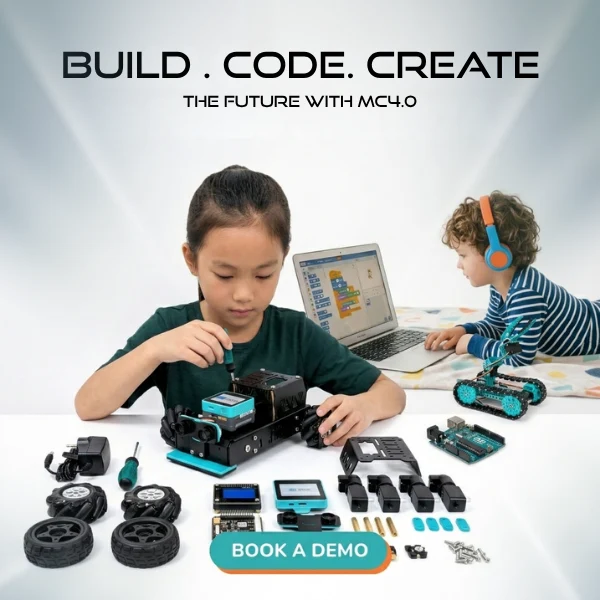
The MC4.0 Controller provides a versatile foundation for K-12 learning, offering the processing power needed for student-led discovery. By utilizing modular MC Blocks, schools can significantly reduce the time spent on tedious mechanical assembly. This efficiency maximizes “coding time,” allowing students to dive straight into logic and problem-solving. These components create vital feedback loops. When a student’s code produces an immediate physical action, it sparks the curiosity required for deep, self-directed experimentation. It moves the learner from passive consumer to active creator.
Why ‘Closed’ Systems Limit Student Growth
Proprietary kits often trap learners in “walled gardens.” These systems use simplified languages that don’t exist outside the classroom, making the transition to Python or Arduino feel like starting from scratch. Choosing an open-ended robotics kit for schools encourages students to solve problems using real-world logic. A true robotics ecosystem is the intentional blend of modular hardware, intuitive software, and rigorous pedagogy. You can explore these professional-grade tools at the Maker & Coder shop to see how scalable engineering looks in practice. Hardware should never be the ceiling of a student’s potential; it should be the floor they stand on to reach higher.
Evaluating the MC 4.0 Platform: From Base Kits to AIoT
The MC 4.0 platform isn’t just a collection of parts; it’s a strategic pathway designed to grow alongside your students. We move from the foundational logic of the MC4.0 Base Kit, perfect for primary years, to the sophisticated engineering of the MC4.0 AIoT Kit. This progression ensures that schools don’t waste budget on hardware that students outgrow in a single semester. By choosing a versatile robotics kit for schools, administrators can ensure a consistent learning experience across every grade level. It’s about building a legacy of innovation rather than just filling a cart with gadgets.
Modern education demands more than just basic mechanics. Artificial Intelligence of Things (AIoT) has emerged as the essential skill set for the 2026 workforce, requiring students to understand how data flows between devices. While traditional “all-in-one” boards limit a student’s ability to innovate, the modularity of MC Blocks encourages endless exploration. Students can swap sensors, add actuators, and reconfigure their designs in minutes. This modular approach outpaces static boards by allowing students to focus on the logic of their engineering rather than getting bogged down in fixed hardware limitations. It’s the difference between following a blueprint and designing a solution.
The MC4.0 Controller: A Deep Dive into Versatility
The MC4.0 Controller is the powerhouse of the ecosystem, featuring high-speed connectivity and multiple input/output ports designed for heavy classroom use. It’s built to handle everything from simple LED toggles to complex data processing for autonomous vehicles. This single hub supports a student’s journey from their first block-based code to professional-grade Python scripts. The MC4.0 Controller acts as the vital bridge between physical hardware components and cloud-based AI processing, making advanced machine learning accessible to K-12 learners. It provides the processing power necessary for students to build real-world applications that actually function in the modern tech landscape.
Specialized Kits for Targeted Learning Outcomes
Targeted learning requires specialized tools that address specific curriculum goals. The MC4.0 AIoT Kit brings smart-home and industrial automation concepts directly to the desk, teaching students how to manage interconnected systems and cloud data. Meanwhile, the MC4.0 STEAM Kit excels in cross-curricular applications, helping students visualize complex physics and mathematics through tangible projects. You can explore our full range of MC4.0 Kits to find the perfect fit for your specific classroom needs. If you’re ready to design a custom rollout for your district, you can connect with our educational consultants to build a tailored implementation plan.
The Curriculum Gap: Why Hardware Alone Isn’t Enough
Hardware alone is a promise; curriculum is the fulfillment. Even the most sophisticated robotics kit for schools can quickly become a “shiny object” that gathers dust in a storage closet if it lacks a structured pedagogical framework. While a survey indicated that 26.75% of educators have integrated educational robots into their teaching, many struggle to maintain engagement beyond the initial “wow” factor. To move from a novelty to a core educational pillar, schools must adopt a comprehensive, sequential roadmap that aligns with international STEM standards. Success is found in the transition from simply following instructions to mastering the logic of engineering.
Scaffolding is the heart of the MC Curriculum. We don’t expect a primary student to write lines of text-based code immediately. Instead, we build a mental model for algorithmic thinking through “unplugged” activities. These screen-free tasks teach the fundamentals of logic and sequences before a student ever touches a controller. As they progress, they transition to block-based environments using MC Blocks, eventually graduating to professional Python programming. This methodical journey ensures that the complexity of the tool never outpaces the learner’s cognitive development, keeping frustration low and curiosity high.
Structuring a K-12 Robotics Pathway
A unified pathway eliminates the “relearning” phase that often happens when students move between grade levels. At the primary level, students focus on basic logic and physical construction, seeing immediate results from their sequences. Middle school learners dive deeper into sensor integration and data collection, managing complex loops and conditional statements. By the time they reach high school, the curriculum shifts toward AI, IoT, and industrial automation. This prepares them for technical certifications and real-world career paths, ensuring their classroom experience has direct professional relevance.
Assessment and Learning Outcomes
Measuring success in a hands-on environment requires a shift from traditional testing to portfolio-based learning. Students use their projects to document the entire engineering process, capturing everything from initial sketches to failed prototypes and final iterations. This approach integrates seamlessly into existing ICT and Science blocks, allowing teachers to assess problem-solving skills alongside technical proficiency. It’s about capturing the “why” behind the code, not just the “how.” By focusing on the process, we empower students to view failure as a data point rather than a dead end, which is the hallmark of a true innovator.
Empowering Educators: The Role of Professional Teacher Training
The most advanced robotics kit for schools is only as effective as the educator leading the lesson. We recognize that the primary barrier to STEAM success isn’t typically the budget or the hardware; it’s the “imposter syndrome” many teachers feel when introduced to high-tech tools. Boxes of gear don’t inspire students. Confident, empowered teachers do. Our Teacher Training Programs move beyond the basic instruction manual, shifting the focus from “how this works” to “how to teach with this.” We aim to transform educators from hesitant observers into visionary mentors who can navigate the complexities of AI and IoT with ease.
The Maker & Coder “expert-as-enabler” philosophy is designed to build a sustainable STEM culture within your staff. Instead of providing a one-time demonstration, we equip teachers with the troubleshooting skills and facilitation techniques required for a dynamic classroom. This approach ensures that when a student’s code fails or a sensor misreads, the teacher sees a learning opportunity rather than a technical crisis. By fostering this resilience in staff, schools can create an environment where innovation is continuous and teacher turnover doesn’t reset the progress of the entire department.
The Implementation Roadmap for Schools
Successful integration follows a methodical progression. We recommend a four-step journey to ensure long-term viability:
- Step 1: Identifying STEM Champions. Pinpoint internal leaders who can advocate for the program and provide peer-to-peer support.
- Step 2: Hands-on Workshops. Engage with the MC4.0 platform through immersive sessions that mirror the student experience.
- Step 3: Co-teaching Support. Integrate the MC Curriculum into existing blocks with direct guidance on lesson delivery and classroom management.
- Step 4: Continuous Professional Development (CPD). Maintain momentum through community sharing and advanced modules as your program evolves.
Overcoming Technical Anxiety in the Classroom
Technical anxiety often stems from the fear of the unknown. Hardware like MC Blocks utilizes a “low-floor, high-ceiling” design, allowing teachers to start with simple, successful projects before moving toward complex engineering. This gradual entry point builds the necessary confidence to explore more ambitious territory. Access to a supportive mentor network further alleviates pressure, providing a safety net for educators as they experiment. In this new landscape, the modern STEM teacher acts as a facilitator who orchestrates the journey of discovery rather than a lecturer who dictates technical facts. Start small. Scale fast. Build a legacy of innovation. Schedule a consultation for our Teacher Training Programs to begin your school’s transformation.
Implementing Your School’s Robotics Lab with Maker & Coder
Transforming a vision into a physical reality requires a balance of logistical planning and pedagogical intent. Selecting the right robotics kit for schools is the first step, but the environment where that kit is used dictates the depth of student engagement. We see schools succeed by starting with a clear spatial strategy. Mobile carts offer agility for institutions sharing resources across multiple classrooms, allowing technology to travel where it’s needed most. Dedicated STEM labs, however, provide the immersive atmosphere required for complex, multi-week AIoT builds where projects can remain assembled and evolving.
Budgeting for longevity means moving away from the cycle of “disposable” tech. Many schools fall into the trap of buying kits that students outgrow in a single term. A true robotics ecosystem scales with the learner. By investing in modular hardware that supports everything from basic sequences to advanced cloud communication, you ensure that your initial capital outlay continues to provide value for years. The Maker & Coder ecosystem provides this unified solution, merging professional-grade hardware with a sequential K-12 curriculum and the expert-led training programs discussed in previous sections.
Selecting Your Initial Kit Fleet
The MC4.0 Base Kit serves as the smartest entry point for most schools. It establishes the foundational logic and mechanical skills students need before they tackle the complexities of advanced sensing. This “low-floor” entry point ensures immediate success for both teachers and students. As your program matures and student proficiency rises, you can seamlessly integrate AIoT and STEAM kits into your inventory without replacing your existing controllers. Check out the Maker & Coder Shop for classroom bundle options designed to maximize your district’s investment while providing enough hardware for every student to participate actively.
The Long-Term Impact of a Robotics Ecosystem
We aren’t just teaching students to build robots; we’re preparing them for a 2030 job market defined by AI, automation, and critical thinking. This isn’t about rote memorization. It’s about developing the mental agility to solve problems that don’t even exist yet. Schools that adopt this high-tech approach build significant institutional prestige, positioning themselves as forward-thinking leaders in the global educational landscape. You have the opportunity to move your students from being passive consumers of technology to becoming its primary architects. Join the global network of Maker & Coder schools today and give your students the tools to engineer the future.
Engineering the Future of Your Classroom
Building a successful STEAM program is a journey that moves from initial curiosity to professional-grade engineering. We’ve seen how the right robotics kit for schools acts as the catalyst for this growth, bridging the gap between modular play and complex AIoT projects. By integrating the MC4.0 platform with a K-12 Aligned Curriculum and Professional Teacher Training programs, you provide your staff and students with a reliable roadmap for success. It’s about creating a sustainable ecosystem where hardware and pedagogy work in perfect harmony.
You have the opportunity to move beyond isolated lessons and foster a culture of genuine innovation. Our modular AIoT-ready hardware ensures your investment scales as your students’ skills evolve, preparing them for the technical challenges of the 2030 workforce. Let’s work together to turn your classroom into a laboratory of discovery where every student has the tools to become an architect of the future. Explore our specialized MC4.0 Robotics Kits and Classroom Bundles and take the first step toward empowering your school’s next generation of innovators.
Frequently Asked Questions
What age group is the MC4.0 platform designed for?
The MC4.0 platform is designed for the entire K-12 spectrum, supporting learners from age 7 through high school graduation. Primary students begin with foundational logic and physical assembly, while secondary students engage with professional-grade engineering. This progression ensures that a single robotics kit for schools can remain relevant throughout a student’s entire academic career.
Do our teachers need prior coding experience to use these robotics kits?
Teachers don’t need any prior coding or engineering experience to successfully implement these kits in their classrooms. Our Teacher Training Programs are specifically built to empower non-technical educators with the confidence to facilitate high-tech lessons. We provide the tools and troubleshooting skills needed to move from a beginner’s mindset to a capable mentor.
Is the MC Curriculum aligned with international standards like NGSS?
Yes, the MC Curriculum is intentionally aligned with international STEM standards, including the Next Generation Science Standards (NGSS). We ensure that every project and lesson plan maps directly to core academic requirements in science and technology. This alignment allows schools to integrate robotics into their existing ICT and Science blocks without sacrificing curriculum coverage.
Can we use Python with the MC4.0 Controller?
You can absolutely use Python with the MC4.0 Controller, as it’s built to handle professional-grade text-based programming. The platform also supports block-based coding and Arduino-style C++. This multi-language compatibility allows students to graduate from simple logic to advanced AI and IoT applications using the same hardware hub.
How do MC Blocks differ from traditional building bricks like LEGO?
MC Blocks differ from traditional bricks by focusing specifically on the seamless integration of electronics and sensors for robotics engineering. While standard building blocks are excellent for general construction, MC Blocks are designed to house motors and actuators securely. This specialized modularity reduces mechanical assembly time, allowing students to maximize their coding time and logic development.
What is the difference between the Base Kit and the AIoT Kit?
The MC4.0 Base Kit focuses on foundational logic, mechanics, and basic programming for younger learners. In contrast, the MC4.0 AIoT Kit includes advanced sensors and components designed for Artificial Intelligence and Internet of Things projects. The AIoT version is the ideal robotics kit for schools looking to teach smart-home automation and cloud-based data processing.
Does Maker & Coder provide technical support for school-wide rollouts?
Maker & Coder provides comprehensive technical support and consulting for large-scale school-wide rollouts and district implementations. We act as a dedicated educational partner, assisting with everything from initial space planning to continuous professional development for your staff. Our team ensures that your implementation is sustainable and that any technical hurdles are resolved quickly.
Can we purchase the curriculum separately from the hardware?
You can purchase the MC Curriculum separately, though it’s optimized for use with the MC4.0 platform components. The curriculum provides a sequential K-12 roadmap that can be adapted to various classroom needs and STEM strategies. For the most cohesive experience, we recommend pairing the curriculum with the hardware it was specifically designed to support.