What if your students stopped asking how AI works and started building the physical systems that define our future? It is a daunting shift. You likely recognize that AI literacy is no longer optional, yet the transition from screen-based theory to hands-on AI projects for middle school students often feels like a leap into the unknown. We understand the pressure of finding a curriculum that aligns with 2026 standards while providing the tangible tools necessary for true engineering. It’s natural to feel the weight of this responsibility when the technology moves faster than the textbook.
This guide provides the professional roadmap you need to bridge that gap. We will empower you to move your classroom from passive consumption to visionary creation through a hardware-integrated framework. You’ll discover how to facilitate sophisticated prototypes and lead confident ethics discussions. We will preview a structured path to help you architect real-world solutions using the MC 4.0 ecosystem. Prepare to transform your lab into a hub of innovation where students build, test, and refine the intelligence of tomorrow.
Key Takeaways
- Shift your classroom focus from basic AI consumption to active engineering, aligning your curriculum with the latest 2026 standards for intelligent systems.
- Discover why hardware-integrated AI projects for middle school students using MC Blocks drive deeper engagement and more rapid prototyping than screen-only learning.
- Learn to make abstract concepts like neural networks and data processing tangible through physical nodes and modular building blocks.
- Follow a structured, two-phase roadmap that establishes logical foundations before introducing students to the advanced MC 4.0 hardware ecosystem.
- Scale your STEM initiatives into a comprehensive K-12 pathway that ensures long-term future-readiness and aligns with international educational benchmarks.
Defining AI Literacy for the Middle School Classroom
AI literacy is the critical ability to understand, utilize, and architect intelligent systems. By 2026, educational standards have evolved beyond basic digital skills. It’s no longer sufficient for students to simply consume AI outputs. They must engineer with AI. This shift requires a mastery of three core pillars: Machine Learning, Data Ethics, and Physical Integration. Middle school represents the perfect cognitive window for this transition. At ages 11 to 14, students move from concrete operations to abstract reasoning. They’re ready to stop playing with toys and start building solutions. For those seeking a comprehensive overview of AI in education, the consensus is clear: early exposure to engineering principles is the key to long-term success. It’s about moving from curiosity to competence.
The Shift from Passive Users to Active Makers
Middle schoolers often begin their journey with simple block-based coding. While useful, it rarely exposes the inner mechanics of modern technology. We must demystify the “black box” of artificial intelligence through direct experimentation. Effective AI projects for middle school students move beyond the screen. They involve a journey from asking a chatbot for an answer to building a physical sensor that triggers a machine learning model. This transformation is vital. It replaces passive observation with active engineering. When students build something tangible, they gain a sense of ownership over the technology. They aren’t just users; they’re the architects of the next digital era.
Core AI Concepts for 11-14 Year Olds
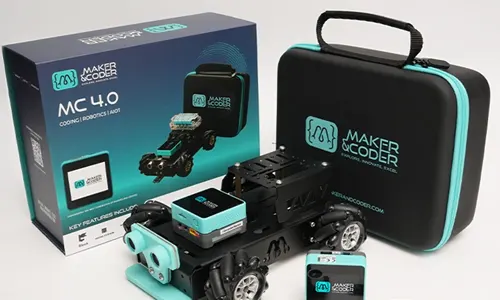
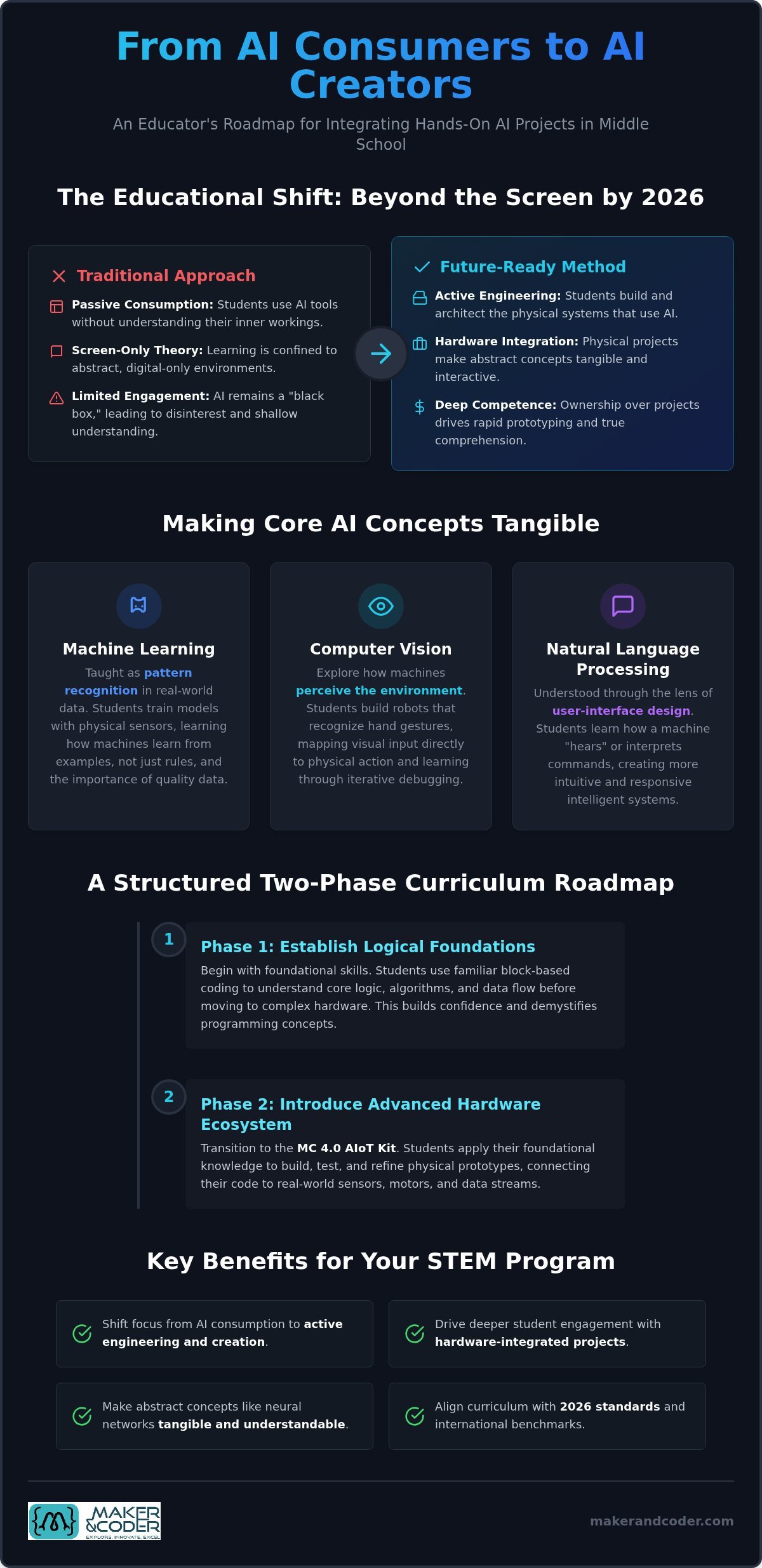
To build with confidence, students must grasp three specific technical concepts. First, Machine Learning is taught as pattern recognition in real-world data. It’s about how machines learn from examples rather than just following rigid rules. Second, Computer Vision allows students to explore how machines perceive the physical environment through cameras and modular sensors. Finally, Natural Language Processing (NLP) becomes relatable when viewed through the lens of user-interface design. When students use the MC 4.0 AIoT Kit, these abstract ideas become tangible. They aren’t just learning code; they’re designing how a machine “sees” or “hears” the world around it. This technical foundation prepares them for the complex engineering challenges of the future. It turns a classroom into a high-tech laboratory of discovery.
Core AI Concepts: Making the Abstract Tangible
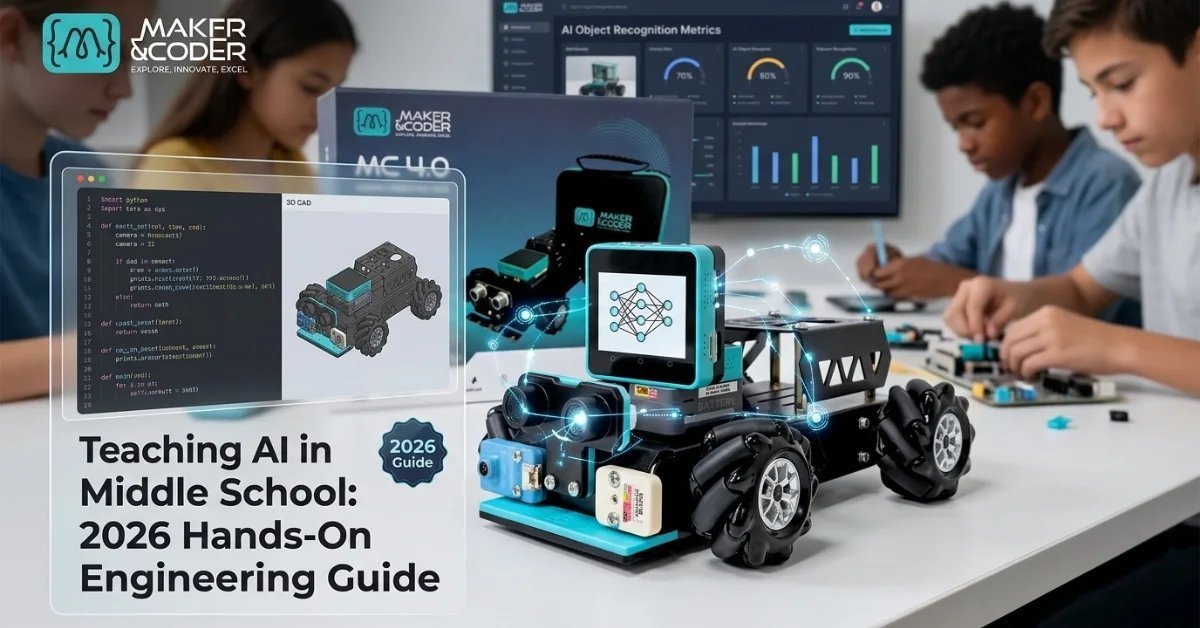
Transforming abstract algorithms into physical prototypes is where true engineering begins. For many, a neural network feels like an invisible “black box” that produces answers without explanation. We change that narrative by visualizing these networks through modular building blocks and physical nodes. By using the MC4.0 AIoT Kit, students can see how data flows from a sensor to a controller, mimicking the way information travels through a biological brain. This hands-on approach grounds complex theory in reality. It allows learners to architect systems where AI doesn’t just exist on a screen; it interacts with the room around them. Connecting these systems to the Internet of Things (AIoT) provides the practical utility needed for 2026 classroom standards.
Machine Learning and Data Training
Success in AI projects for middle school students depends on the quality of the data provided. We start with a simple comparison: manual data sorting versus automated machine learning logic. Students first sort physical objects by hand, then program a model to do the same using environmental sensors. This exercise highlights the role of the engineer in “feeding” the model. It also opens the door to critical discussions about algorithmic bias. If students only train a sensor to recognize one type of input, the system will fail when it encounters variety. They learn quickly that poor data leads to flawed decisions. Using the MC 4.0 Controller, they can gather real-world data points, such as light levels or temperature, to refine their models through iterative testing loops.
Computer Vision and Physical Feedback
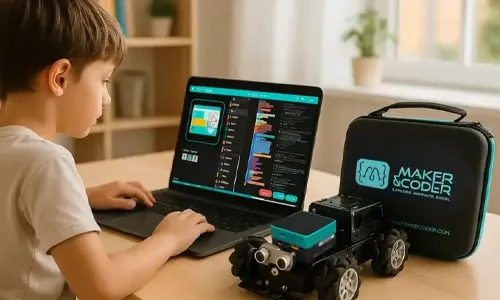
Computer vision turns a simple camera into a sophisticated input sensor within an integrated AIoT ecosystem. A favorite project involves building a modular robot that recognizes specific hand gestures to navigate an obstacle course. This requires a clear transition from “Vision Input” to “Physical Action.” Students must map a visual pattern to a motor command, ensuring the robot reacts in real time. This process is rarely perfect on the first try. It demands constant refinement and debugging, which builds the resilience necessary for future-ready innovators. If you’re ready to bring these tangible experiences to your classroom, you can reach out to our team for a tailored implementation plan. Seeing a student’s face light up as their code moves a physical object is the ultimate proof of effective STEM education.
Hardware vs. Software: Why Physical AI Wins in STEM
Most AI lessons stay trapped behind a glass screen. While software-only simulations offer accessibility, they often fail to capture the imagination of kinesthetic learners. Physical AI changes the equation. It transforms abstract logic into visible, tangible motion. By integrating hardware, you reduce the “screen fatigue” that often plagues modern classrooms. Students move from staring at code to solving physical engineering problems. This tactile approach fosters a deeper connection to the material. It turns a theoretical lesson into an immersive experience where success is measured by a robot’s movement or a sensor’s reaction.
The MC 4.0 Advantage in AIoT
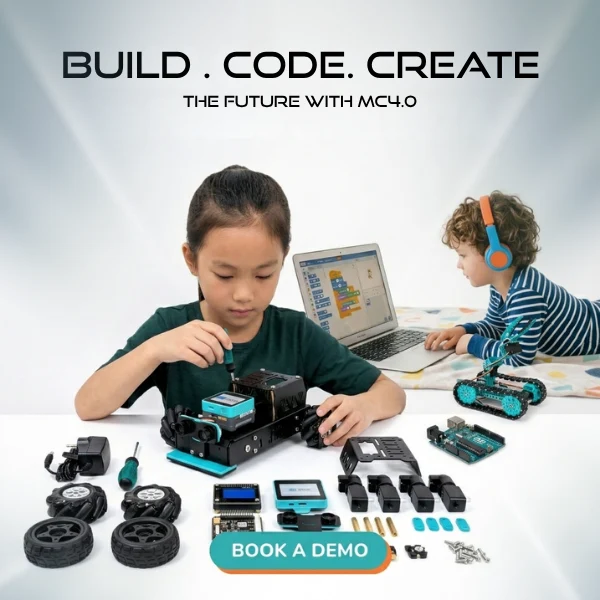
The MC 4.0 Controller acts as the essential bridge between high-level Python code and physical motion. In many AI projects for middle school students, the biggest hurdle is the complexity of wiring. Our modular system eliminates this barrier. Students can swap components instantly without ever picking up a soldering iron. This speed is vital for a classroom setting where time is limited. You can explore how modular STEM hardware enhances AI labs by allowing for rapid experimentation. When a student can iterate on a physical build as quickly as they can edit a line of code, innovation flourishes. It empowers them to test bold ideas without the fear of permanent hardware failure.
Building Smart Systems with MC Blocks
MC Blocks allow students to design complex “Smart Home” prototypes that react to environmental AI inputs. Imagine a system that adjusts lighting based on a user’s facial expression or a security gate that opens via voice recognition. These projects teach logic through physical connectivity. When implementing AI projects for middle school students, the transition from digital logic to mechanical action provides the ultimate “aha” moment. A notable case study involved a group of students who built an automated AI sorting machine using the MC4.0 AIoT Kit. The machine used computer vision to identify recyclable materials and physical actuators to sort them into bins. This project moved the students from basic coding to full-scale systems engineering. They didn’t just learn about AI; they built a functional solution to a real-world problem.
Step-by-Step AI Curriculum Implementation
A successful transition to engineering-led education requires a scaffolded roadmap. We’ve designed a twelve-week framework that moves students from basic logic to advanced AIoT system design. This journey ensures that AI projects for middle school students remain both rigorous and achievable. It begins with theoretical foundations and culminates in a functional physical prototype.
- Phase 1: Foundations (Weeks 1-2). Focus on the logic of data collection for AI projects for middle school students. Students learn how machines categorize information and explore the initial concepts of algorithmic bias.
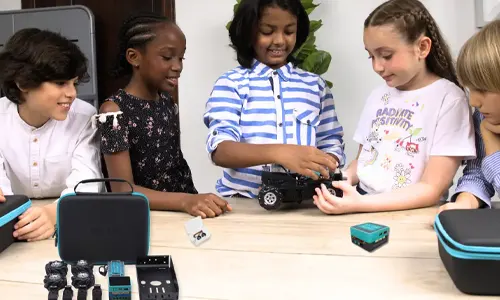
- Phase 2: Ecosystem Integration (Weeks 3-4). Introduce the MC 4.0 hardware ecosystem. Students familiarize themselves with the MC 4.0 Controller and modular MC Blocks, learning how to assemble components without complex wiring.
- Phase 3: Model Training (Weeks 5-8). Build and train simple machine learning models. This phase connects Python-based logic to physical outputs, such as a motor that turns when a specific object is recognized.
- Phase 4: Capstone Engineering (Weeks 9-12). Students work in teams to architect a full AIoT solution. This final presentation showcases their ability to integrate perception, reasoning, and physical action into a single visionary project.
Teacher Training and Professional Development
You don’t need a Computer Science degree to lead a world-class AI lab. We empower educators through our Teacher Training Programs, which bridge the knowledge gap through structured, hands-on learning. By using the ready-to-use MC Curriculum, you can focus on mentoring your students rather than building lesson plans from scratch. If you’re ready to transform your teaching practice, contact us today to discuss our training options.
Classroom Management for AI Labs
Organizing a high-tech lab requires clear systems. We recommend managing student-led hardware teams where each member has a specific role, such as data lead or hardware architect. Troubleshooting is an essential part of the process. Encourage a “fail-fast” environment where sensor calibration issues are seen as opportunities for discovery rather than setbacks. This structure fosters the resilience students need to master modern technology.
Scaling Your STEM Program with Maker & Coder
Scaling a STEM initiative requires more than just adding more devices. It demands a vision that spans grades and skill levels. We provide a comprehensive K-12 AI educational pathway that grows with your students. This framework ensures that AI projects for middle school students aren’t isolated events but foundational steps toward mastery. Our MC Curriculum aligns directly with international 2026 STEM standards, giving you the peace of mind that your lab is operating at the absolute cutting edge of educational technology. By moving from simple logic to sophisticated AIoT systems, you create a narrative of growth that keeps learners engaged throughout their academic career.
The Complete MC 4.0 Ecosystem
Growth happens in stages. Our hardware reflects this journey. The MC4.0 Base Kit provides the essential entry point, while the MC4.0 AIoT Kit and MC4.0 STEAM Kit offer specialized paths into advanced engineering and creative design. You can start with basic logic and move toward complex edge computing. The beauty of MC Blocks lies in their modularity. They allow students to increase complexity without the frustration of fragile connections. Check out the latest MC 4.0 hardware to see how these components can elevate your specific lab environment. This ecosystem isn’t just a collection of parts; it’s a scalable platform for visionary creation. It allows you to tailor the hardware to the specific needs of your students as they progress from beginners to advanced makers.
Preparing Students for the Future
We aren’t just teaching code. We’re developing an “AI mindset.” This involves a blend of critical thinking and technical agility that will be essential in the AI-driven workforce of the 2030s. By bridging the gap between middle school curiosity and high school technicality, we ensure students are never overwhelmed. They learn to view complex systems as accessible tools for expression. This transition from passive consumer to active architect is the most valuable gift you can give a learner. It’s about building the confidence to lead in a world defined by intelligent machines. You’re not just preparing them for a job; you’re preparing them to innovate in a future we can only begin to imagine. Empower your classroom with Maker & Coder and start building that future today.
Architecting the Future of STEM Education
The transition from passive AI consumption to active engineering is the most significant shift your classroom will make this year. By grounding abstract concepts in physical hardware, you provide students with the technical agility they need for the 2030s. We’ve explored how modular systems and structured implementation phases turn complex logic into tangible success. High-quality AI projects for middle school students don’t just teach code; they build the confidence to solve real-world problems through innovation.
Maker & Coder is your dedicated partner in this journey. Our systems are used in global K-12 STEM programs to bridge the gap between curiosity and professional-grade engineering. With modular MC Blocks for zero-soldering prototyping and comprehensive teacher training included, you can facilitate advanced labs with total peace of mind. It’s time to move beyond the screen and start building. Equip your classroom for the future of AI today. The next generation of visionary creators is waiting for the tools to lead. We can’t wait to see what they build.
Frequently Asked Questions
What is the best age to start teaching artificial intelligence?
Middle school represents the optimal cognitive window for students to transition from digital consumers to technical creators. While foundational logic can begin in primary school, ages 11 to 14 are perfect for introducing complex engineering frameworks. At this stage, learners possess the abstract reasoning skills necessary to understand neural networks and data training. Starting at this age ensures they develop the technical agility required for future computer science. It’s about moving from curiosity to competence.
Do students need to know how to code before learning AI?
Students don’t need prior coding expertise to begin exploring AI projects for middle school students. Our K-12 MC Curriculum is designed to teach logical foundations alongside technical implementation. Beginners often start with block-based logic to understand core concepts before moving into text-based languages like Python. This integrated approach ensures that students learn the “why” of machine learning while they develop the “how” of programming, making the learning process more intuitive and purposeful.
How much does it cost to set up an AI lab in a middle school?
The investment for an AI lab varies based on the number of student stations and the depth of the curriculum. Schools typically focus on scalable solutions like the MC4.0 AIoT Kit to maximize their budget. By choosing modular hardware, educators reduce long-term costs associated with specialized sensors or soldering equipment. We recommend starting with a base set of controllers and expanding your ecosystem as your program grows across different grade levels.
What are the most important AI ethics to teach middle schoolers?
Python is an excellent language for middle schoolers because its syntax is readable and mirrors natural logic. The MC4.0 Controller acts as a powerful bridge, allowing students to see their Python code translate into physical motion or sensor feedback. This real-world application makes the learning experience more engaging than purely screen-based coding. It prepares students for industry-standard practices while keeping the complexity manageable for the 11 to 14 age group. Build. Test. Refine.
How does hardware like MC 4.0 help with AI education?
Hardware like the MC 4.0 ecosystem transforms abstract software concepts into tangible engineering challenges. By using modular MC Blocks, students can prototype AI projects for middle school students without the need for complex wiring or soldering. This physical interaction reinforces how machines perceive their environment through sensors and react through actuators. It moves the lesson from a theoretical discussion to a functional engineering lab where students build real-world solutions.
What is the difference between AI and traditional computer science in middle school?
Traditional computer science focuses on deterministic logic where a specific input always leads to a set output. AI education introduces probabilistic reasoning, where systems learn from patterns in data to make predictions. This shift requires students to think differently about debugging and testing. Instead of just fixing a line of code, they might need to retrain a model or improve their data collection methods to achieve a more accurate and reliable result.
How do I align AI lessons with existing STEM standards?
Alignment is achieved by integrating AI concepts into existing engineering and data science benchmarks. Our MC Curriculum is specifically mapped to international 2026 standards, ensuring that every lesson supports core academic goals. You can incorporate AI into physics through motion sensors or into biology through image recognition projects. This cross-disciplinary approach makes AI a foundational element of STEM rather than an isolated elective, providing a more cohesive and meaningful learning experience.