What if the same students who yawn at paper-mache volcanoes could build a functional, Python-powered smart city prototype by Friday? It’s a common frustration for educators: the “fun” projects often lack depth, while the technical ones feel intimidating or disconnected from academic standards. You know that middle schoolers are ready for more than just crafts, yet finding hands-on STEM activities for middle school that actually scale from basic curiosity to professional-grade engineering is a constant challenge. The transition from simple assembly to genuine technical literacy requires a bridge that many current kits simply don’t provide.
This guide bridges that gap. We’ll show you how to transform your classroom into a high-tech innovation hub where coding and hardware meet real-world problem-solving. Discover how to move your students from passive consumers of technology to confident creators. We will explore scalable projects that grow alongside student skills, moving from modular prototyping with blocks to advanced AIoT applications. You’ll gain a clear roadmap for 2026 to deliver measurable learning outcomes that excite your students and align perfectly with NGSS standards, ensuring every project is as purposeful as it is engaging.
Key Takeaways
- Learn to bridge the gap between simple crafts and professional engineering by integrating modular hardware with Python-based logic.
- Discover high-impact hands-on STEM activities for middle school that utilize rapid prototyping to eliminate technical barriers and messy wiring.
- Explore how AIoT projects and smart sensors transform student engagement through authentic, real-world problem-solving scenarios.
- Establish a scalable learning environment using a structured K-12 curriculum designed for measurable technical growth and academic alignment.
- Gain the confidence to lead advanced coding and hardware lessons through professional training programs that support your long-term educational goals.
Why Middle School is the Critical Window for Hands-On STEM
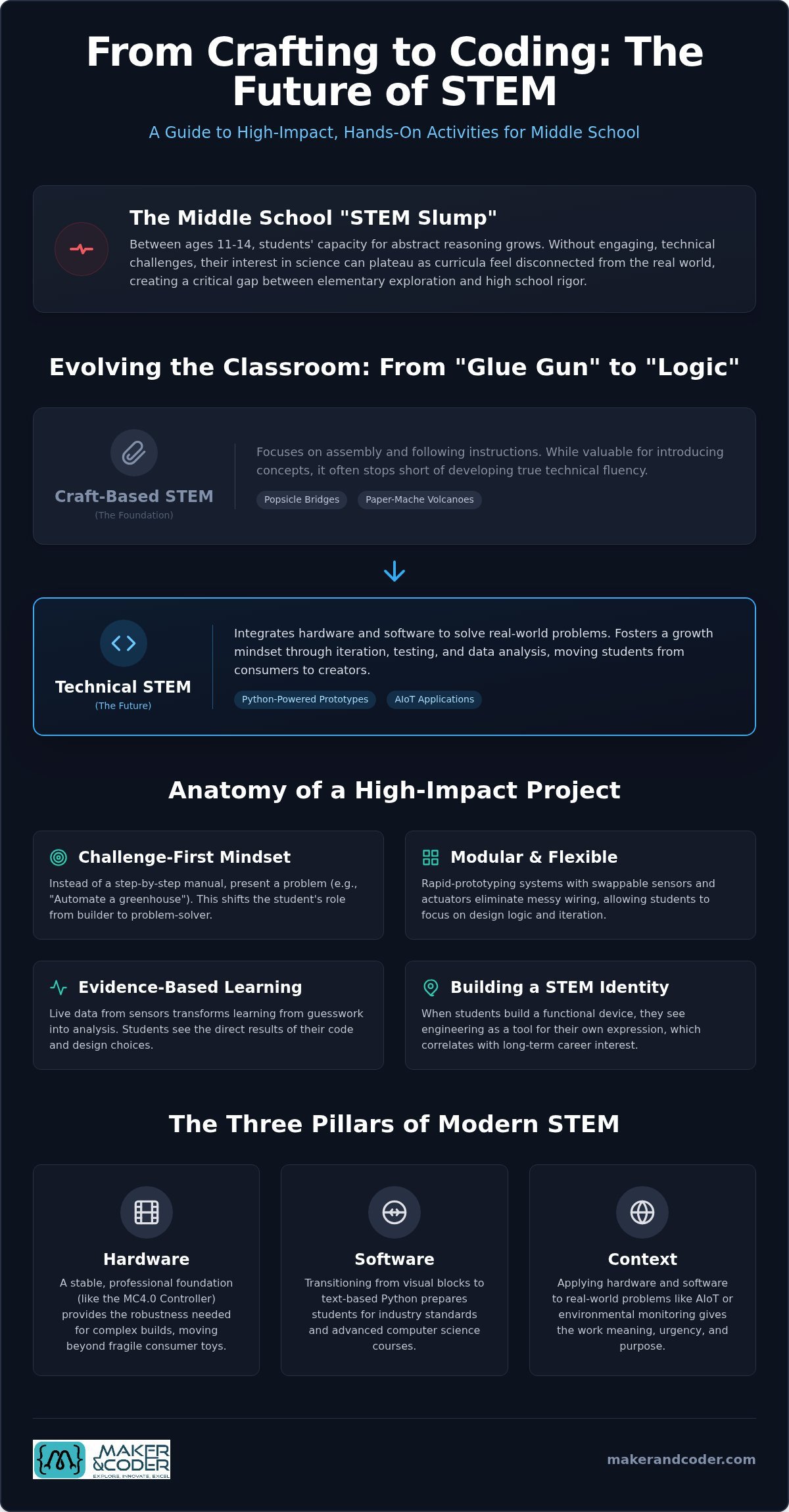
Middle school represents a neurological crossroads. Between the ages of 11 and 14, students undergo a profound cognitive shift, moving from concrete observations to the capacity for abstract reasoning. This developmental window is the ideal time to introduce Science, technology, engineering, and mathematics (STEM) through projects that demand both logic and physical assembly. Without this engagement, many students experience a “middle school slump,” where science interest plateaus because the curriculum feels increasingly disconnected from reality.
High-impact hands-on STEM activities for middle school serve as the necessary bridge between elementary exploration and high school rigor. While younger children learn through play, middle schoolers are ready to learn through iteration. They need to experience the productive struggle of a circuit that doesn’t light or a line of code that fails to execute. This cycle of testing and refining is where a growth mindset is forged. It transforms failure from a dead end into a valuable data point, preparing them for the complexities of real-world engineering.
Developing a Strong STEM Identity
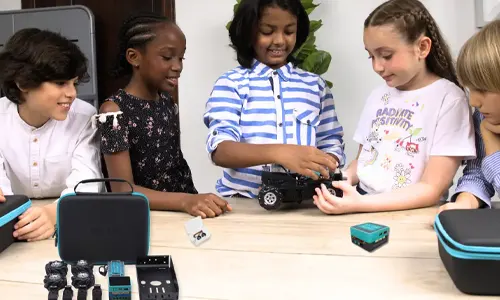
To thrive in a technical future, students must transition from being passive consumers of technology to active creators. This shift is the foundation of a robust STEM identity. When a student builds a functional device, they stop seeing engineering as a career for someone else and start seeing it as a tool for their own expression. Tangible success in the classroom correlates directly with long-term career interest. By focusing on inclusive project design, we invite girls and underrepresented groups to lead the innovation process rather than just following instructions.
From Crafting to Technical Fluency
The educational landscape of 2026 demands more than craft-based maker projects. While popsicle stick bridges have their place, they don’t prepare a student for the complexity of AP Computer Science or high-level robotics. Technical fluency requires professional-grade tools adapted for the classroom environment. It’s about moving beyond the “glue gun” phase and into the “logic” phase.
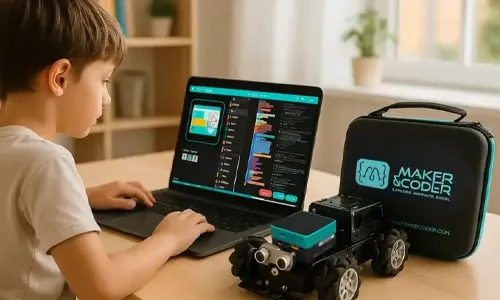
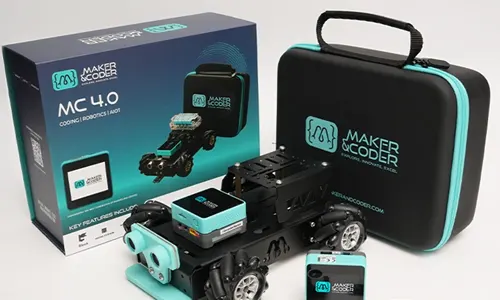
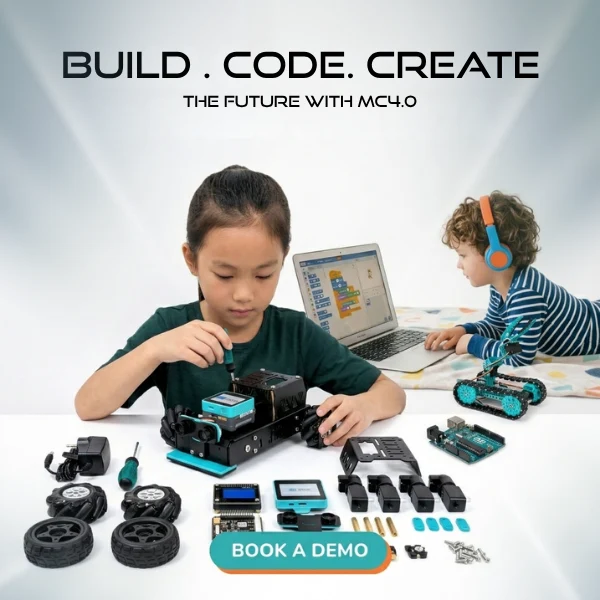
Introducing the MC 4.0 Kit and Python-supported controllers allows students to engage with the same languages used by professional engineers. By integrating modular sensors and real-world hardware, learners move beyond building to see and begin coding to solve. This preparation ensures they enter high school with the confidence to tackle advanced hardware systems and complex software architecture without feeling overwhelmed. It turns the classroom into a laboratory for future-ready skills.
The Anatomy of a High-Impact STEM Activity
High-impact STEM isn’t defined by the materials used; it’s defined by the cognitive load it demands. To move beyond simple crafts, educators must prioritize “Technical STEM.” This approach integrates physical hardware with logical software to solve a specific, real-world problem. Effective hands-on STEM activities for middle school start with a “Challenge-First” mindset. Instead of providing a step-by-step manual for a pre-determined model, present a problem: “How can we automate a greenhouse to save water?” This reframe shifts the student from a builder to a problem-solver.
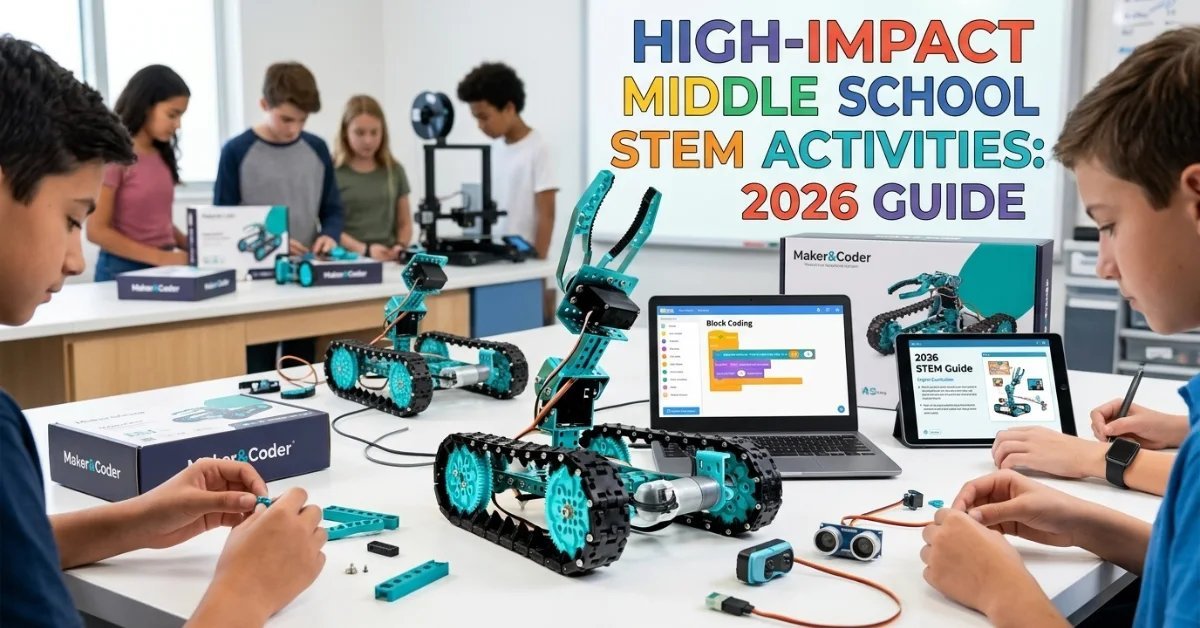
Flexibility is essential in a dynamic classroom. Fixed kits often limit creativity to a single outcome. In contrast, modular systems like MC Blocks allow students to swap sensors and actuators instantly. This modularity removes the friction of complex wiring, letting learners focus on the logic of their design. When students can see live data from their sensors, they move from guessing to analyzing, making their learning measurable and evidence-based.
The Three Pillars of Modern STEM Projects
A successful technical project rests on three critical foundations that move learners from basic concepts to advanced applications:
- Hardware: The MC4.0 Controller provides a stable, professional foundation for complex builds without the fragility of consumer toys.
- Software: Transitioning from visual blocks to text-based Python prepares students for industry standards and high-level computer science.
- Context: Applying these tools to AIoT (Artificial Intelligence of Things) or environmental monitoring gives the work meaning and urgency.
Encouraging Design Thinking and Iteration
Success in engineering isn’t a straight line; it’s a “Test-Break-Fix” cycle. High-impact activities should have a “low floor” for beginners and a “high ceiling” for advanced students. This ensures every learner can participate while providing room for experts to innovate. By documenting this process in digital portfolios or engineering notebooks, students learn to value the journey of iteration as much as the final product. If you’re ready to design your own high-impact curriculum, reach out to our team for a consultation on implementing these frameworks effectively.
Technical vs. Craft-Based STEM: Which Does Your Classroom Need?
Choosing the right tools is the first step in designing effective hands-on STEM activities for middle school. Educators often face a choice between accessible craft projects and sophisticated technical kits. While both have value, they serve different pedagogical masters. Craft-based STEM focuses on the physical properties of matter; technical STEM centers on the logic of systems. Understanding the shift from “making for fun” to “coding for literacy” is essential for meeting 2026 academic standards.
Think about the educational lifespan of your investment. Consumable craft supplies are often “one and done,” leading to waste and constant replenishment. Technical kits represent a foundational asset for your school. They offer a much longer educational lifespan because they support professional coding languages like Python. This ensures that the projects you implement today provide the groundwork for high school success. You aren’t just buying a kit; you’re building a scalable ecosystem of technical fluency.
When to Use Craft-Based STEM
Craft-based projects are excellent for rapid prototyping or short “brain breaks.” They’re ideal for teaching foundational physics concepts like tension, gravity, and structural integrity. If you’re demonstrating how a bridge carries a load using popsicle sticks, you’re building physical intuition. However, these activities reach a ceiling quickly. They lack the capacity for data collection and the logical complexity required for modern AIoT or robotics. Because they rely on consumables, they don’t allow for the deep, multi-week iteration that defines real engineering.
The Power of Technical-Based STEM
Technical STEM provides the high-level literacy students need for the future. By integrating hardware like the MC4.0 Controller, you’re giving students a reusable system that scales with their growing expertise. Unlike a one-off craft, a technical kit allows for infinite iteration. Students can build an automated environmental monitor on Monday and a motion-sensing security system on Wednesday using the same modular MC Blocks. This approach directly aligns with Next Generation Science Standards (NGSS) by moving students from simple observation to complex data analysis and system design. It builds a bridge between the physical world and digital intelligence, preparing students for the 21st-century workforce through authentic hands-on STEM activities for middle school.
5 Hands-On STEM Projects for the Modern Middle School
High-impact hands-on STEM activities for middle school must go beyond simple assembly. They should challenge students to engineer solutions using digital intelligence and physical hardware. These projects leverage the MC4.0 ecosystem to transform abstract concepts into tangible innovations that solve real-world problems.
- The Smart Environmental Monitor: Monitor local air quality and humidity using the MC4.0 AIoT Kit to understand environmental impact.
- AI-Powered Motion Security System: Deploy machine learning models to detect movement patterns, distinguishing between humans and pets.
- Automated Greenhouse Irrigation: Engineer a sustainable system that regulates plant health through soil moisture data and automated pumps.
- Autonomous Navigation Challenge: Program a robot to navigate a complex maze using ultrasonic sensors and precise Python logic.
- Wearable Tech Health Tracker: Create a functional prototype that tracks physical activity and heart rate, merging biology with electronics.
Deep Dive: Building a Smart Greenhouse
Students use soil moisture sensors to trigger automated watering in this sustainable tech challenge. This isn’t just about keeping a plant alive; it’s about mastering ‘If-Then’ logic in Python. By using the MC4.0 Controller, they write code that monitors real-time data. If the moisture drops below a specific threshold, the controller activates a water pump. To level up, students connect their system to the cloud. This allows for remote monitoring from a tablet or smartphone, introducing them to the foundational principles of the Internet of Things (IoT).
Deep Dive: AI Motion Detectors
AI literacy is a foundational skill for 2026, and this project brings it into the classroom. Students code a sensor to recognize specific movement patterns by first gathering data sets to teach the system what “normal” activity looks like. This provides a practical introduction to machine learning and algorithmic thinking. To enhance the build, students integrate an alert system using modular MC Blocks and LEDs. When the system detects an anomaly, it triggers a visual or auditory warning, completing the loop between software logic and physical response.
These projects empower students to solve the modern challenges mentioned earlier, such as smart city development and sustainable resource management. If you’re ready to bring these high-impact experiences to your classroom, contact our educational specialists today to find the right kit for your curriculum.
Implementing a Scalable STEM Ecosystem with Maker & Coder
Scaling a STEM program requires more than just a collection of gadgets. It demands a cohesive strategy that connects elementary curiosity to high school career readiness. By adopting the K-12 MC Curriculum, schools move away from disjointed, one-off lessons and toward a structured progression of skills. This ecosystem ensures that hands-on STEM activities for middle school aren’t just isolated events; they’re critical building blocks in a long-term technical journey. The MC 4.0 Kit serves as the versatile heart of this system, providing a consistent hardware platform that adapts as student expertise grows.
Transitioning to a comprehensive lab environment allows for a “low floor, high ceiling” approach. Students can start with basic logic and move toward professional-grade Python applications without needing to learn entirely new hardware systems. This continuity builds confidence and mastery, ensuring that the investment you make today continues to deliver value as your students advance into more complex engineering challenges.
Professional Development and Support
The most advanced lab is only as effective as the educator leading it. We recognize that many teachers feel a lack of technical confidence when introducing complex coding or hardware. Our Teacher Training Programs are designed to eliminate this “tech-phobia” by putting the tools directly in your hands. These programs provide the professional authority needed to guide students through productive struggle and complex iteration. By utilizing our structured lesson plans, you save hours of preparation time, allowing you to focus on student engagement rather than troubleshooting. You’re also joining a global community of Maker & Coder educators who are redefining what’s possible in modern education.
Choosing the Right Kit for Your Classroom
Building a future-ready lab starts with selecting the right foundation for your specific goals. The MC4.0 Base Kit offers the perfect entry point for foundational electronics and logic. For classrooms ready to tackle the biggest challenges of 2026, the MC4.0 AIoT Kit introduces smart city concepts and environmental monitoring through advanced sensors. If your focus is on creative expression through technology, the MC4.0 STEAM Kit provides the tools for artistic innovation and complex robotics.
Central to all these kits are the modular MC Blocks. These components simplify complex electronics, allowing students to prototype rapidly without the frustration of messy wiring or loose connections. This modularity ensures that hands-on STEM activities for middle school remain focused on high-level design thinking rather than basic assembly. When you’re ready to transform your educational environment, you can explore the Maker & Coder shop for classroom solutions that scale with your vision.
Empowering the Next Generation of Creators
The journey from simple classroom experiments to professional-grade engineering shouldn’t be a daunting leap. By prioritizing technical fluency over basic crafting, you provide your students with the tools to solve real-world problems. High-impact hands-on STEM activities for middle school are the catalyst for this growth, turning curiosity into measurable skill. You’ve seen how modular hardware and Python-based logic can transform a standard lesson into a laboratory of discovery. Now, it’s time to bring that vision to life in your own environment.
Our ecosystem is designed to support you at every step. With Python-ready hardware for real-world skills and modular MC Blocks for frustration-free building, your students can focus on innovation rather than troubleshooting. We ensure you feel confident leading these advanced projects by including Professional Teacher Training Programs in our partnership. This isn’t just about kits; it’s about building a sustainable culture of technical excellence. Equip your classroom with the MC 4.0 STEM ecosystem today and watch your students become the creators of tomorrow. The future of education is tangible, and it starts with the right tools.
Frequently Asked Questions
What are the best STEM activities for 6th-8th graders?
The most effective projects for this age group transition from simple assembly to logical problem-solving. High-impact hands-on STEM activities for middle school include building smart environmental monitors or AI-powered security systems. These projects challenge students to integrate hardware with real-world software logic. By using modular systems like MC Blocks, students can prototype rapidly and focus on the engineering design process rather than struggling with basic wiring or fragile connections.
How do I start a STEM program in middle school with no budget?
Starting with zero budget requires focusing on the software and logic pillars of STEM first. Utilize free, browser-based coding platforms and open-source resources to teach the fundamentals of computational thinking. For physical components, encourage students to use recycled materials to build prototypes. While these low-cost options provide a starting point, scaling to a professional-grade program eventually requires investing in reusable hardware like the MC 4.0 Kit for technical depth.
Is Python or block-based coding better for middle schoolers?
The primary difference is the integration of the Arts into the traditional science, technology, engineering, and math framework. STEAM emphasizes creative expression and human-centric design in technical projects. For example, the MC4.0 STEAM Kit allows students to merge artistic innovation with robotics. While STEM focuses on the functional solution, STEAM encourages students to consider aesthetics and user experience, making technical learning more accessible and engaging to a diverse range of learners.
How can I integrate AI into my middle school STEM curriculum?
Integrating AI begins with teaching students how to collect and evaluate data sets. Middle schoolers can use the MC4.0 AIoT Kit to build systems that recognize patterns, such as a motion sensor that distinguishes between different types of movement. This hands-on approach demystifies artificial intelligence, moving it from a theoretical concept to a practical tool for innovation. Students learn to build, test, and refine algorithmic models in a controlled classroom setting.
Do I need special training to teach hands-on STEM activities?
While a technical background is helpful, specialized training programs are designed to bridge the gap for any educator. Maker & Coder provides professional teacher training focused on effectively utilizing STEM technology without the need for prior engineering experience. These programs provide structured lesson plans and hands-on practice, helping teachers overcome tech-phobia. This support ensures you can lead advanced hands-on STEM activities for middle school with total confidence and professional authority.
What materials are essential for a middle school maker space?
A modern maker space needs a balance of structural materials and technical hardware. Essential components include modular controllers like the MC4.0, a variety of sensors for moisture or light, and actuators like servos. Modular MC Blocks are critical because they allow for frustration-free building without messy wiring. Combining these technical tools with traditional materials like cardboard or 3D-printed parts creates a high-ceiling environment where students can prototype any complex solution they envision.
How do hands-on STEM activities align with NGSS standards?
Hands-on projects align with NGSS by focusing on the Engineering Design core ideas and Science and Engineering Practices. Instead of memorizing facts, students identify problems, develop prototypes, and iterate based on data. The K-12 MC Curriculum is specifically mapped to these standards, ensuring that every project supports academic growth. This approach ensures that students aren’t just building for fun; they’re meeting rigorous state and national benchmarks for technical literacy and future-readiness.