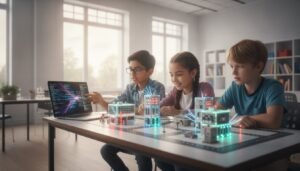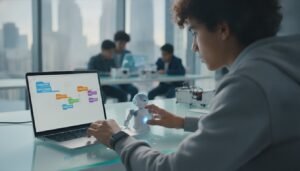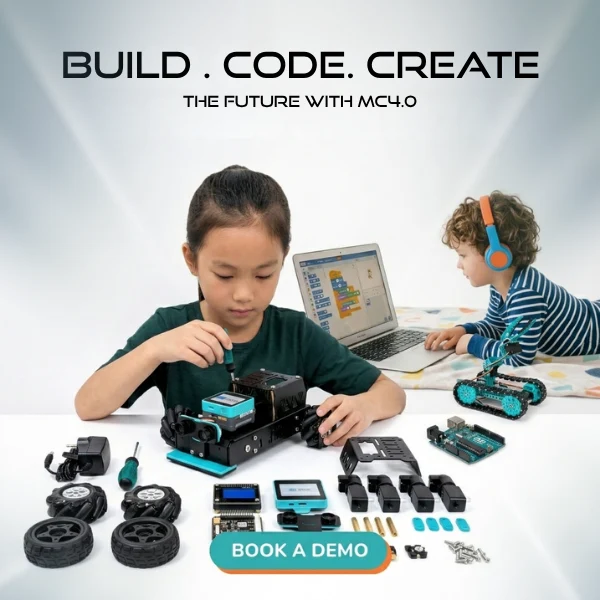
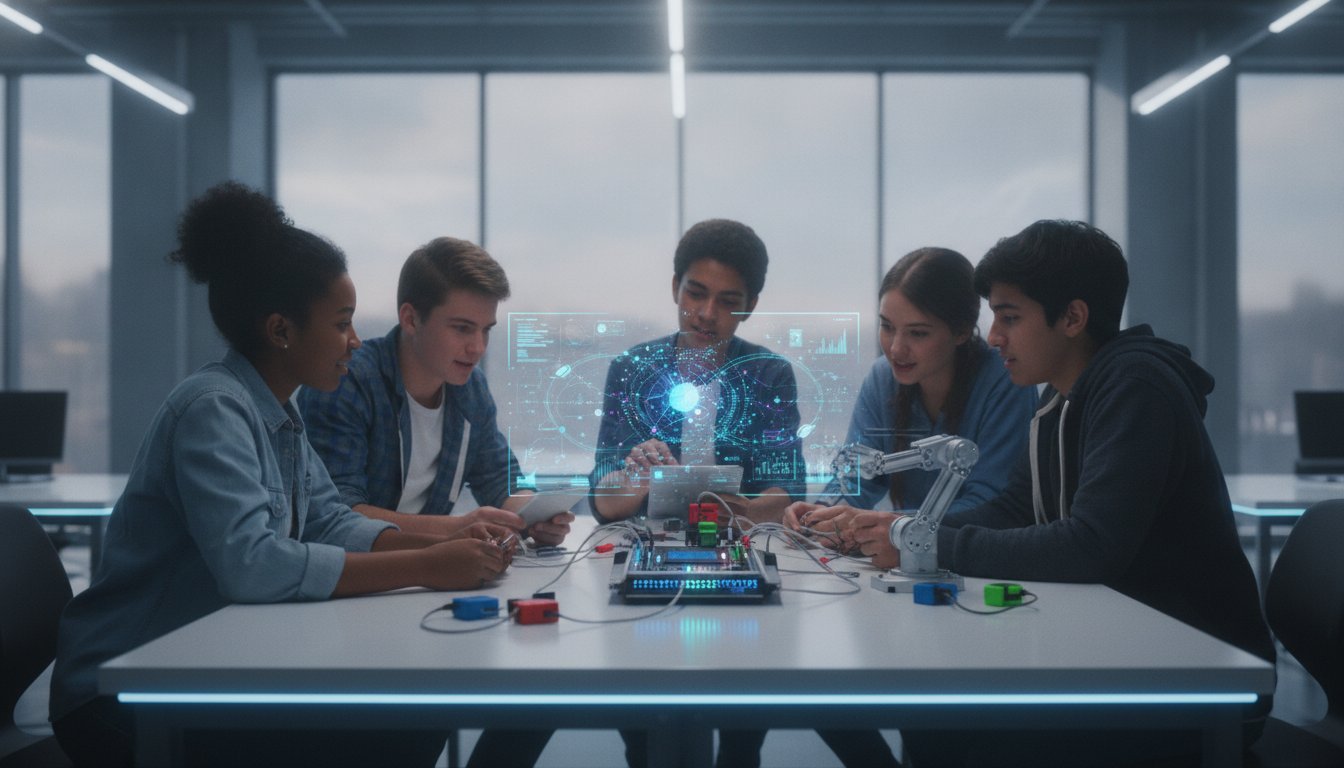
What if the biggest barrier to student engagement isn’t the complexity of the code, but its invisibility? You’ve likely seen the shift in your own classroom; students start with enthusiasm but quickly grow weary of logic that remains trapped behind a glass screen. It’s frustrating to watch potential fade because the tools don’t match the ambition of the modern curriculum. High-quality physical computing kits for education solve this by turning abstract concepts into something students can touch, see, and control.
Discover how to bridge that gap using the professional MC 4.0 ecosystem. Shift your classroom from passive screen-time to active, tangible creation. We’ll explore how a structured K-12 curriculum and modular MC Blocks transform technical instruction into a source of professional confidence. This guide outlines the essential hardware and teacher training required to build a scalable STEM environment that prepares every learner for the complex AIoT projects of 2026.
Key Takeaways
- Move beyond screen-based limitations to foster a “Codmaker” mindset where students actively innovate with professional physical hardware.
- Identify the core components of the MC 4.0 ecosystem that make physical computing kits for education a professional standard rather than a simple classroom activity.
- Master the transition from basic coding logic to advanced AIoT applications using modular MC Blocks and high-performance controllers.
- Build institutional confidence by implementing a structured K-12 STEM curriculum supported by dedicated teacher training programs.
- Secure long-term educational value by selecting scalable, professional-grade tools that grow alongside your students’ technical maturity.
Defining the Codmaker: Why Physical Computing Kits are Vital for Education
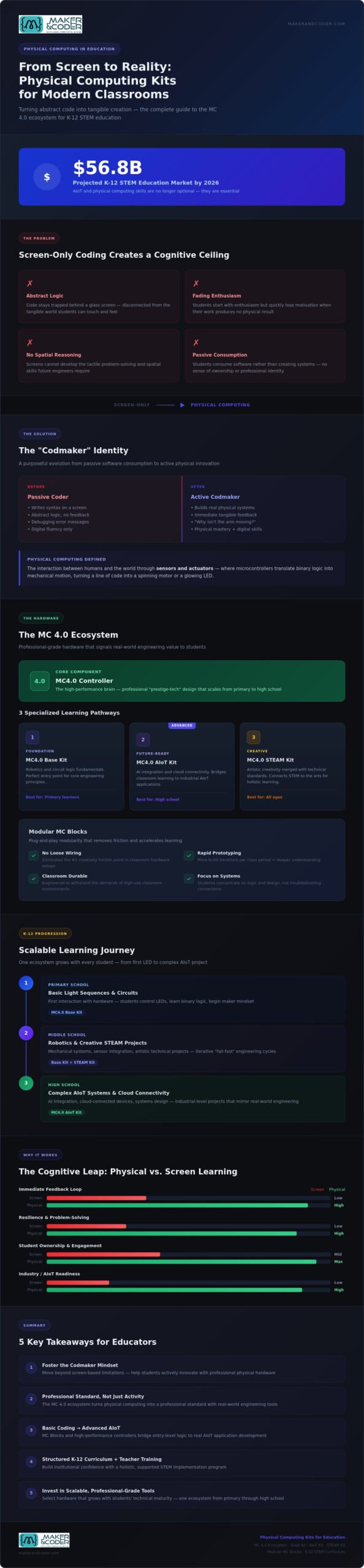
The modern student doesn’t just need to understand code; they need to command the physical environment. We define this evolution as the “Codmaker” identity. It marks a purposeful transition from passive software consumption to active physical innovation. Screen-only coding often creates a cognitive ceiling for STEM students. Logic remains abstract and disconnected from the tangible world. By integrating physical computing kits for education, we dismantle these barriers. These kits demand spatial reasoning and tactile problem-solving, skills that are essential for future engineers. Physical computing is the essential bridge between digital logic and real-world impact.
To fully grasp What is Physical Computing?, one must view it as the interaction between humans and the world through sensors and actuators. It’s a shift from digital fluency to physical mastery. This approach ensures that learners don’t just write programs; they build systems that respond to their environment.
The Software-Hardware Synergy
Microcontrollers serve as the vital link in this process. They translate binary logic into mechanical motion, turning a line of code into a spinning motor or a glowing LED. This provides immediate physical feedback. In this learning loop, a student sees the consequence of their logic instantly. It fosters a maker mindset where failure is just another step in iterative hardware testing. This process builds a level of resilience that screen-based debugging simply cannot replicate. It’s about moving from “it doesn’t work” to “why isn’t the arm moving?”
Preparing for the AIoT Economy
By 2026, the K-12 STEM education market is projected to grow to $56.8 billion. In this rapidly evolving landscape, understanding the Artificial Intelligence of Things (AIoT) is no longer optional. Students shouldn’t just learn syntax; they must understand systems design and functional engineering. Professional ecosystems, like those found in the Maker & Coder shop, prepare learners for real-world industrial applications. They move students from basic classroom theory to the complex, interconnected systems required in the modern workforce. This preparation ensures they’re ready to lead in an economy defined by smart, physical technology.
The MC 4.0 Ecosystem: Professional Hardware for the Classroom
The MC4.0 Controller stands at the center of this transformation. It isn’t just a circuit board; it’s the high-performance brain of a comprehensive ecosystem. In an era where students expect sophisticated technology, our “prestige-tech” design ensures they engage with tools that look and feel like professional engineering equipment. This aesthetic choice isn’t just for show. It signals to the learner that their work has real-world value. When students use professional-grade physical computing kits for education, their sense of ownership and purpose increases. They stop playing and start building.
Scalability is a core pillar of the MC 4.0 design. Projects are engineered to grow with the student. A primary learner might start with basic light sequences, while a high school student utilizes the same controller for complex robotics. This continuity reduces the re-learning curve often found in fragmented STEM programs. It creates a stable environment where technical skills accumulate over years rather than months.
Specialized Kits for Targeted Learning
We offer three distinct pathways to technical mastery. The MC4.0 Base Kit focuses on the foundations of robotics and circuit logic. It’s the perfect entry point for mastering fundamental engineering principles. For those looking toward the future of connectivity, the MC4.0 AIoT Kit integrates Artificial Intelligence and cloud connectivity. Finally, the MC4.0 STEAM Kit merges artistic creativity with rigorous technical standards. These kits ensure that physical computing kits for schools provide a clear roadmap from basic curiosity to industrial-level competence.
The Power of Modular MC Blocks
The modular MC Blocks revolutionize the classroom experience. Traditional wiring often creates a friction point that stalls creativity. Our plug-and-play modularity removes this barrier. Students focus on logic and systems design rather than troubleshooting loose connections. This approach encourages rapid prototyping and “fail-fast” engineering cycles. It allows for more iterations within a single class period. More iterations lead to deeper understanding.
Durability is equally vital. We’ve designed MC Blocks to withstand the rigors of a high-use classroom environment. They’re built for longevity, ensuring your investment remains viable for years to come. You can explore the full range of these components in the Maker & Coder shop. If you’re ready to discuss how this ecosystem fits your specific institutional goals, reach out to our educational consultants for a tailored implementation plan.
The Cognitive Leap: How Physical Computing Prepares Students for an AIoT Future
Many educators mistakenly view coding as a purely digital endeavor. While screen-based logic is a starting point, the true cognitive leap occurs when that code interacts with physical reality. Physical debugging teaches a unique brand of resilience. When a robot fails to turn or a sensor ignores a signal, students must apply precise logical thinking to isolate the fault. Is it a syntax error, a loose connection, or a power supply issue? This multi-layered problem-solving is exactly what industry professionals face every day. High-performance physical computing kits for education ensure that students aren’t just learning to code; they’re learning to innovate.
By 2026, the Internet of Things will underpin almost every sector, from smart cities and automated logistics to environmental monitoring. Students need more than just abstract theory to participate in this economy. The MC4.0 AIoT Kit enables students to build real-world smart devices that collect, process, and act on environmental data in real time. These physical computing kits for education move the curriculum beyond simple puzzles and into the territory of functional engineering. You can explore these capabilities further in the Maker & Coder shop.
From Python Syntax to Robotics Application
Mastering Python syntax is only the first step. The real magic happens when those industry-standard commands control physical actuators. Students move rapidly from printing a “Hello World” message to programming complex robot navigation. This transition requires systems-level thinking. They must account for friction, momentum, and sensor latency. It’s a journey from understanding a language to applying it within the constraints of the physical world. This practical application cements theoretical knowledge in a way that software-only platforms cannot match.
Data Literacy in the Physical World
Data literacy becomes tangible when students collect real-world environmental data via sensors. Using the MC 4.0 platform, learners can visualize data-driven decision making in action. They might monitor soil moisture to automate irrigation or track light levels to optimize energy usage. This hands-on experience prepares students for the data-heavy roles of the future digital economy. It transforms them from consumers of data into architects of smart systems. Key skills developed include:
- Identifying patterns in raw sensor output.
- Calibrating hardware for environmental variables.
- Predicting system outcomes based on historical data.
This methodical approach ensures that students feel equally comfortable in a high-tech laboratory or a primary school setting, building the confidence required for lifelong technical success.
Scaling STEM: Implementing a Holistic Curriculum and Teacher Training Program
Scaling a STEM program requires more than hardware. It requires a shift in institutional mindset. Many schools struggle with “one-off” projects that fail to build cumulative knowledge, leading to wasted resources and student boredom. Maker & Coder addresses this through our “Expert-as-Enabler” model. We don’t just provide physical computing kits for education; we act as a dedicated partner in your school’s growth. This partnership ensures that technical innovation becomes a permanent part of the school culture rather than a fleeting experiment.
As of April 2026, the majority of U.S. states have adopted the Next Generation Science Standards (NGSS). With federal STEM funding facing potential cuts in the FY 2026 budget, establishing sustainable, school-wide ecosystems is more critical than ever. Our platform aligns perfectly with these three-dimensional learning models. We help schools create high-tech laboratory environments that remain viable despite financial uncertainty. It’s about moving from a cluttered storage closet to a streamlined center of innovation.
The K-12 MC Curriculum
A structured pathway is essential for student success. The MC Curriculum provides a clear trajectory from primary logic to advanced high school engineering using physical computing kits for education. We utilize project-based learning modules that emphasize collaboration and real-world problem-solving. This curriculum integrates seamlessly with the MC 4.0 hardware. It ensures that students always have the right tools for their current cognitive level, allowing them to build complex systems without hitting a technical wall.
Professional Teacher Training
Educators are the heart of any successful STEM initiative. However, many feel overwhelmed by complex hardware and rapidly changing standards. Our Teacher Training Programs empower educators to become confident mentors in high-tech subjects. We focus on reducing technical anxiety through hands-on professional development sessions. By providing continuous support and resources, we ensure that teachers have the peace of mind they need to lead. We move the educator from a state of uncertainty to a state of professional authority, making them a trusted guide in the classroom.
If you’re ready to transform your school’s technical capabilities and implement a scalable STEM ecosystem, contact our team today to discuss a custom implementation plan.
Selecting the Right Physical Computing Kit for Your School
Selecting the ideal hardware for your institution requires a balance of current needs and future ambitions. Start by assessing your school’s technical maturity. Consider your specific learning goals. Are you aiming for foundational literacy or advanced engineering competence? Investing in physical computing kits for education that offer a professional-grade ecosystem provides a superior long-term ROI. You move away from the cycle of short-lived gadgets and toward a sustainable lab environment. This professional approach ensures that your hardware remains relevant as industry standards evolve. It provides peace of mind for administrators and excitement for students.
The transition from a basic setup to a specialized laboratory should be a journey of growth. We’ve designed our ecosystem to support this evolution without requiring you to start over every year. By using a unified controller platform, you ensure that the skills learned in primary school serve as the direct foundation for high school innovation. It’s a scalable model that respects both your budget and your students’ time. You don’t just buy a kit; you invest in a technical roadmap.
Getting Started with the MC 4.0 Base Kit
The MC4.0 Base Kit is the essential starting point for any K-12 program. It’s designed to introduce core robotics concepts to younger learners without overwhelming them. By focusing on the fundamentals of circuit logic and motor control, you establish a solid foundation for advanced systems engineering. Students learn to respect the hardware while gaining the skills needed for more complex projects. This kit ensures that the first step into physical computing is both successful and inspiring. Explore the full range of options at the Maker & Coder Shop.
Advancing Technical Literacy
As your students progress, their tools must keep pace. We recommend introducing the MC4.0 AIoT Kit and MC4.0 STEAM Kit for senior students who are ready for deeper specialization. These kits allow for the integration of advanced sensors and AI modules into sophisticated projects. The transition from the Base Kit is intuitive. Because the core MC 4.0 Controller is universal across the ecosystem, students don’t waste time learning new interfaces. They focus entirely on innovation.
Initiating a partnership with Maker & Coder is a methodical process. We begin with a consultation to understand your curriculum requirements. From there, we help you select the right mix of MC4.0 Base and specialized kits. We then move to teacher training to ensure your staff feels empowered and ready. This “expert-as-enabler” model guarantees that your investment leads to measurable student outcomes. Ready to transform your classroom? Contact the Maker & Coder team today to design your school’s technical roadmap.
Leading the AIoT Revolution in Your Classroom
The transition from abstract code to tangible innovation is the defining challenge of modern STEM education. By integrating professional-grade physical computing kits for education, you move beyond the cognitive ceiling of screen-only logic. You empower students to become “Codmakers” who navigate the complexities of the AIoT economy with confidence. It’s a journey from basic software logic to advanced systems engineering.
Success requires a holistic approach. It’s about more than just hardware; it’s about a scalable ecosystem. Our Modular MC Blocks facilitate rapid prototyping while the comprehensive K-12 MC Curriculum ensures a clear pathway for growth. We don’t just provide tools. Through our Professional Teacher Training programs, we enable educators to lead with authority and technical peace of mind. This model transforms the classroom into a high-performance laboratory.
The future of engineering is physical, interconnected, and ambitious. It’s time to bridge the gap between classroom theory and industrial application. Empower the next generation of innovators-contact Maker & Coder today to begin your institutional transformation. Let’s build something tangible together.
Frequently Asked Questions
What is the difference between coding and physical making?
Coding is the creation of digital logic, while physical making is the application of those instructions to hardware. In a purely digital environment, the output is limited to the screen. Physical making utilizes physical computing kits for education to interact with the real world through sensors and actuators. This transition allows students to see their logic manifest as mechanical motion, fostering a deeper understanding of systems engineering and functional design.
Is the MC 4.0 platform suitable for primary school students?
Yes, the MC 4.0 ecosystem is designed to be scalable across all K-12 levels. The MC4.0 Base Kit provides a perfect entry point for primary school students. It introduces fundamental robotics and circuit logic through a simplified, modular interface. This ensures younger learners build confidence with professional-grade hardware without the frustration of complex traditional wiring. It’s about creating an accessible yet sophisticated foundation for future technical growth.
Do teachers need prior engineering experience to use the MC 4.0 Kit?
Prior engineering experience isn’t required to lead a successful STEM classroom. Maker & Coder provides professional Teacher Training Programs specifically designed to empower educators of all technical backgrounds. These sessions focus on reducing technical anxiety through hands-on practice and structured lesson plans. We act as a dedicated partner, providing the continuous support and resources you need to become a confident mentor in high-tech subjects like robotics and AIoT.
How does the MC Curriculum align with international education standards?
The K-12 MC Curriculum is meticulously aligned with modern academic standards, including the Next Generation Science Standards (NGSS). It emphasizes three-dimensional learning by integrating Disciplinary Core Ideas with Science and Engineering Practices. This alignment ensures that your school’s technical laboratory meets rigorous academic requirements while preparing students for future-ready careers. We provide a structured pathway that moves students from basic logic to advanced, functional engineering applications.
Can the MC4.0 Controller be programmed with Python?
Yes, the MC4.0 Controller is fully compatible with industry-standard languages like Python. This compatibility is a core feature of our professional-grade ecosystem. It allows students to move beyond simple block-based logic to master the languages used in modern software engineering and data science. By programming physical actuators with Python, learners bridge the gap between classroom theory and industrial application, preparing them for the data-heavy roles of the 2026 digital economy.
What support does Maker & Coder offer for professional teacher training?
Maker & Coder offers a comprehensive “expert-as-enabler” support model for schools. Our training programs go beyond initial setup to provide continuous professional development and implementation resources. We focus on hands-on sessions that equip teachers with the skills to troubleshoot hardware and lead project-based learning modules. This ongoing partnership ensures that your STEM program remains scalable and sustainable, providing educators with the peace of mind they need to succeed in the classroom.
How do MC Blocks differ from traditional electronic components?
MC Blocks differ from traditional components through their modular, plug-and-play design. Traditional electronics often require complex breadboarding and wiring, which can stall the learning process in a classroom setting. MC Blocks eliminate this friction, allowing for rapid prototyping and “fail-fast” engineering cycles. They are also built for the rigors of high-use environments, ensuring hardware longevity. This modularity enables students to focus on systems-level thinking rather than troubleshooting loose connections.
Where can I buy the MC 4.0 Kit for my school?
You can purchase the MC 4.0 Kit and our specialized AIoT and STEAM versions directly through the Maker & Coder shop. For schools looking to implement a large-scale program, we recommend contacting our educational consultants for a tailored plan. We provide bulk options and institutional support to help you build a sustainable technical laboratory. Investing in these physical computing kits for education ensures your school provides a professional standard for STEM innovation.