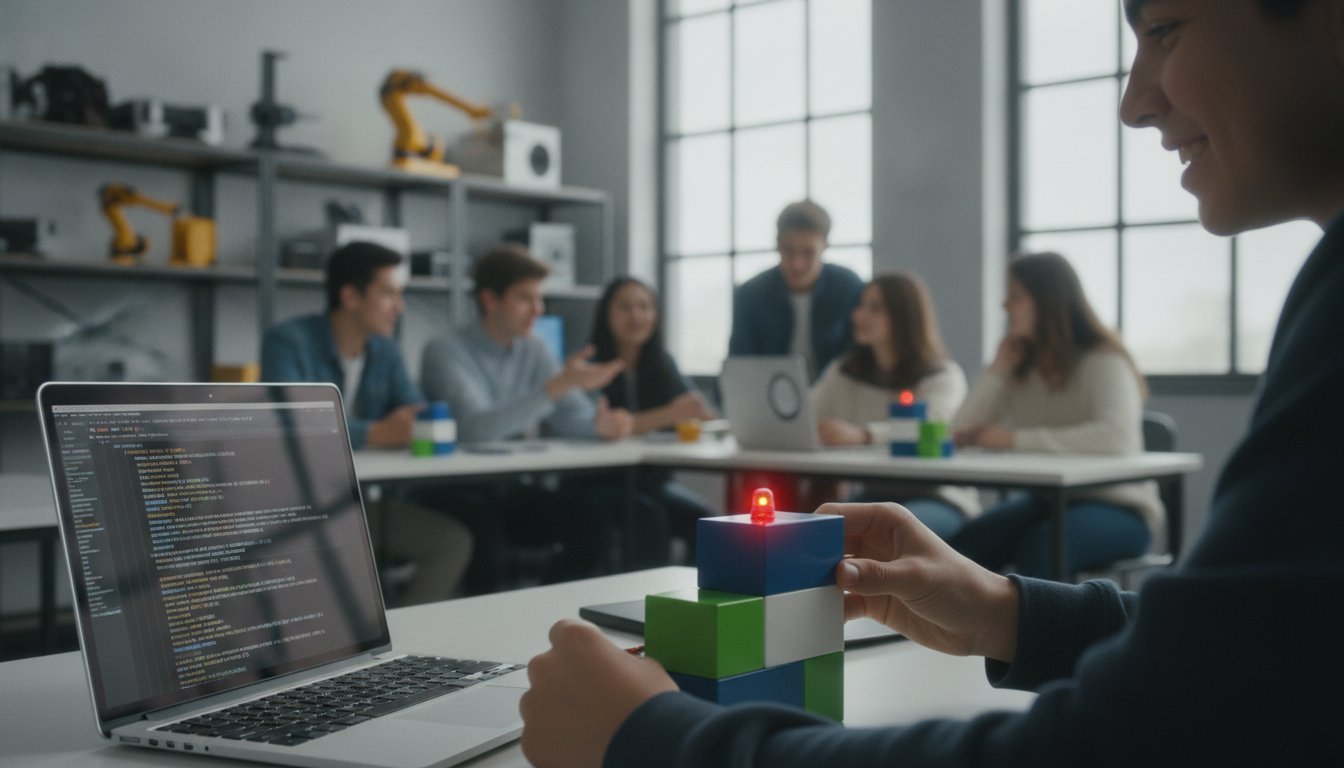
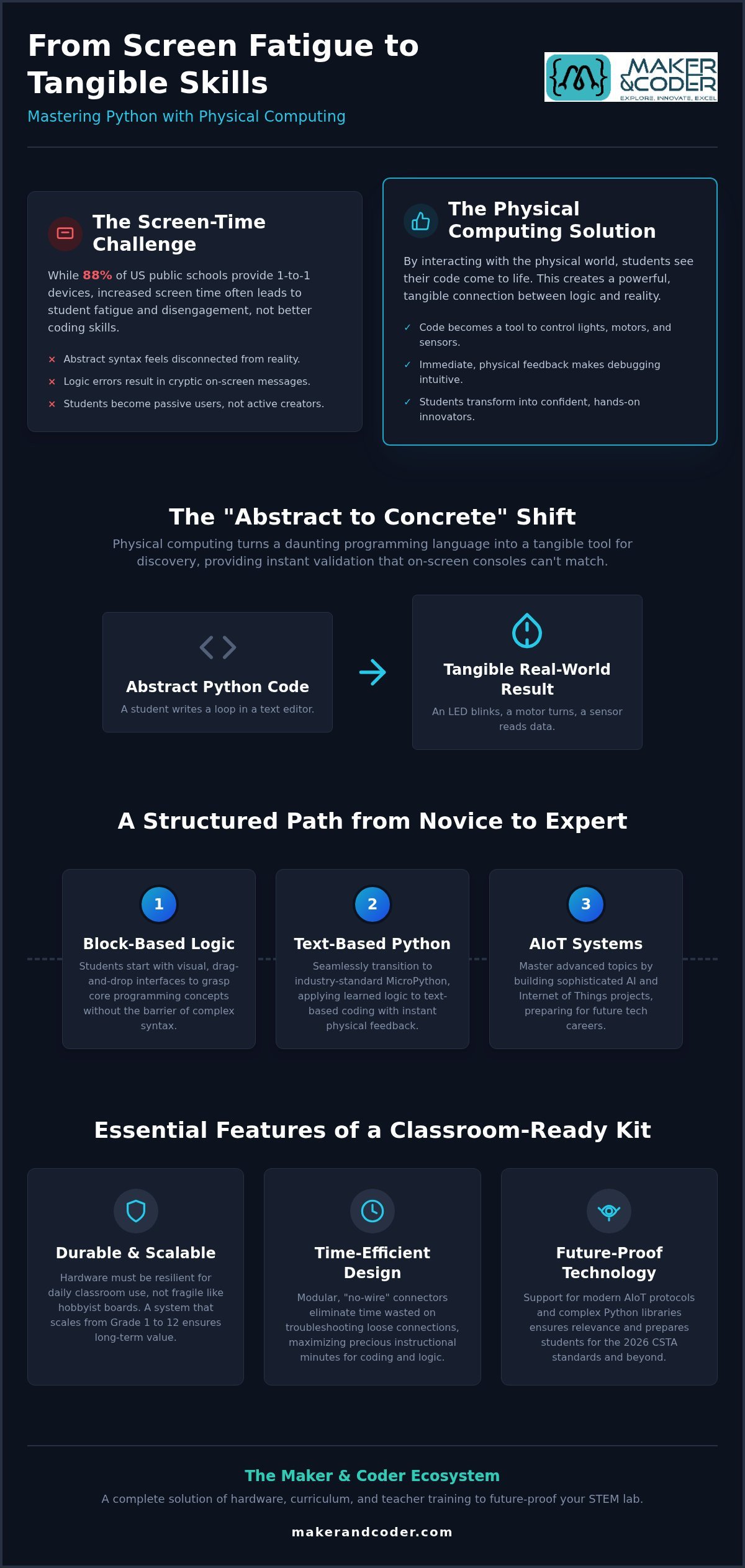
What if the key to mastering Python wasn’t found on a glowing screen, but in the palm of a student’s hand? While 88% of U.S. public schools now provide 1-to-1 devices, many educators find that increased screen time often leads to deeper student fatigue rather than better coding skills. You’ve likely seen the glazed eyes when abstract syntax doesn’t click. By teaching python with physical computing kits, you can break this cycle and turn a daunting programming language into a tangible tool for discovery.
We understand that managing thirty sets of messy wires while trying to meet the 2026 CSTA Physical Computing standards is a massive challenge. You need a system that’s scalable, structured, and actually works in a busy classroom. This guide reveals how to transform your STEM lab into a hub of innovation using modular hardware and professional pedagogy. We’ll walk through the journey from block-based logic to text-based Python, ensuring your students move from passive users to confident creators of the future.
Key Takeaways
- Learn how teaching python with physical computing kits bridges the gap between abstract syntax and real-world application through immediate tactile feedback.
- Discover why modular hardware like MC Blocks eliminates wiring complexity, allowing you to maximize instructional time rather than troubleshooting hardware.
- Implement a structured scaffolding method that transitions students seamlessly from simple block logic to sophisticated AIoT systems using the MC Curriculum.
- Master classroom organization and time management strategies to keep your STEM lab running efficiently even with thirty students and multiple hardware kits.
- Future-proof your classroom by integrating a complete ecosystem of professional-grade hardware and teacher training programs designed for the 2026 CSTA standards.
Table of Contents
Why Physical Computing is the Catalyst for Python Literacy
Physical computing is more than a classroom trend; it’s a fundamental shift in how we perceive the relationship between logic and reality. To understand the impact, we must first ask: What is Physical Computing? It is the dynamic interaction between software and the physical world through sensors and actuators. For educators, this means transforming a digital script into a physical event. When you’re teaching python with physical computing kits, you’re giving students a reason to care about every colon and indentation.
The “Abstract to Concrete” shift is the most powerful tool in your pedagogical arsenal. In a traditional coding environment, a logic error results in a cryptic message on a screen. In a physical environment, it results in a silent motor or a dark LED. This immediate, physical validation turns abstract syntax into a tangible cause-and-effect relationship. It’s the difference between reading about gravity and dropping a ball. Seeing a motor turn validates a line of Python code more effectively than any virtual console ever could.
Introducing tactile experimentation also addresses the growing issue of screen fatigue. While digital literacy is essential, students often struggle to remain engaged with purely virtual projects. By integrating MicroPython, the industry-standard starting point for microcontrollers, you move the learning experience from the monitor to the desk. This hands-on approach builds a deeper cognitive connection to the language. It’s about making code feel like a material you can mold and shape.
From Syntax to Success: Overcoming the Learning Curve
Transitioning from block-based coding to text-based Python is often where students lose momentum. The syntax feels rigid and the stakes feel high. Physical computing kits lower this barrier by providing immediate feedback loops. If a student writes a loop to blink an LED and it stays lit, they don’t need a debugger to tell them something is wrong. They see it. This instant feedback builds the confidence needed to tackle more complex logic, turning frustration into that elusive “A-ha!” moment.
Python as a Real-World Skill
Python isn’t just for school; it’s the backbone of modern AI and IoT industries. By using professional-grade tools like the MC 4.0 Kit, you’re preparing students for the technical demands of the next decade. We define the physical-digital feedback loop as a core pedagogical concept where software logic creates physical action, and physical data informs software decisions. Using teaching python with physical computing kits as a foundation ensures students don’t just learn a language; they learn to build the future.
Essential Features of a Python-Ready Physical Computing Kit
Selecting the right hardware is a high-stakes decision for any school district. While hobbyist boards are common, they often lack the resilience needed for daily classroom use. When teaching python with physical computing kits, the focus should shift from “cheap and disposable” to “durable and scalable.” You need hardware that survives the inevitable drops and spills of a middle school lab while remaining cost-effective over a multi-year curriculum. A kit that breaks in the first semester isn’t a bargain; it’s a bottleneck.
Time is your most precious resource in a 45-minute lesson. Traditional breadboards and jumper wires often lead to 20 minutes of troubleshooting loose connections. Modular connector systems, such as MC Blocks, eliminate this hurdle. By using “no-wire” interfaces, students spend their time refining Python logic instead of hunting for a short circuit. This efficiency allows for deeper exploration of the code itself. It transforms the classroom from a repair shop into a center for innovation.
Modern projects require more than just blinking an LED. Your kit must handle AIoT protocols and complex Python libraries to remain relevant. A system that scales from Grade 1 to Grade 12 ensures that your investment grows with your students’ skills. This adaptability is supported by research on remote learning for physical computing, which emphasizes that flexible hardware architecture is vital for maintaining engagement across different learning environments. The goal is a seamless transition from basic input-output to sophisticated data science.
The Heart of the System: The Controller
The MC4.0 Controller acts as the brain of your lab. Unlike basic microcontrollers, it’s designed specifically for Python compatibility. It features essential ports for Bluetooth and Wi-Fi connectivity, allowing for sophisticated IoT projects. This dedicated processing power means students can run real-time data analysis without the hardware lagging. It provides the professional-grade foundation necessary for teaching python with physical computing kits at a high level.
Sensors and Actuators: The Modular Ecosystem
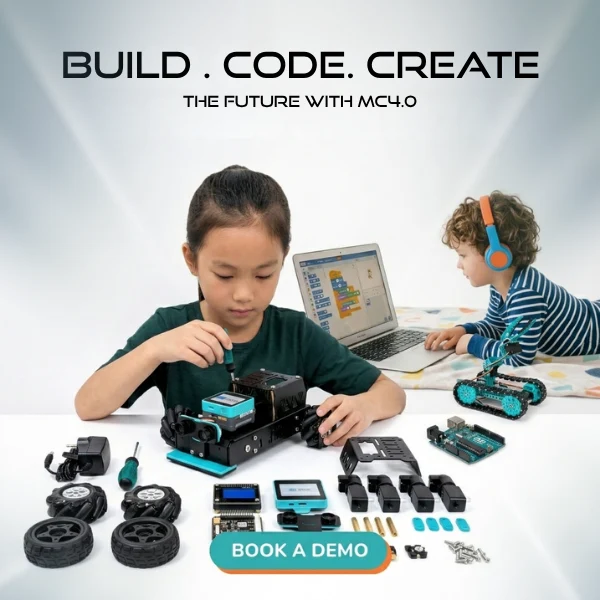
Prototyping shouldn’t be a chore. Plug-and-play components like ultrasonic sensors, OLED displays, and servos allow students to build complex systems in minutes. This modularity is the cornerstone of the MC 4.0 Kit. It allows learners to focus on the “why” of the code rather than the “how” of the wiring. If you’re looking to upgrade your lab’s capabilities, reach out to our team for a tailored implementation plan.
Strategic Pedagogy: Moving from ‘Hello World’ to AIoT Systems
Teaching python with physical computing kits requires more than just handing out hardware. It demands a structured pedagogical approach that transforms curiosity into technical mastery. We advocate for the “Code-Predict-Test” cycle as a primary classroom framework. In this model, students must articulate exactly what they expect to happen in the physical world before they execute their script. This simple cognitive step forces a deeper engagement with the logic and prevents the common pitfall of “guess-and-check” programming. By predicting outcomes, students become active investigators rather than passive observers.
The Scaffolding Method provides the necessary bridge for students transitioning from block-based environments like Scratch to text-based Python. Start by using single-block commands to trigger a physical action, such as turning on a light. Once the concept is clear, introduce the corresponding line of Python code. This visual-to-textual mapping demystifies the syntax and builds a solid foundation for complex logic. You can explore foundational Physical computing projects with Raspberry Pi to see how these early interactions spark long-term interest in computer science.
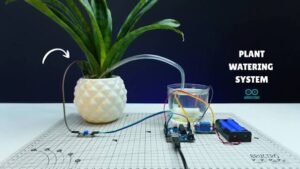
Project-Based Learning (PBL) takes this a step further by challenging students to solve community problems. Instead of abstract exercises, students might build an automated plant watering system or a smart security alarm for the classroom. These projects require a blend of hardware engineering and software logic, pushing learners to think critically about how technology serves human needs. It is through these tangible applications that Python stops being a school subject and starts being a professional tool.
Mapping Python Syntax to Physical Actions
Abstract coding concepts become intuitive when they result in physical movement. You can teach “If/Else” logic through sensor triggers; for example, if a light sensor falls below a certain threshold, the controller turns on an LED. “While” loops are perfect for continuous environmental monitoring, such as tracking temperature changes over time. As students progress, introduce “Functions” to control complex modular behaviors. This allows them to package a series of movements for a robot into a single, reusable command.
Advanced Exploration: AIoT and STEAM
For high school learners, the MC4.0 AIoT Kit offers a pathway into data-driven innovation. Students can move beyond basic electronics into smart systems that utilize artificial intelligence and the Internet of Things. Alternatively, the MC4.0 STEAM Kit allows for the combination of art and technology, encouraging creative expression through code. System thinking is developed through multi-component Python projects where students must manage the interactions between diverse inputs and outputs to achieve a unified goal. This holistic approach ensures they are ready for the interconnected world of tomorrow.
Classroom Implementation: Managing Kits, Kids, and Curriculum
Execution is the bridge between a visionary curriculum and student success. Managing thirty students, each equipped with their own hardware, requires a robust logistical strategy. It isn’t just about the code; it’s about maintaining a high-functioning environment where instructional efficiency remains the priority. When teaching python with physical computing kits, the goal is to spend less time on hardware distribution and more time on high-level cognitive tasks. Success in a 50-minute period depends on a system that is as reliable as the software itself.
Time management is often the greatest hurdle for STEM educators. If setup and cleanup consume half of your lesson, students lose the momentum needed for deep problem-solving. We recommend a “hardware-first” routine where kits are ready before the bell rings. This allows for a seamless transition into the “Code-Predict-Test” cycle discussed earlier. Assessment also requires a shift in perspective. You aren’t merely grading a script on a screen; you’re evaluating how that script interacts with the physical world. A functional project serves as its own rubric, providing clear evidence of mastery.
Professional development is the final, essential pillar of classroom implementation. Even the most advanced tools require a confident mentor to guide the learning process. Teacher training ensures that you aren’t just reacting to technical hiccups but are proactively driving innovation. If you want to ensure your staff is fully prepared for these new standards, speak with our team about our professional development programs.
The ‘Messy Desk’ Solution
The “lost component” problem can derail an entire lesson. Modular systems solve this by keeping sensors and controllers integrated. Establishing a five-minute “Hardware Check” routine at the end of every class ensures that every MC Block is accounted for and ready for the next group. This discipline preserves your investment and keeps the lab focused on creation rather than inventory. Explore our modular MC 4.0 hardware for classrooms to see how design can simplify your daily routine.
Curriculum Integration
Alignment with the 2026 CSTA Computer Science Standards is vital for modern schools. These standards now emphasize the integration of software to control physical peripherals, making teaching python with physical computing kits a core requirement rather than an elective. A structured K-12 MC Curriculum provides vertical alignment, ensuring that skills built in primary school serve as the foundation for advanced AIoT projects in high school. This continuity allows you to integrate Python into existing math or science units with confidence, turning every lab into a future-ready learning space.
Future-Proofing STEM with the Maker & Coder Ecosystem
Building a future-ready classroom requires more than just high-quality components; it requires a cohesive system that evolves alongside your students. The Maker & Coder ecosystem is designed to be that comprehensive partner. By integrating the MC 4.0 hardware platform, a rigorous K-12 curriculum, and professional teacher training, we provide a unified pathway for technical literacy. When you’re teaching python with physical computing kits within this framework, you’re moving beyond isolated lessons and toward a scalable, district-wide STEM strategy.
The MC4.0 Base Kit serves as the ideal entry point for this journey. It provides the essential foundation for Python learners, offering enough complexity to challenge students without overwhelming them during their first steps into text-based coding. This kit isn’t just a collection of parts. It’s a gateway to the professional world of AIoT and smart systems. By starting with a standardized platform, schools ensure that every student, regardless of their starting point, has access to the same high-level technological opportunities.
Investing in teacher training is the most critical step in ensuring long-term success. Hardware can only be as effective as the educator leading the class. Our training programs empower teachers to move from being “troubleshooters” to visionary mentors. This professional development provides the confidence to handle the 2026 CSTA standards and the pedagogical shifts required for modern STEM labs. A unified hardware-software pathway reduces the cognitive load on both the student and the teacher, allowing everyone to focus on the joy of discovery.
Choosing Your Path: Base, AIoT, or STEAM?
Every classroom has unique goals, and our kits are designed to meet them. The MC4.0 Base Kit is perfect for foundational Python literacy. For those ready to dive into data science and smart connectivity, the MC4.0 AIoT Kit offers advanced sensor integration. If your focus is on the intersection of art and technology, the MC4.0 STEAM Kit provides the tools for creative, multi-disciplinary innovation. You can browse the full range of Maker & Coder STEM kits to find the right fit for your specific curriculum needs.
Becoming a STEM Leader
Professional certification through Maker & Coder does more than build skills; it establishes you as a leader in the global educational community. By joining this network, you gain access to shared resources, best practices, and a support system of like-minded innovators. This community ensures that your STEM program doesn’t just start strong but continues to lead the way in technological education. Don’t wait to transform your classroom. Empower your students with the MC 4.0 Kit today and start teaching python with physical computing kits at a professional level.
Empower the Next Generation of Innovators
The transition from digital abstraction to physical reality is the defining moment of a student’s technical journey. By teaching python with physical computing kits, you aren’t just explaining a language; you’re providing the tools to build a smarter, more connected world. We’ve explored how modular MC Blocks eliminate classroom clutter and how a structured pedagogy transforms screen fatigue into tangible discovery. You now have the roadmap to move from simple scripts to complex AIoT systems that solve real-world problems.
Success in the modern STEM lab requires more than just hardware. It demands the support of professional Teacher Training Programs and a comprehensive K-12 MC Curriculum that scales with your students’ ambitions. This ecosystem ensures that your investment today leads to lasting innovation tomorrow. It’s time to bridge the gap between code and creation with a system designed for the rigors of the classroom.
Ready to lead the change? Equip your classroom with the MC 4.0 Kit and K-12 Curriculum to start your journey. The future of engineering is waiting in your classroom. Let’s build it together.
Common Questions About Teaching Python in the Classroom
What is the best physical computing kit for teaching Python to beginners?
The MC4.0 Base Kit is the premier choice for educators because it balances professional capability with classroom-ready durability. It utilizes modular MC Blocks that snap together, removing the mechanical frustration of loose wires and breadboards. This system provides a clear, reliable pathway for teaching python with physical computing kits by allowing students to focus on logic and syntax rather than hardware failure.
Can I teach Python with hardware without any prior electronics experience?
You can absolutely lead a successful STEM lab without a background in engineering. Our Professional Teacher Training Programs are designed to bridge this gap, providing you with the confidence and technical skills to mentor your students effectively. The modular design of the MC 4.0 hardware simplifies the physical setup, ensuring that you can focus on the instructional goals of the K-12 MC Curriculum.
Why is Python preferred over Scratch for physical computing in middle and high school?
Python is a global industry standard for AI and data science, offering a direct connection to professional career paths. While Scratch is excellent for foundational logic, Python allows older students to build sophisticated, real-world applications that require complex data handling. Teaching python with physical computing kits prepares learners for the technical demands of the next decade by using the same tools used by modern innovators.
How do I manage hardware kits for a large class of students?
Effective management requires a system built for the rigors of a 30-student classroom. Modular MC Blocks reduce the “lost component” problem by keeping sensors and actuators in self-contained units. Establishing a structured “Hardware Check” routine at the end of each period ensures that every piece of the MC 4.0 Kit remains accounted for and functional for the next group of learners.
What age is appropriate to start teaching Python with physical computing?
Students typically begin the transition from block-based logic to text-based Python around Grade 4 or 5. The K-12 MC Curriculum provides a structured pathway that adapts to these developmental stages, starting with simple physical interactions and moving toward complex AIoT systems. This vertical alignment ensures that the complexity of the projects matches the student’s growing cognitive abilities.
Do I need special software to program physical computing kits with Python?
Most modern kits utilize industry-standard, open-source editors such as Mu or Thonny, which are free to use and easy to install. The MC 4.0 Controller is fully compatible with these standard tools, ensuring that your lab remains integrated with the broader coding community. This open approach prevents your school from being locked into expensive, proprietary software subscriptions.
How does the MC 4.0 Kit align with K-12 curriculum standards?
The MC 4.0 platform and the K-12 MC Curriculum are meticulously mapped to the 2026 CSTA standards and NGSS requirements. These resources focus on the integration of software to control physical peripherals, which is now a core requirement for high school computer science. This alignment provides educators with peace of mind, knowing their lab activities directly support national academic benchmarks.
What is the difference between the MC4.0 Base Kit and the AIoT Kit?
The MC4.0 Base Kit focuses on the fundamental principles of Python and electronics, providing the ideal starting point for new learners. The MC4.0 AIoT Kit expands on these basics by adding advanced sensors and connectivity protocols for Internet of Things projects. While the Base Kit builds core literacy, the AIoT Kit challenges students to design smart, interconnected systems that respond to real-time environmental data.